
Book VII · Clare of Assisi
The woman who
guarded the light
The life of Clare of Assisi in depth: her family, San Damiano, the sisters, her writings, her struggle for poverty, and the women who remembered her.
Sources, context, and contemplation
A story brought close without losing the truth.
Every page is written to be clear and welcoming without flattening the complexity of history.
We distinguish documents, traditions, and legends, and always explain the origin of prayers and quotations.
Complete contents
48 paths to explore
Choose a page to begin. Follow the order or enter through the story you need most today.
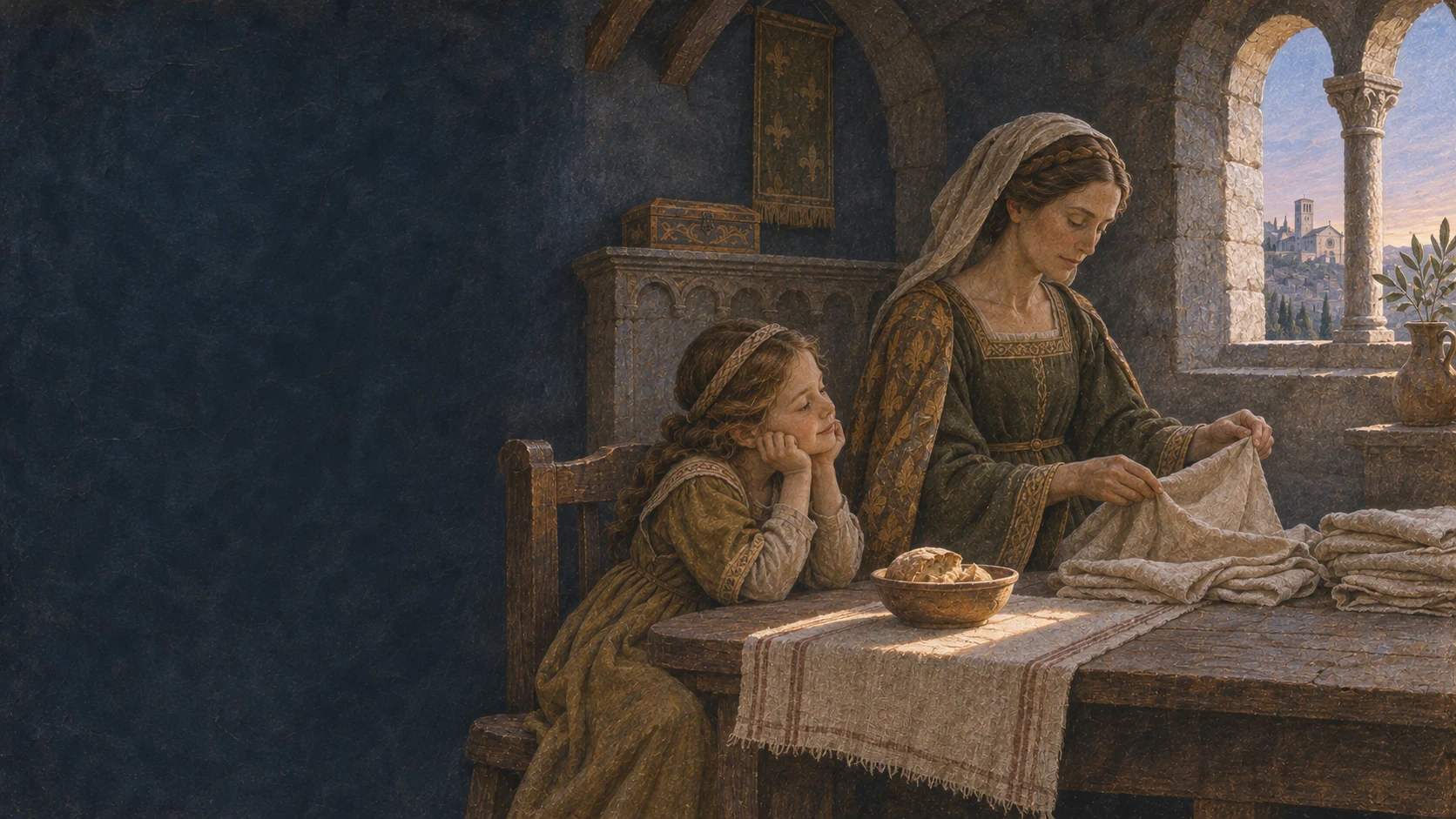
A girl named Chiara
Before the saint on the altars, there was a girl born in a restless Assisi. Her name meant brightness, but nearly everything about her earliest years must be reconstructed with care.
Read now →Name, birth, and the limits of the sources · c. 1193–1194 · childhood in Assisi02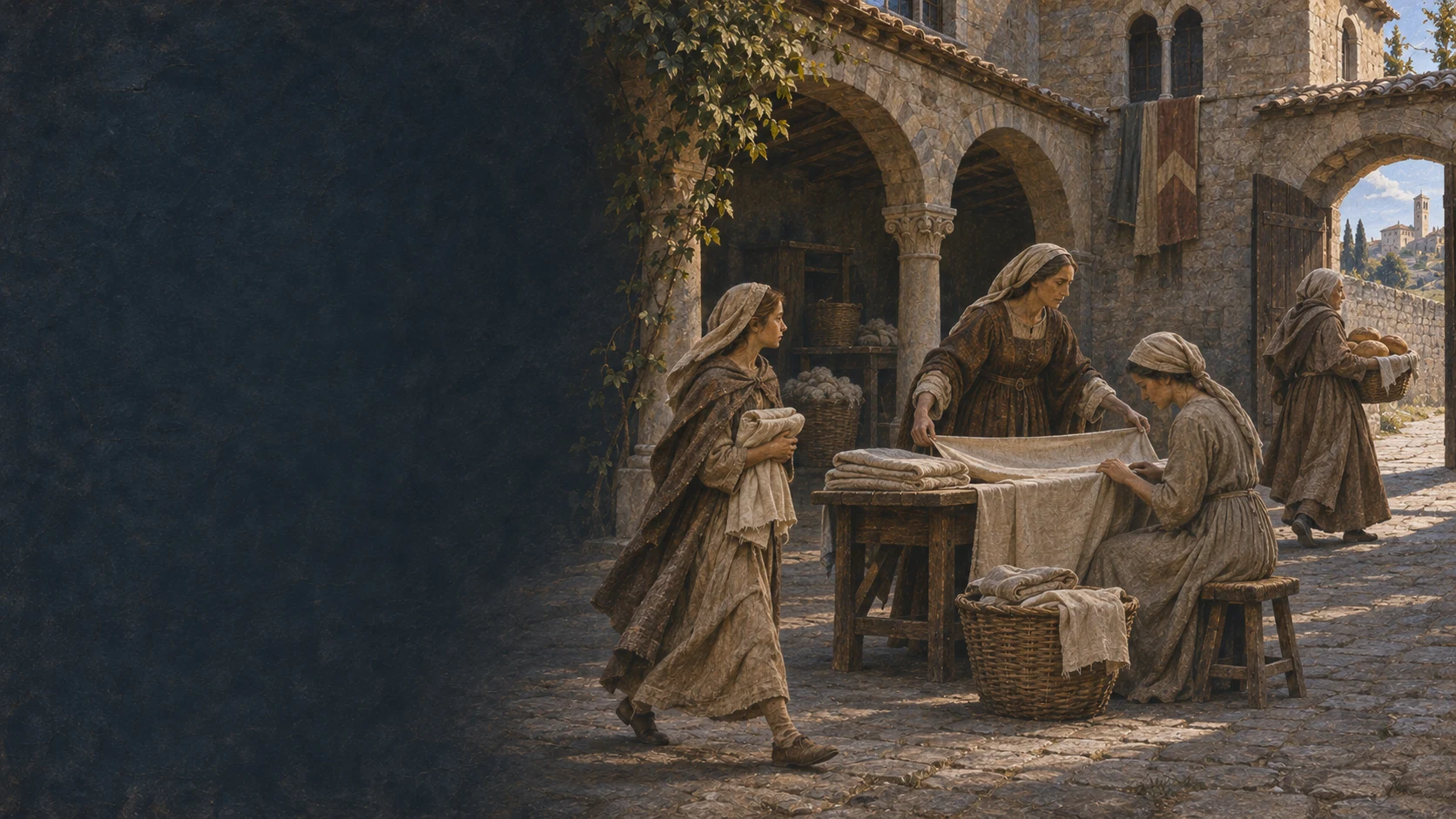
The house of the Offreduccio
A medieval noble house was a shelter, a workshop of power, and a school of duty. We enter carefully into the domestic world Clare would leave.
Read now →Household, nobility, and a woman's expected future · late twelfth century · youth in Assisi03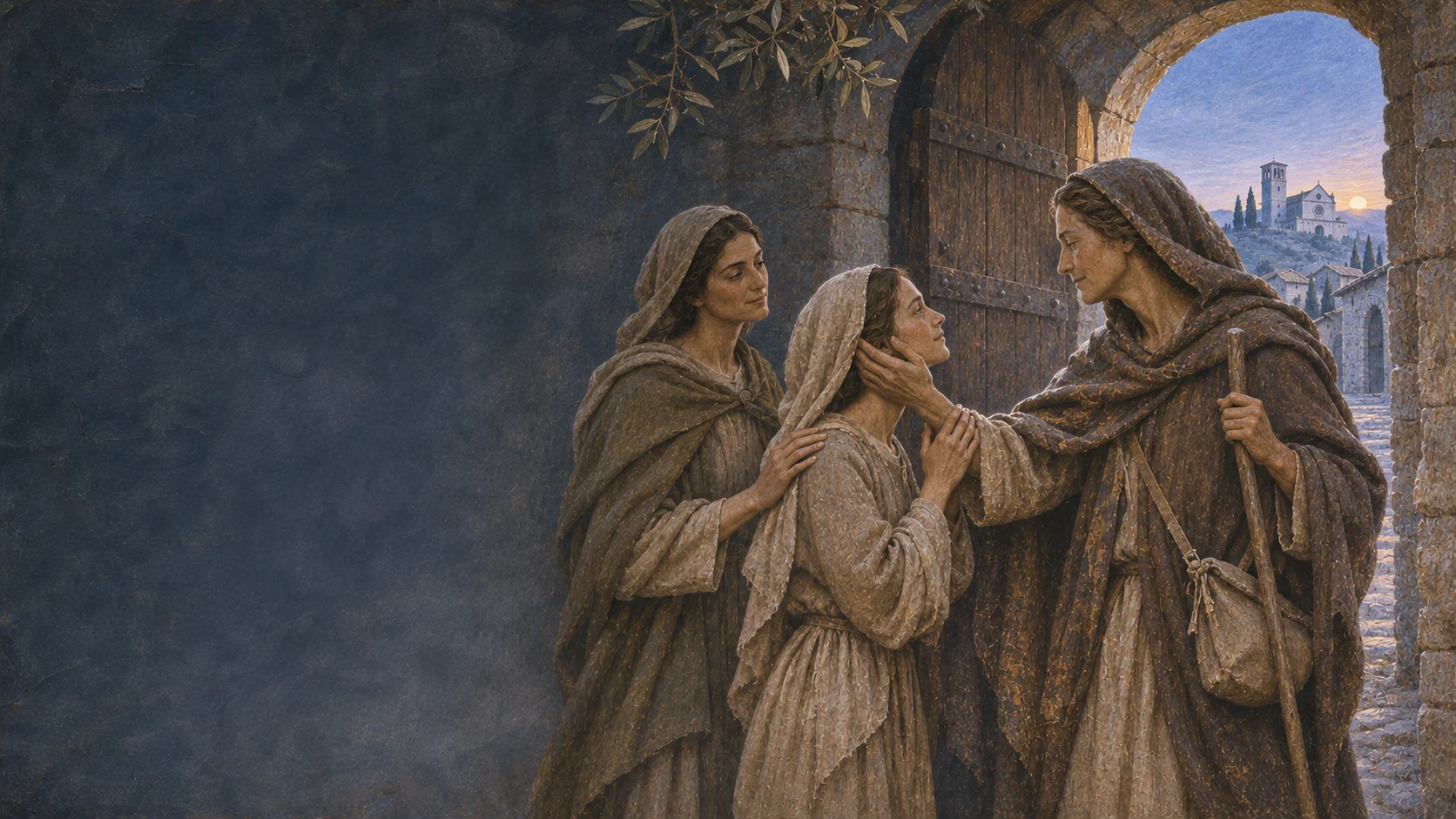
Ortolana, the pilgrim mother
Before entering San Damiano, Ortolana traveled the roads to Rome, the Gargano, and the Holy Land. Her story reveals a medieval woman far less confined than we might imagine.
Read now →Motherhood, pilgrimage, and women's agency · end of the 12th century–beginning of the 13th04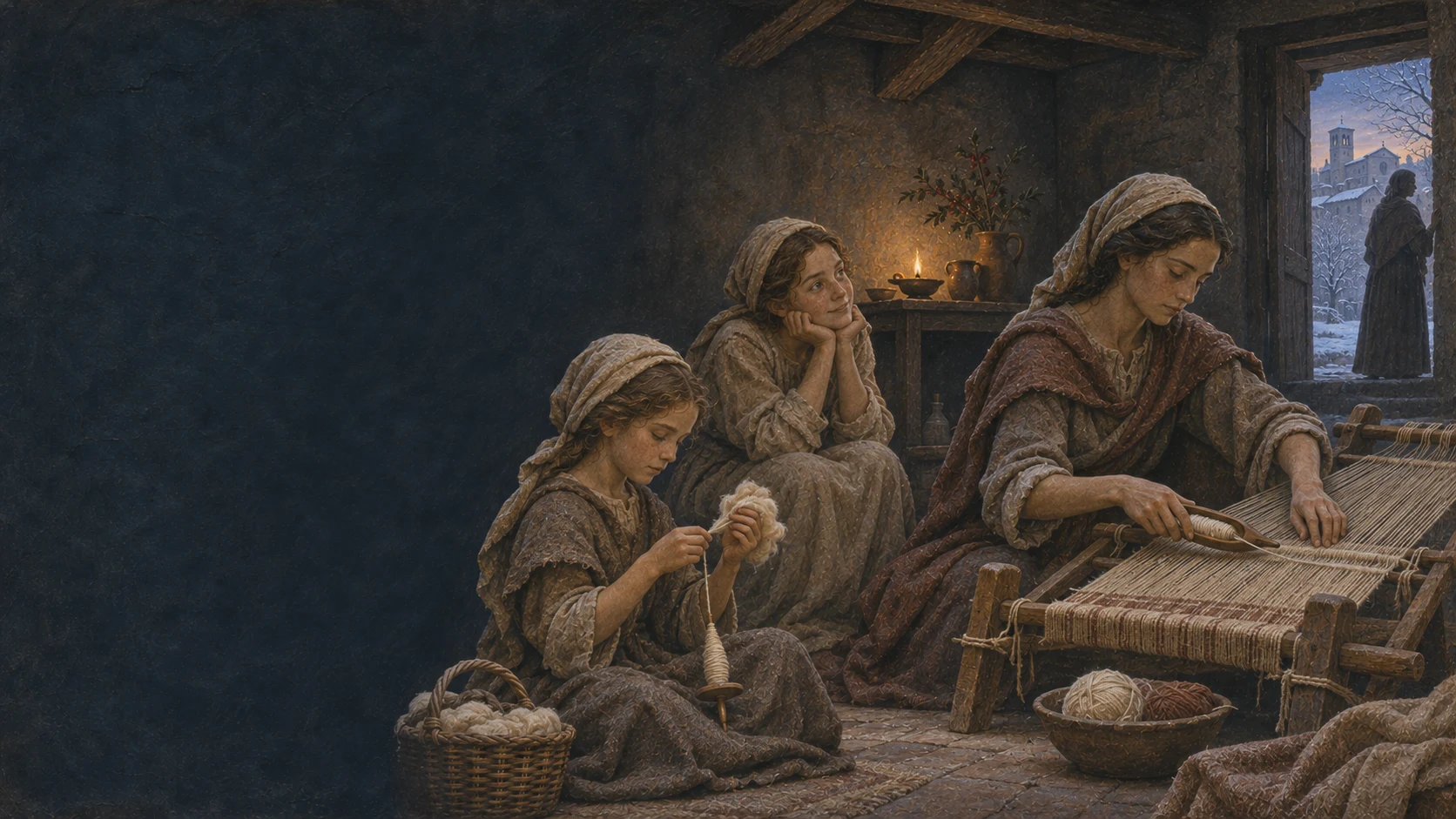
Catherine, Beatrice, and the women of the family
Clare did not enter history alone. Her sisters and relatives reveal choices, affections, and conflicts that moved through an entire family.
Read now →Sisters, kinship and women's possibilities · c. 1194–1212 · the sisters. youth05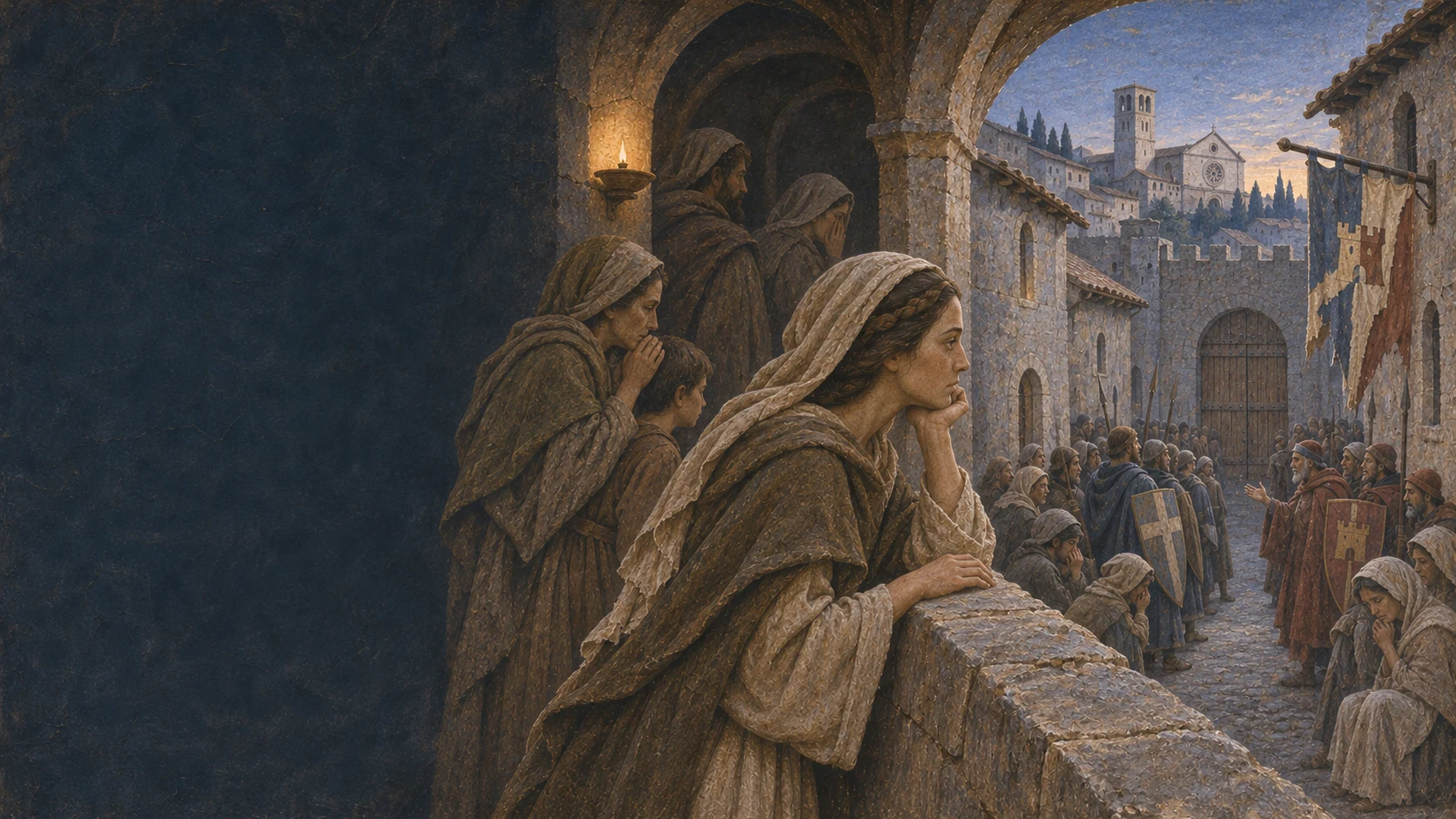
Assisi divided in two
Before Clare chose peace, her city knew revolt, demolished towers, and expelled families. Understanding this wound helps to understand the courage of her decision.
Read now →Urban war, social class, and Clare's formation · 1198–120206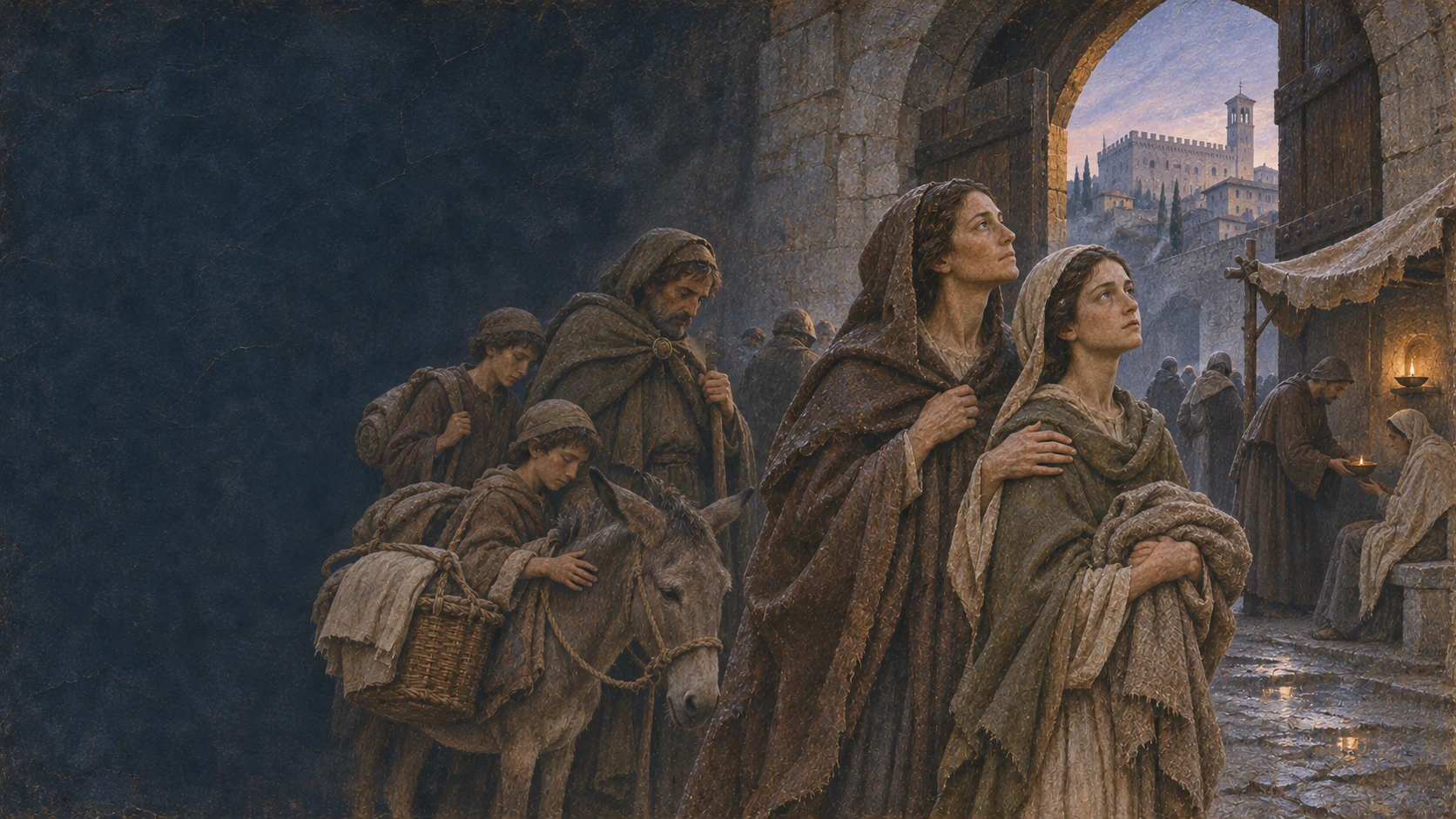
The years of exile in Perugia
As a girl, Clare left Assisi with her family. Exile in Perugia taught that home, position, and security could disappear.
Read now →Displacement, memory and coming of age · c. 1198–120507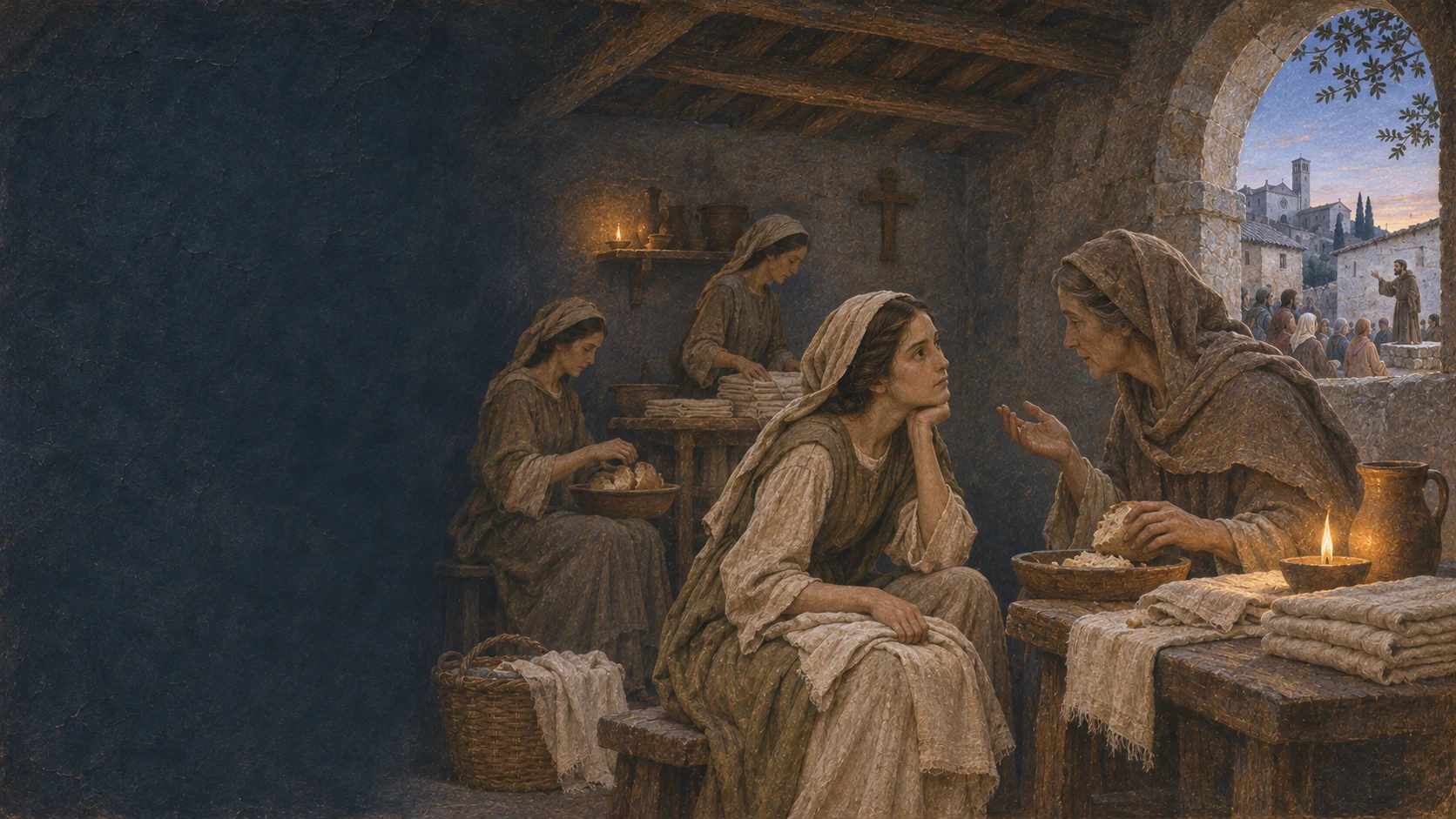
When Clare heard of Francis
Before the meeting, there was news: a young man from Assisi had abandoned prestige and begun to live the Gospel among the poor and lepers.
Read now →Fame, preaching, and discernment · c. 1206–121108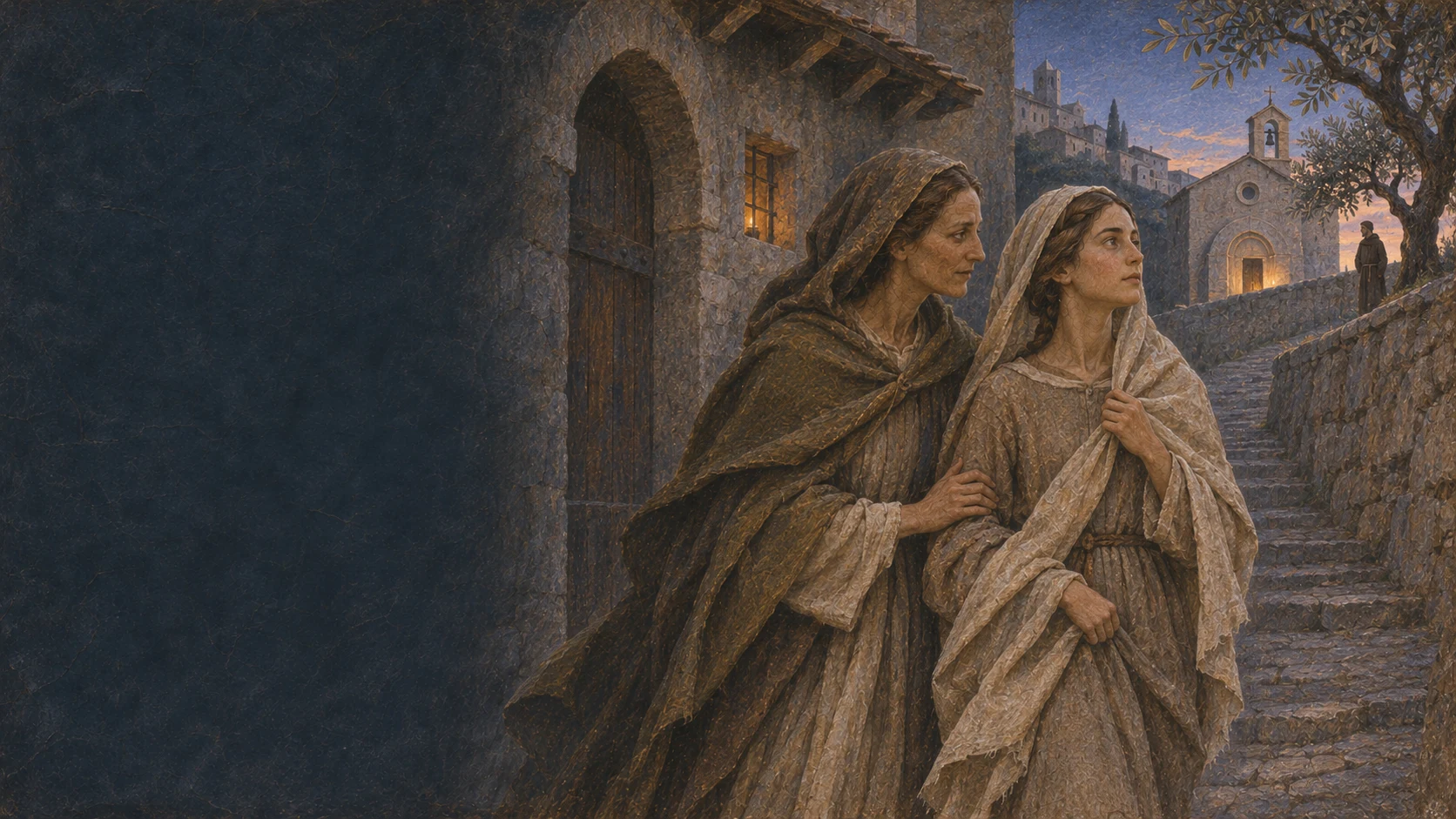
Bona of Guelfuccio keeps the secret
Next to Clare, before the decisive night, there was another woman. Bona accompanied her to meetings, carried out acts of charity, and decades later testified under oath.
Read now →Women's friendship, testimony, and secrecy · c. 1210–1212 and testimony of 125309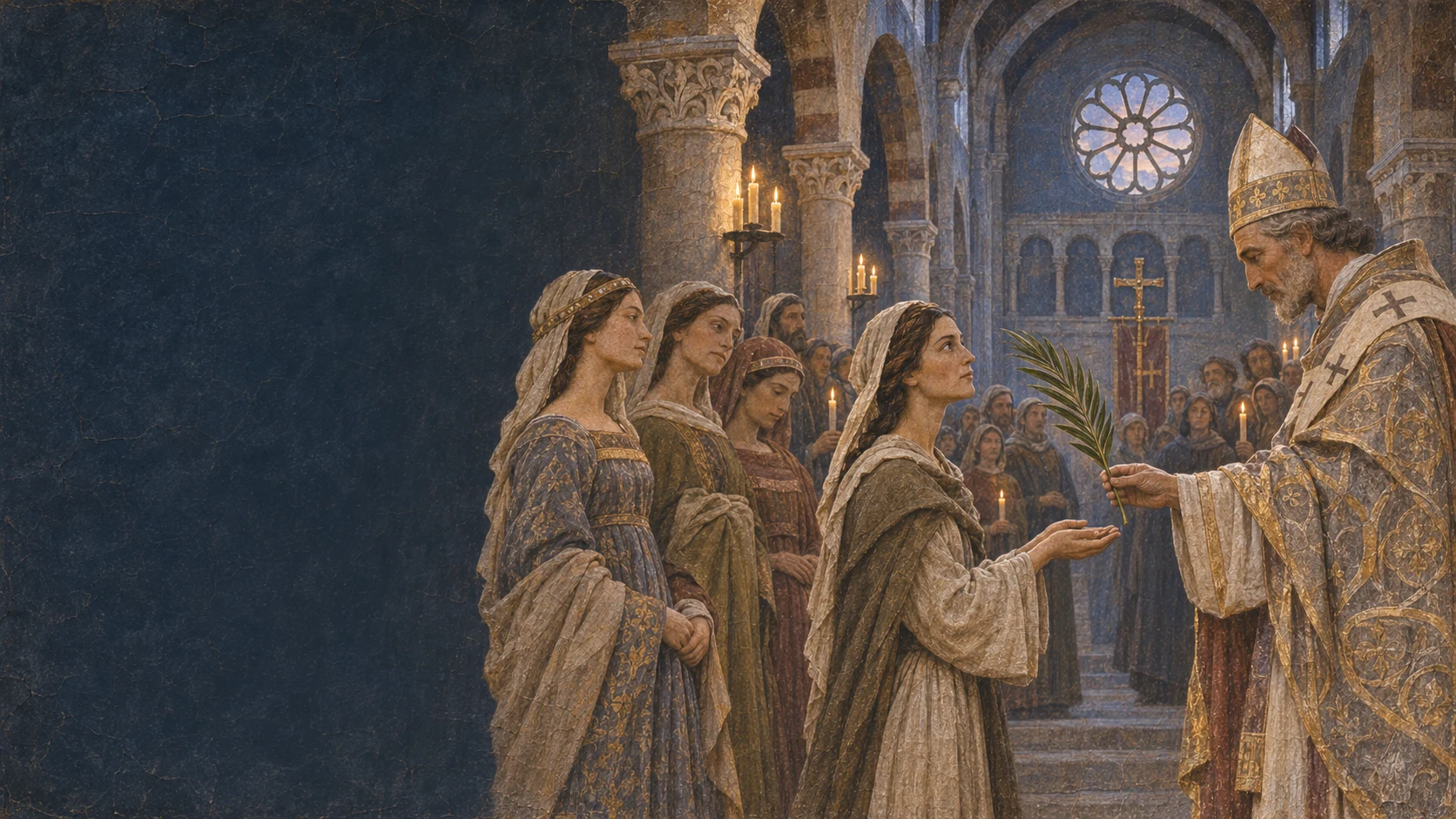
The palm received from the bishop
On Palm Sunday, Clare entered San Rufino dressed as a young noblewoman. A small gesture by Bishop Guido became the public sign before the secret exit.
Read now →Liturgy, authority and sign of passage · Palm Sunday, 1211 or 121210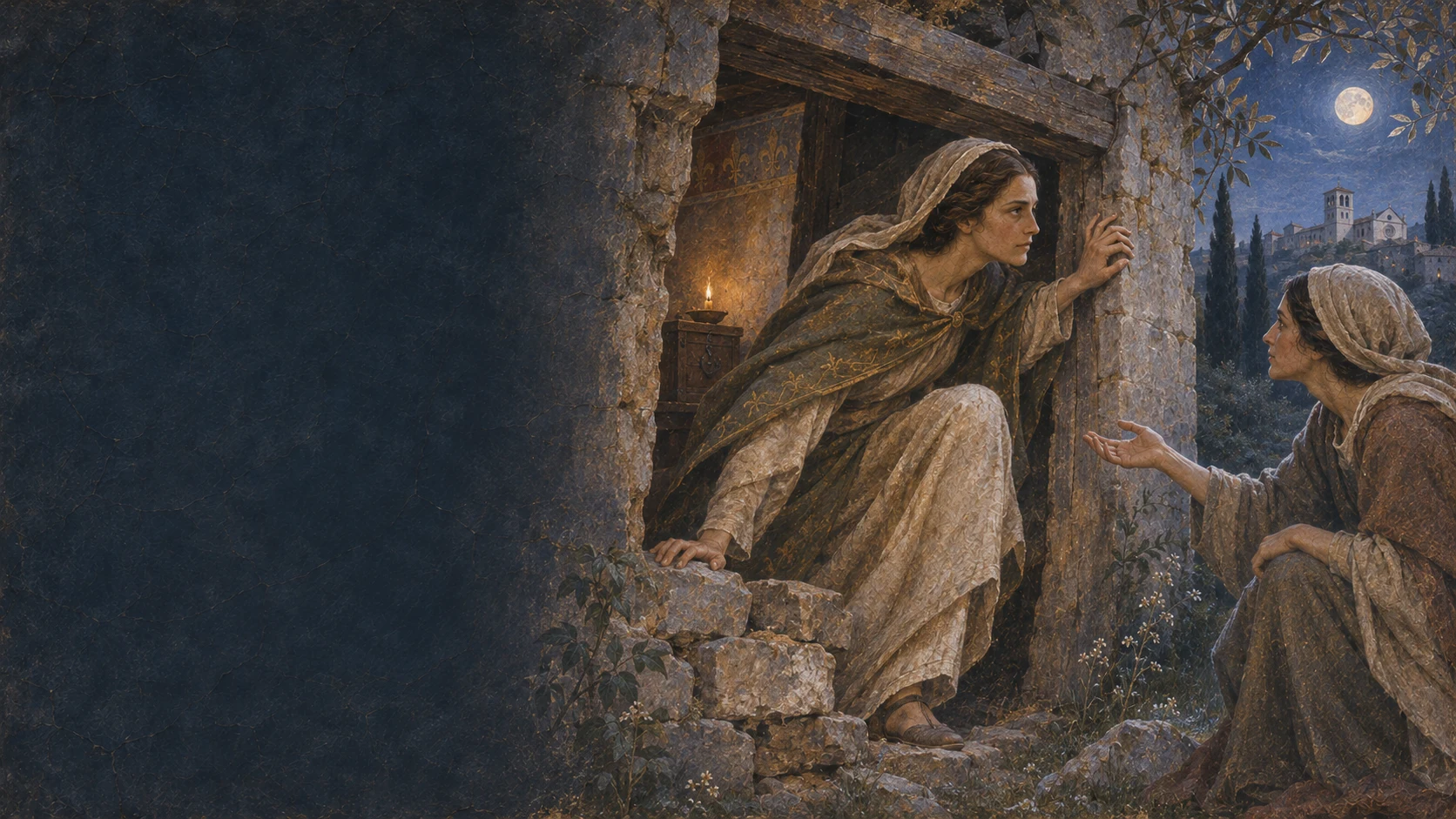
The door of the house and the open night
Clare did not leave through the main passage. The Legend speaks of an obstructed passage that she opened by herself; centuries later, tradition would call it the door of the dead.
Read now →Rupture, tradition, and bodily choice · the night of Palm Sunday, 1211 or 121211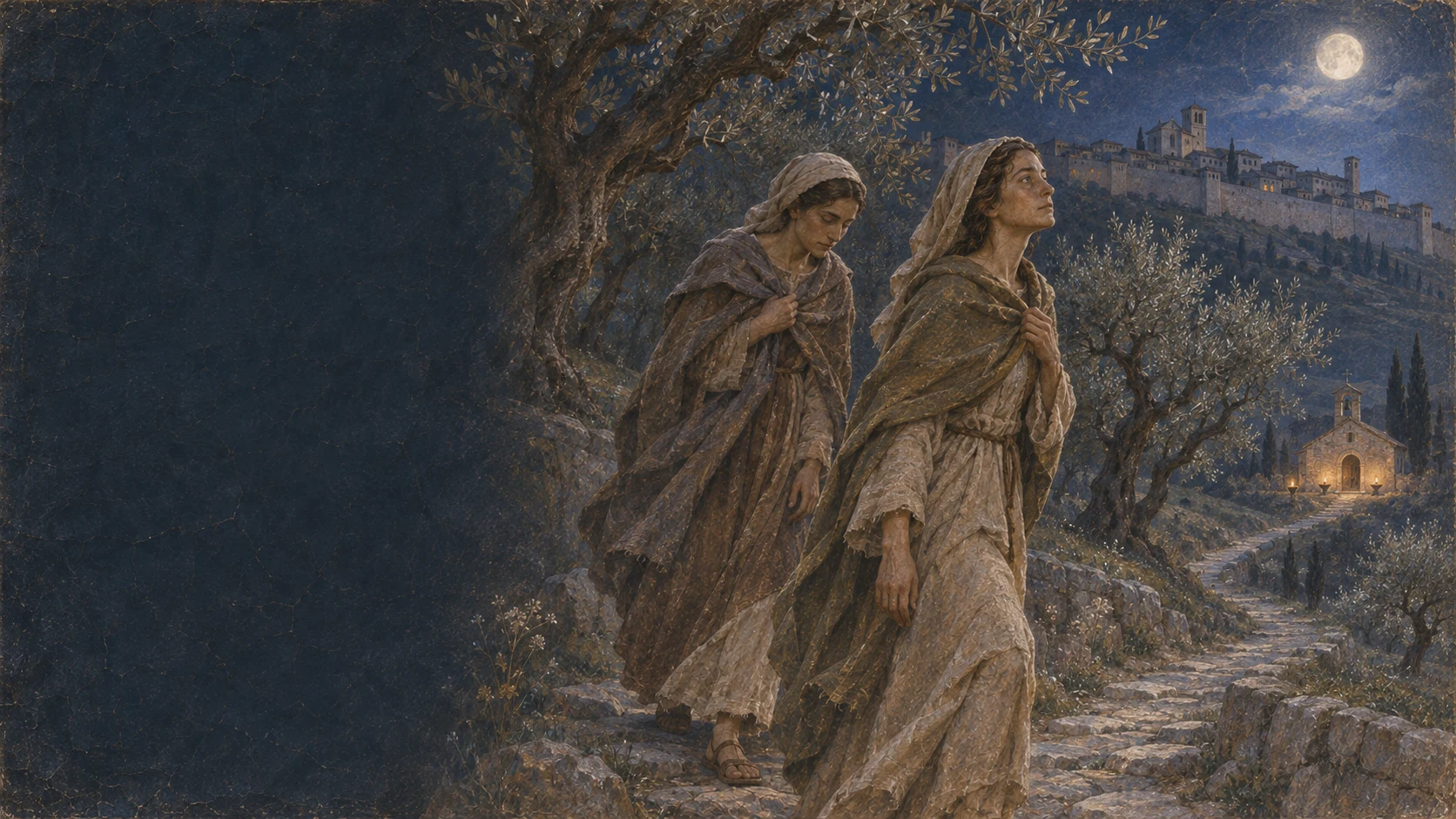
The walk to the Porziuncola
Between the house of the Offreduccio and the small church in the valley lay darkness, a downward slope, and a real distance. Clare's journey was prayer made with her feet.
Read now →Geography, companionship, and decision · the night of Palm Sunday, 1211 or 121212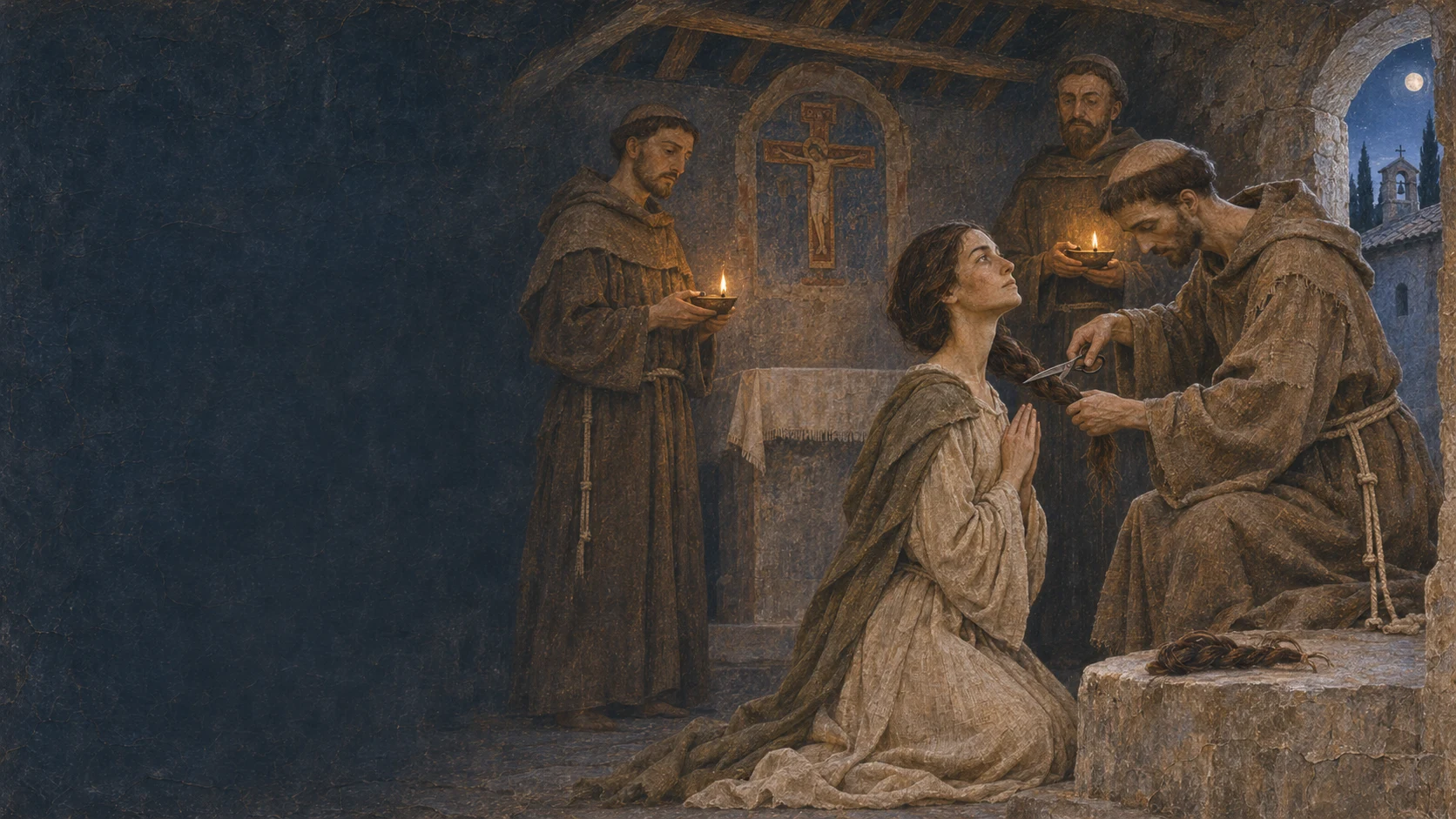
The hair upon the stone
In the small Porziuncola, Francis cut Clare's hair and she exchanged her noble clothing for penitential dress. It was not a gesture about beauty, but a public change of belonging.
Read now →Body, consecration and belonging · the night of Palm Sunday, 1211 or 121213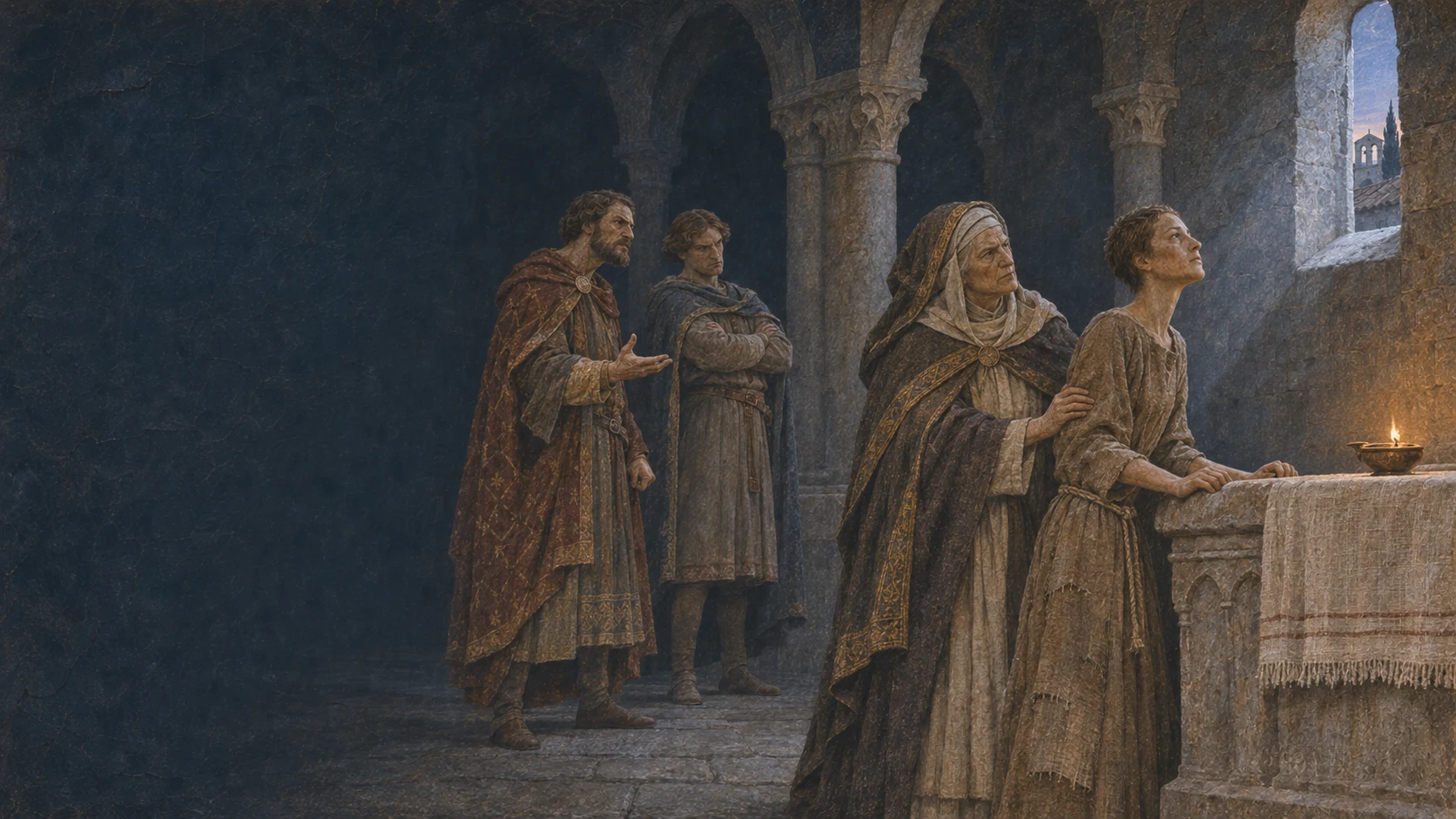
San Paolo of the Abbesses: the first refuge
After the night at the Portiuncula, Clare did not go straight to San Damiano. A Benedictine monastery became her first shelter and the place of a decisive confrontation.
Read now →Refuge, protection, and family resistance · Holy Week of 1212 · first refuge after the Portiuncula14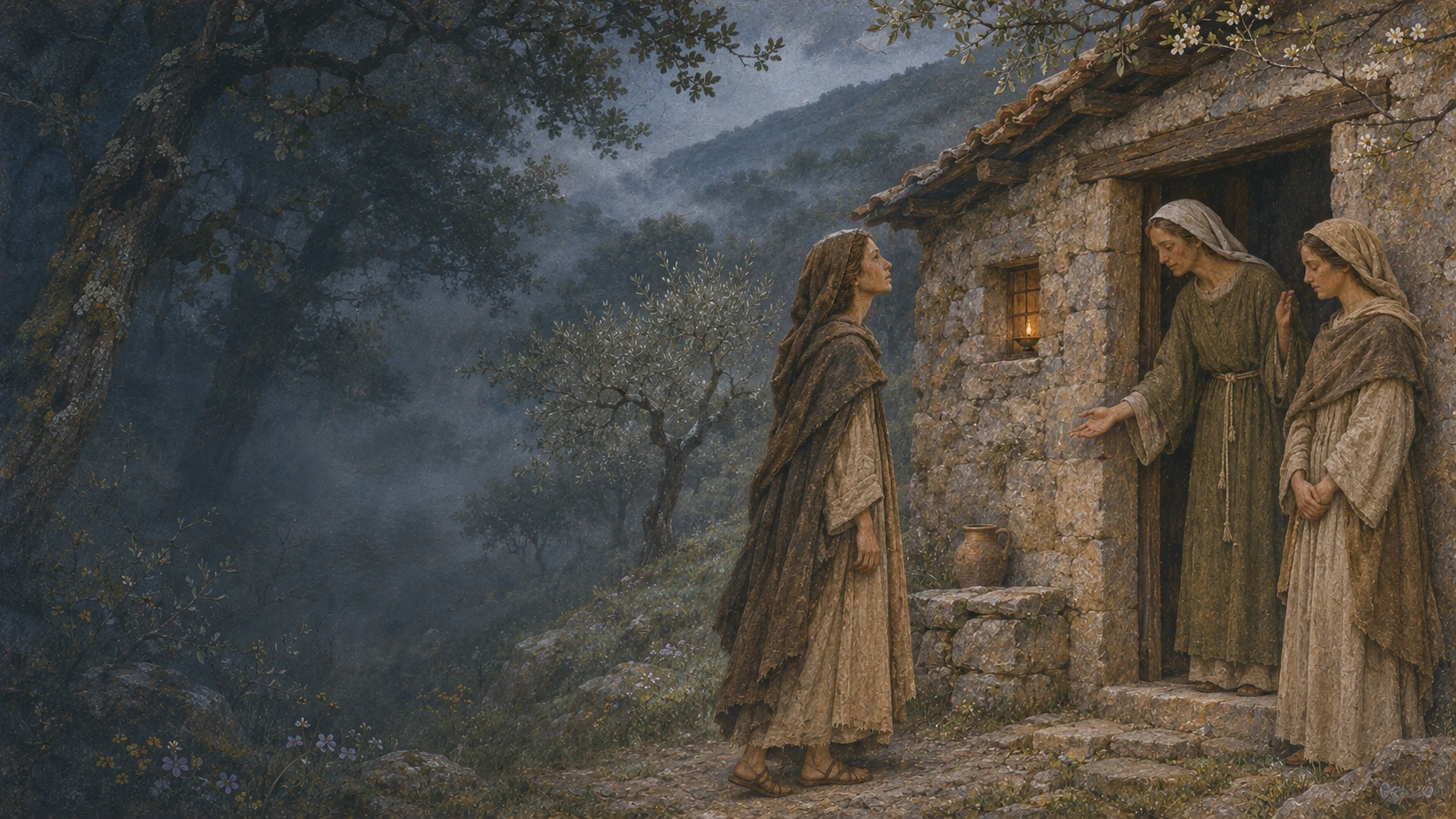
Sant’Angelo di Panzo
Between her first refuge and her lasting home, Clare found another shelter. Panzo holds a decisive passage and questions the sources cannot answer.
Read now →Women's hospitality and the uncertainties of Panzo · c. 1211–1212 · second shelter15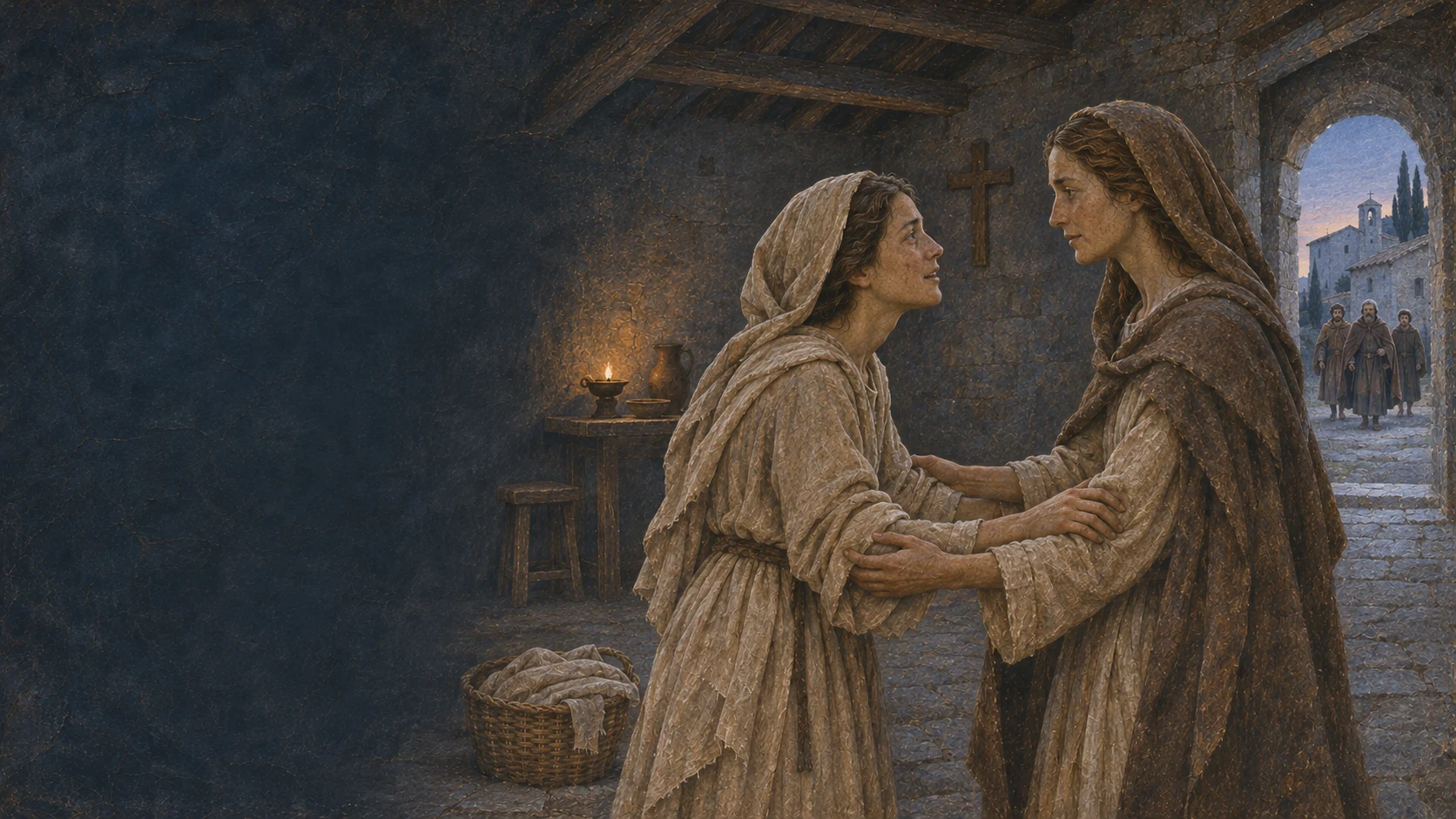
Catherine crosses the same doorway
Clare's sister also chose to leave. The memory of Agnes brings together courage, family violence, and a story of protection that must be read in its different layers.
Read now →Agnes's choice, the bond between sisters, and family resistance · c. 1211–1212 · Agnes's arrival16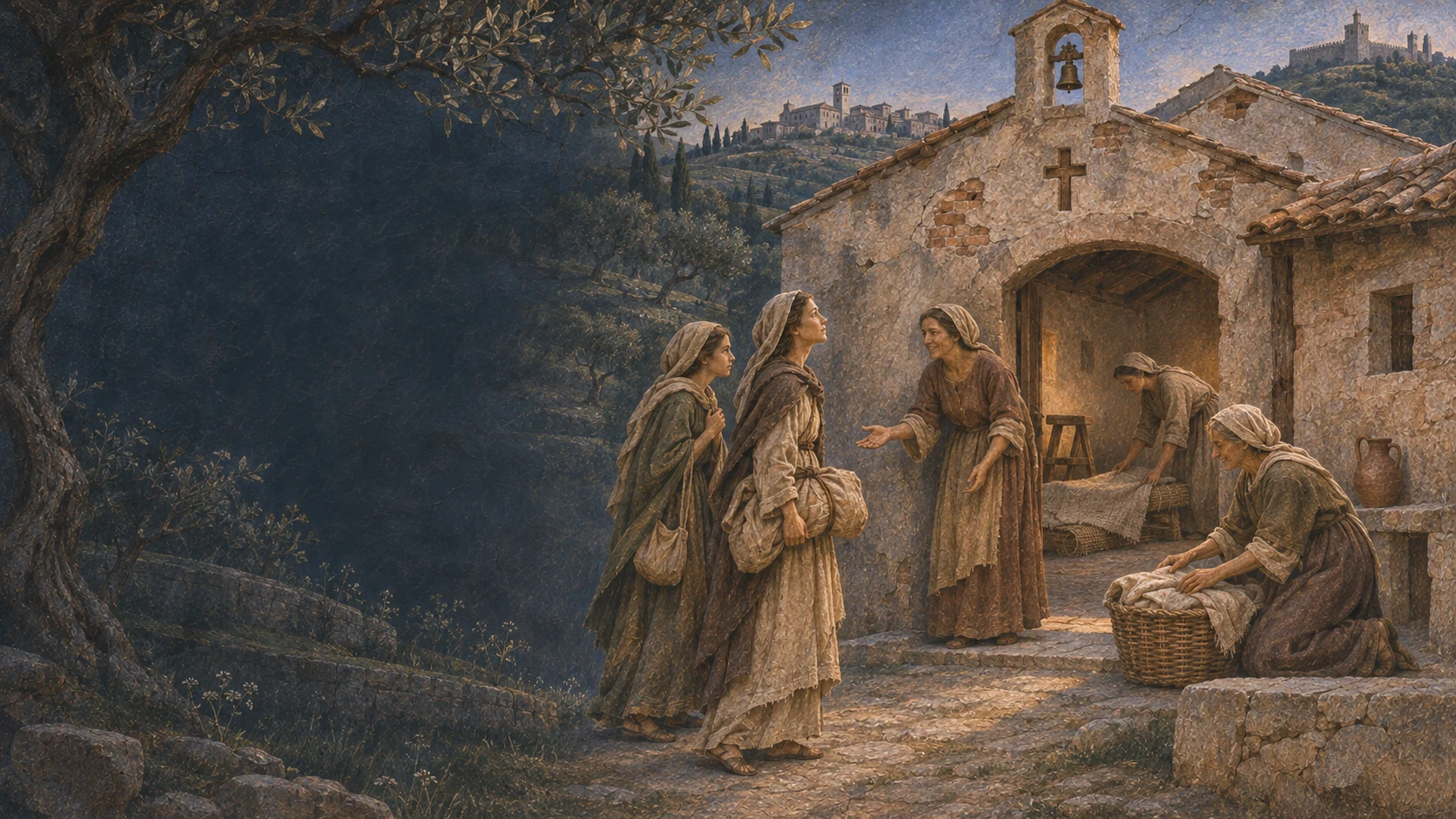
San Damiano becomes home
After temporary shelters, Clare stayed beside the little church of San Damiano. A community began turning a lasting stay into a shared life.
Read now →Place, permanence, and the formation of a community · c. 1211–1212 onward · settling at San Damiano17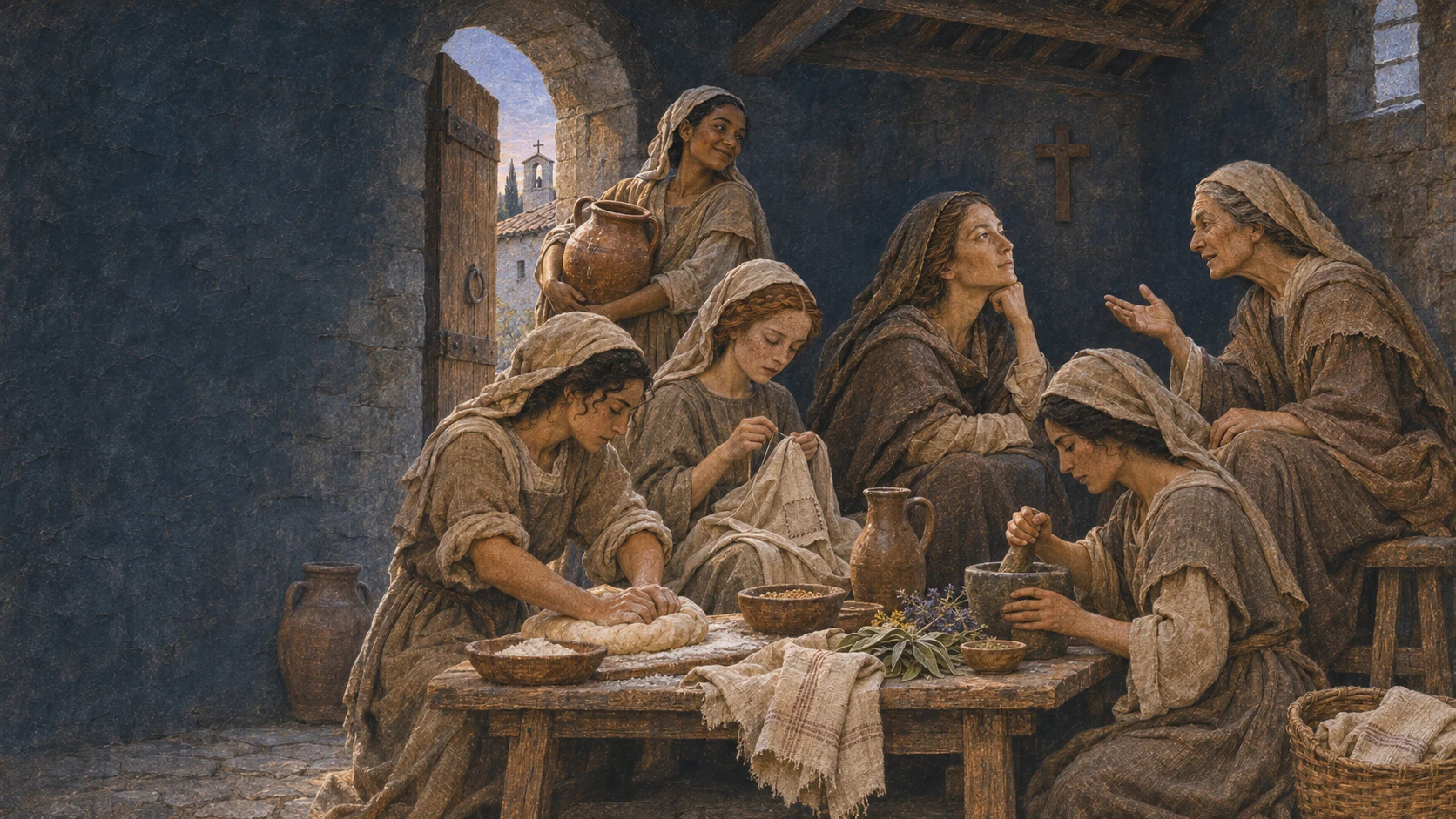
Who were the first sisters
Pacifica, Benvenuta, Philippa, and other women gave voice to life at San Damiano. Their names let us see a community beyond the figure of its founder.
Read now →Named women, origins, and testimony · c. 1211–1253 · first companions and community memory18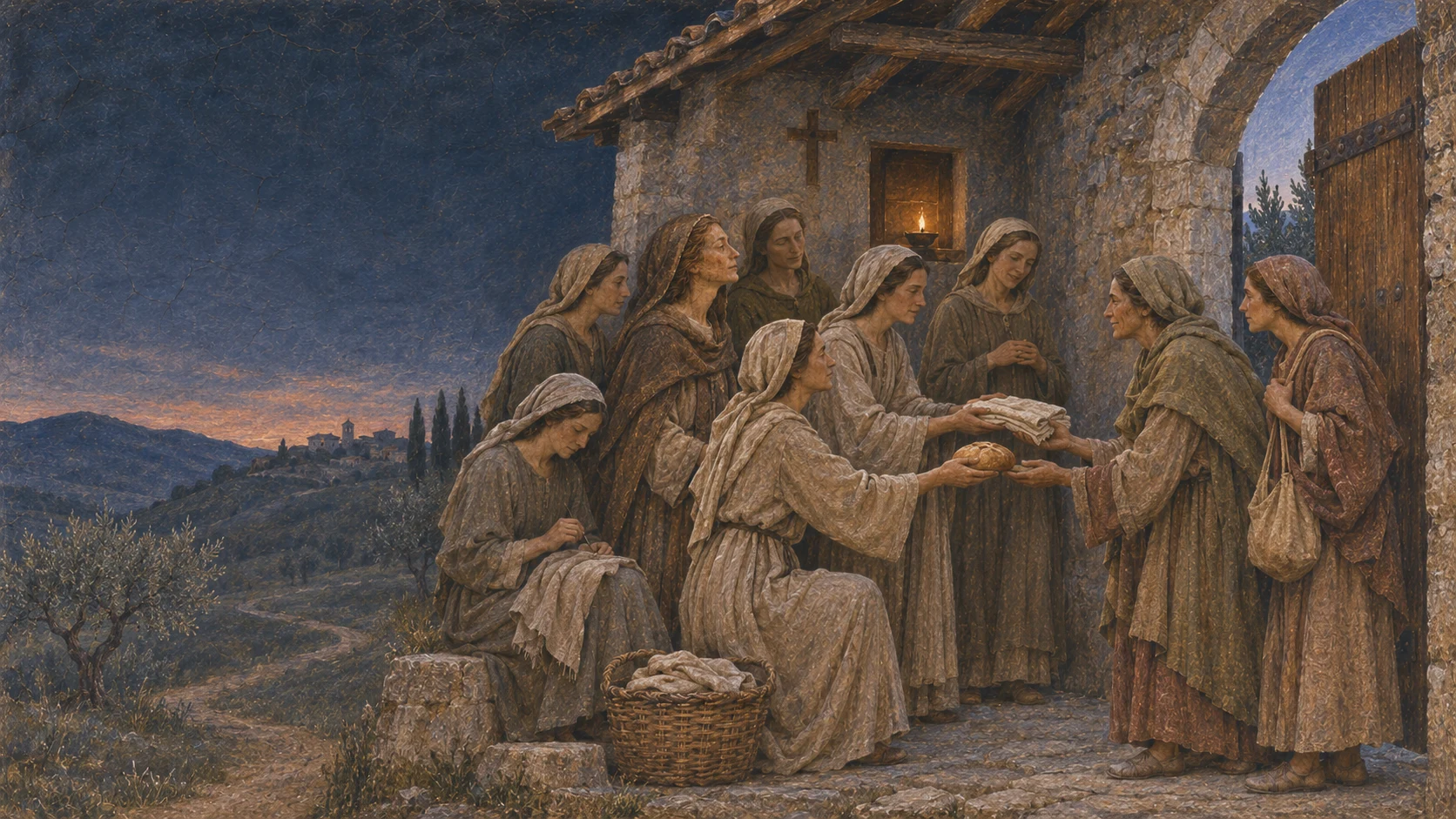
Why they were called Poor Ladies
Before they were known as Poor Clares, the women of San Damiano had different names. Each name reveals a way of understanding their life and their place in the Church.
Read now →Chosen poverty, sisterhood, and identity · Thirteenth century · names and community identity19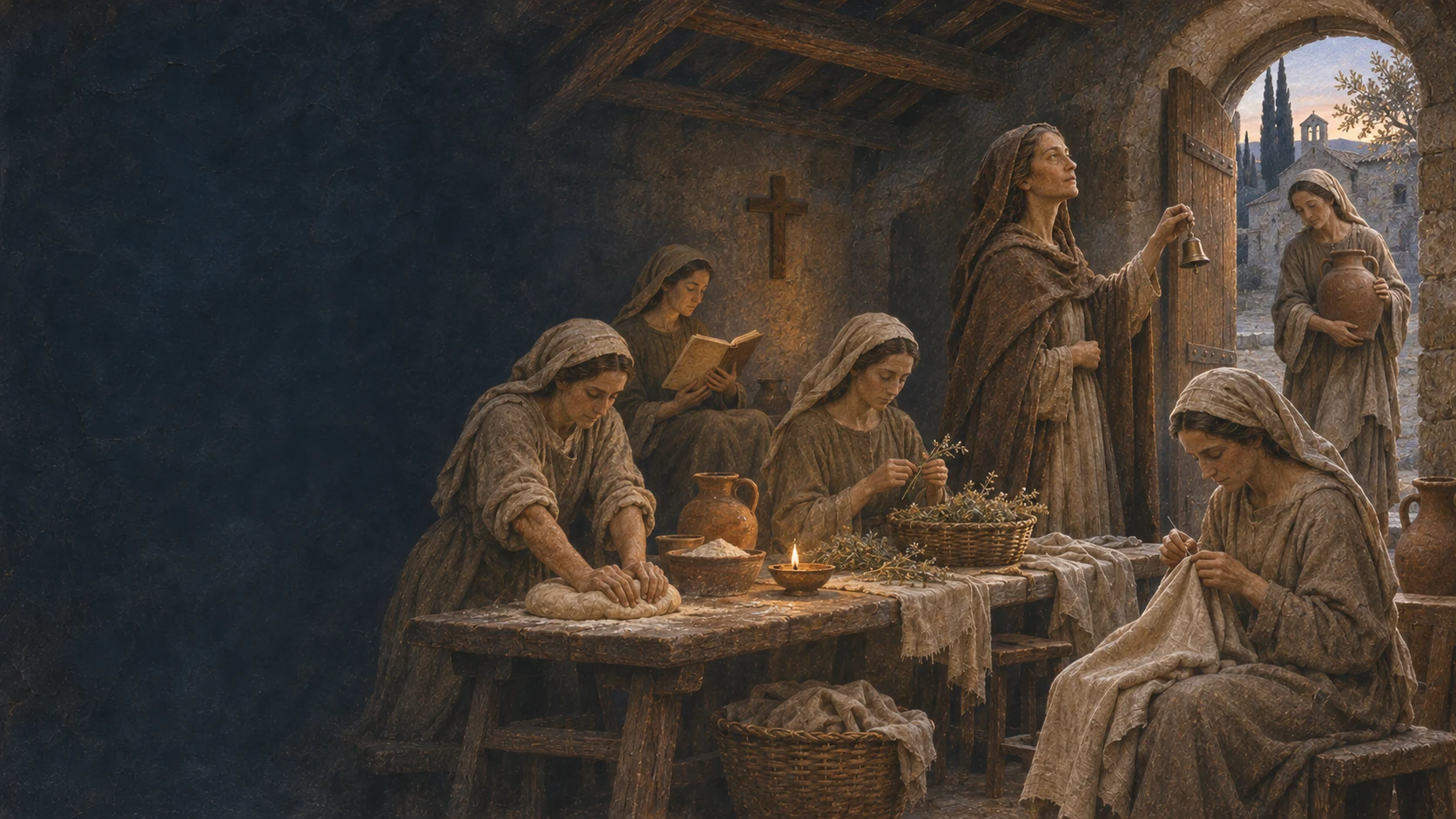
A day inside San Damiano
Prayer, work, food, and rest divided the sisters' time. The Rule helps us explore this routine without promising a diary of a day no one recorded.
Read now →Community time, prayer, work, and needs · San Damiano in the community's mature years · the rule of 1253 as a reference20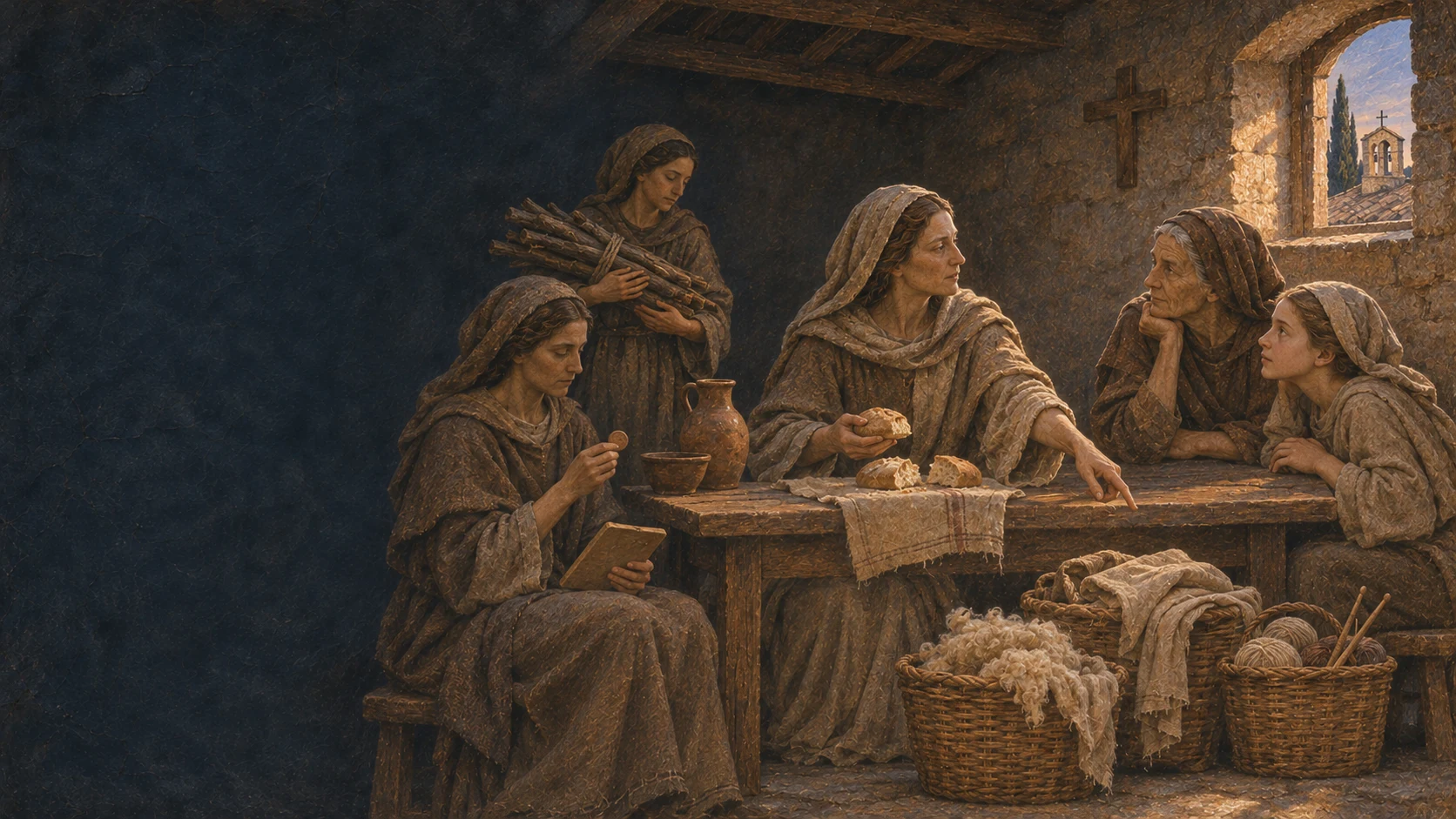
Clare, an abbess against her will
The Legend says that Clare resisted the office of abbess. Her writings show the responsibility she took on: governing, listening, and answering for the sisters' needs.
Read now →Authority, consultation, and responsibility for care · c. 1214–1253 · governing the community21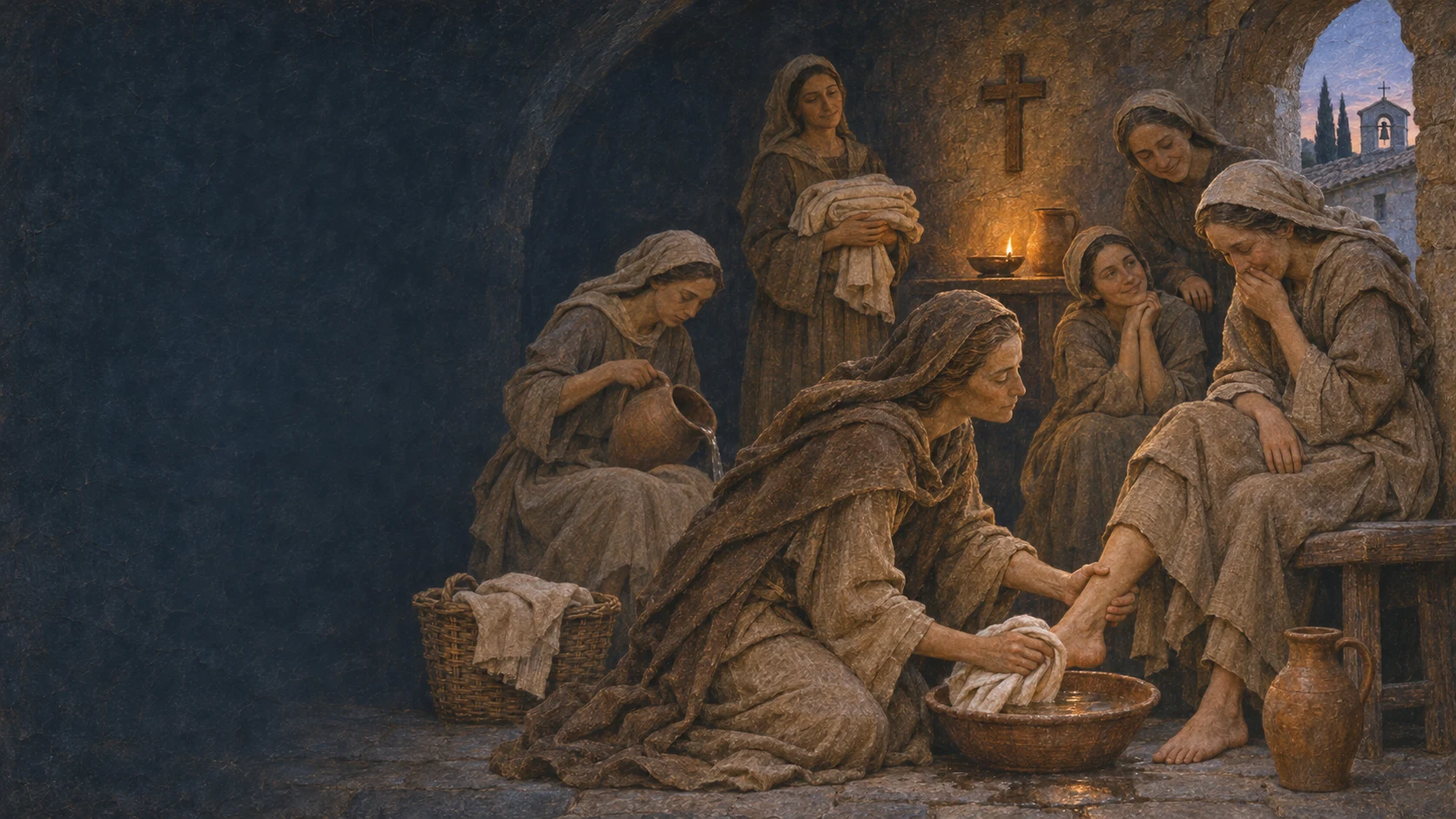
Washing the sisters' feet
Her companions remembered Clare bending over tired feet. The gesture brought together real service, the memory of the Gospel, and the language used to recount a holy life.
Read now →Bodily care, service, and Gospel memory · Community life at San Damiano · memories gathered in 125322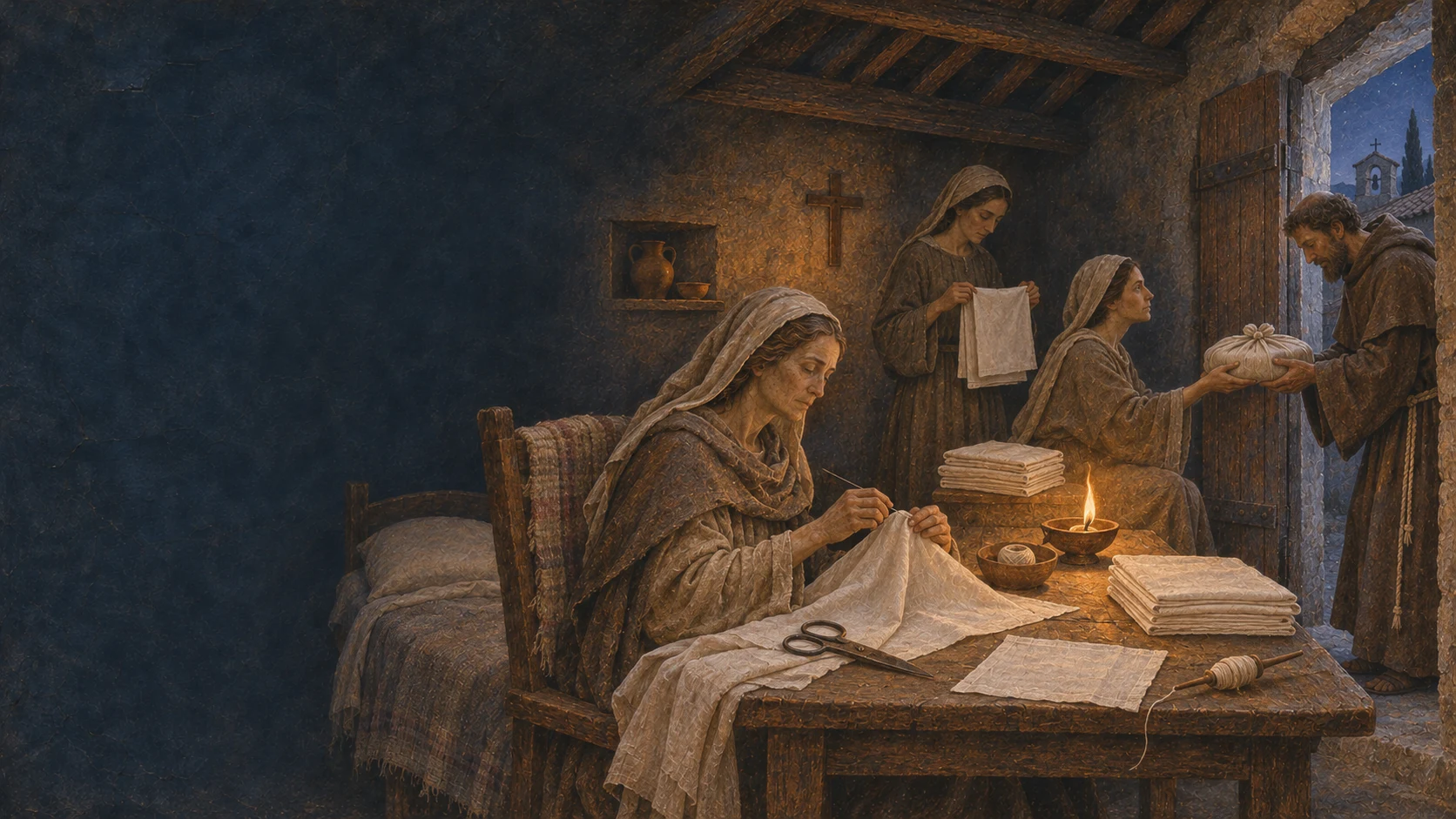
Threads for the churches of Assisi
Even while ill, Clare took part in work that crossed San Damiano's boundaries. From thread to altar cloths, many hands linked the sisters to Assisi's churches.
Read now →Textile work, the Eucharist, and local networks · Decades of illness at San Damiano · work remembered in 125323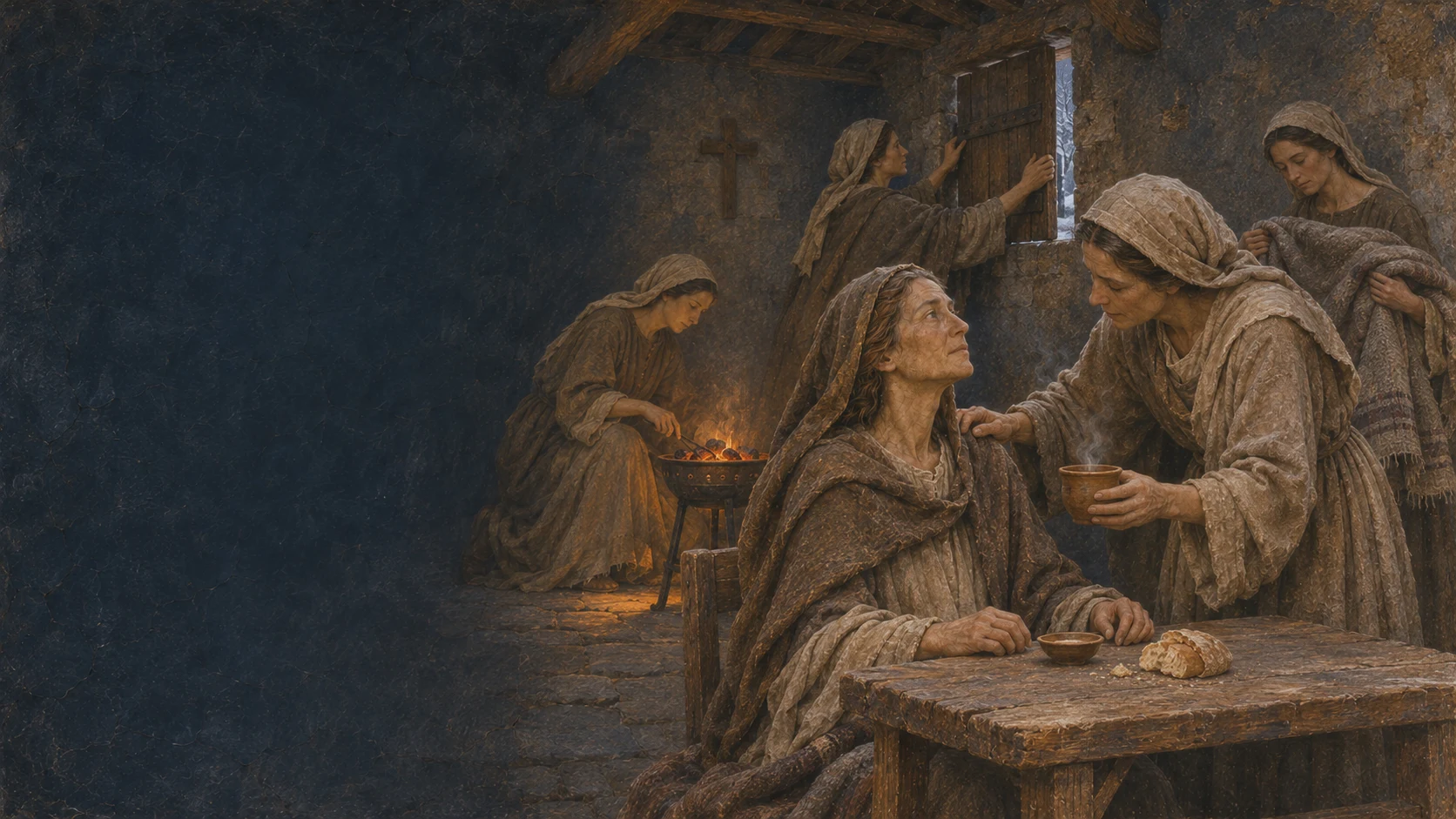
The body pushed to its limit
The testimonies remember severe fasts and the intervention of Francis and the bishop. The story of Clare's body requires understanding medieval penance without hiding its cost.
Read now →Fasting, discernment, and care of the body · Early religious years and maturity · penance and bodily limits24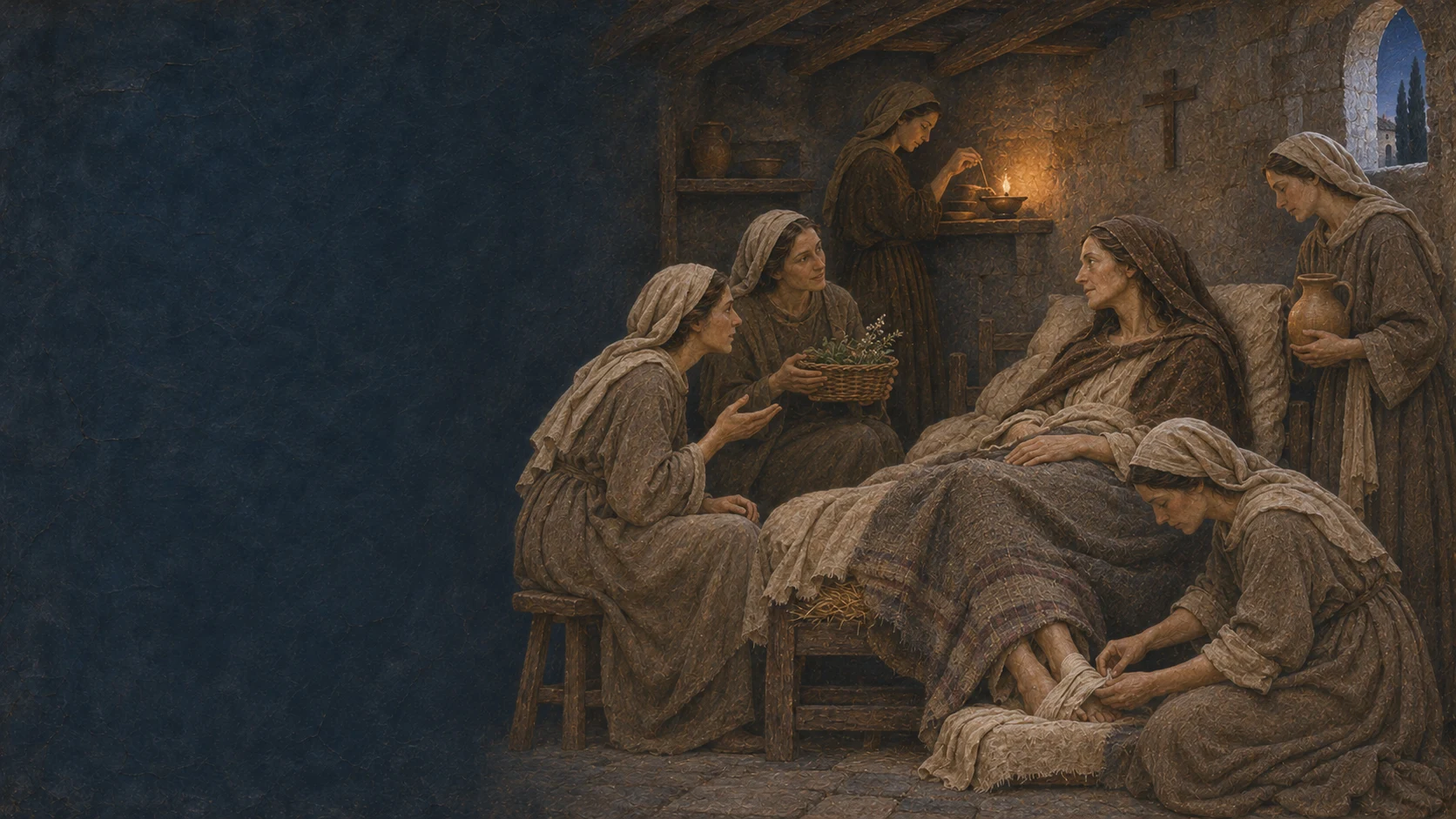
An infirmary that lasted decades
Illness accompanied Clare through much of her adult life. Her bed changed her participation in the house, while the sisters built a long history of care.
Read now →Dependence, leadership, and community care · c. 1224–1225 to 1253 · prolonged illness25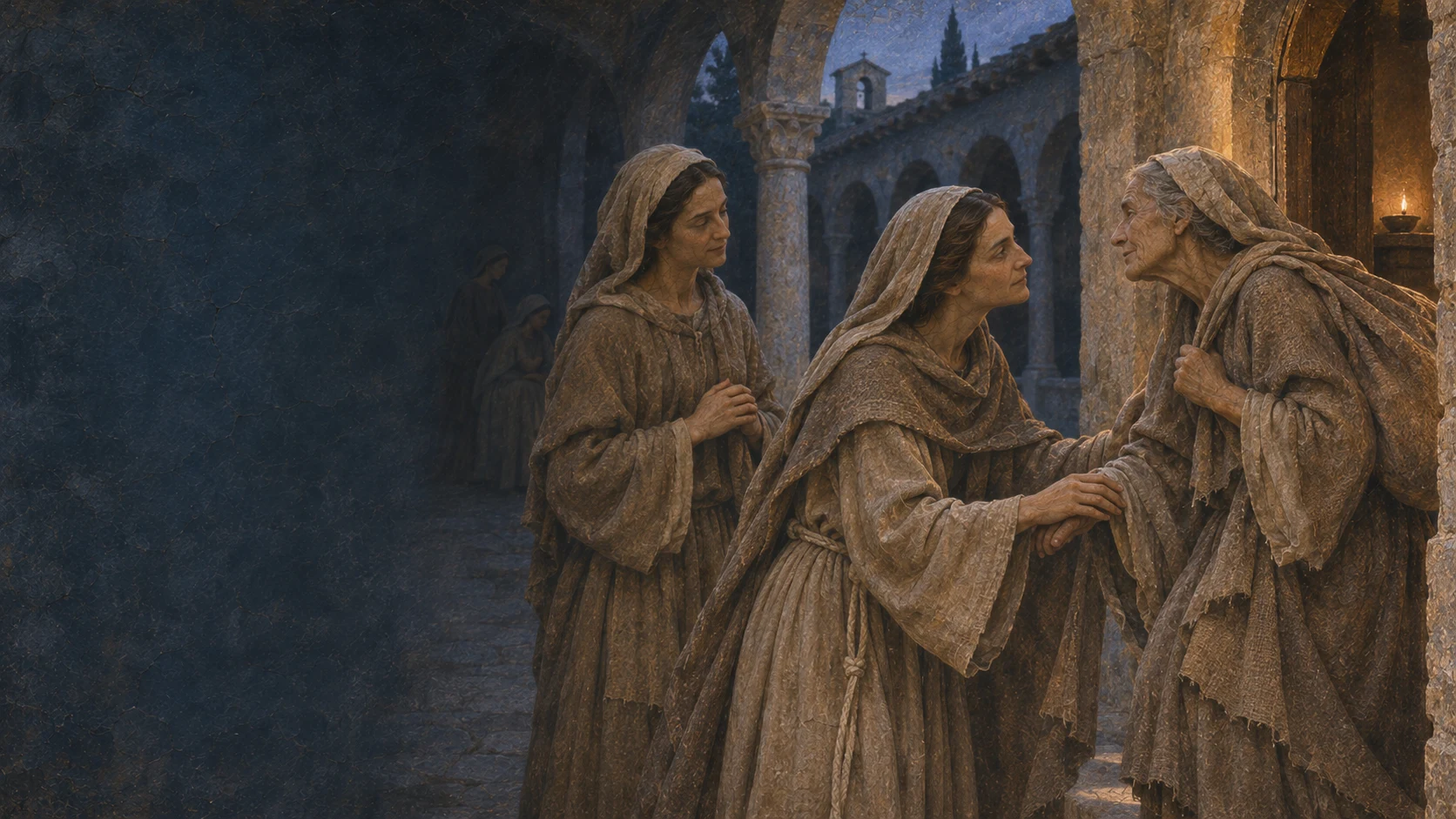
When Ortolana Came to San Damiano
Years after seeing Clare leave the family home, Ortolana passed through the gate of San Damiano to live among the poor women alongside her own daughters.
Read now →Ortolana, motherhood and kinship at San Damiano · First half of the 13th century · exact date unknown26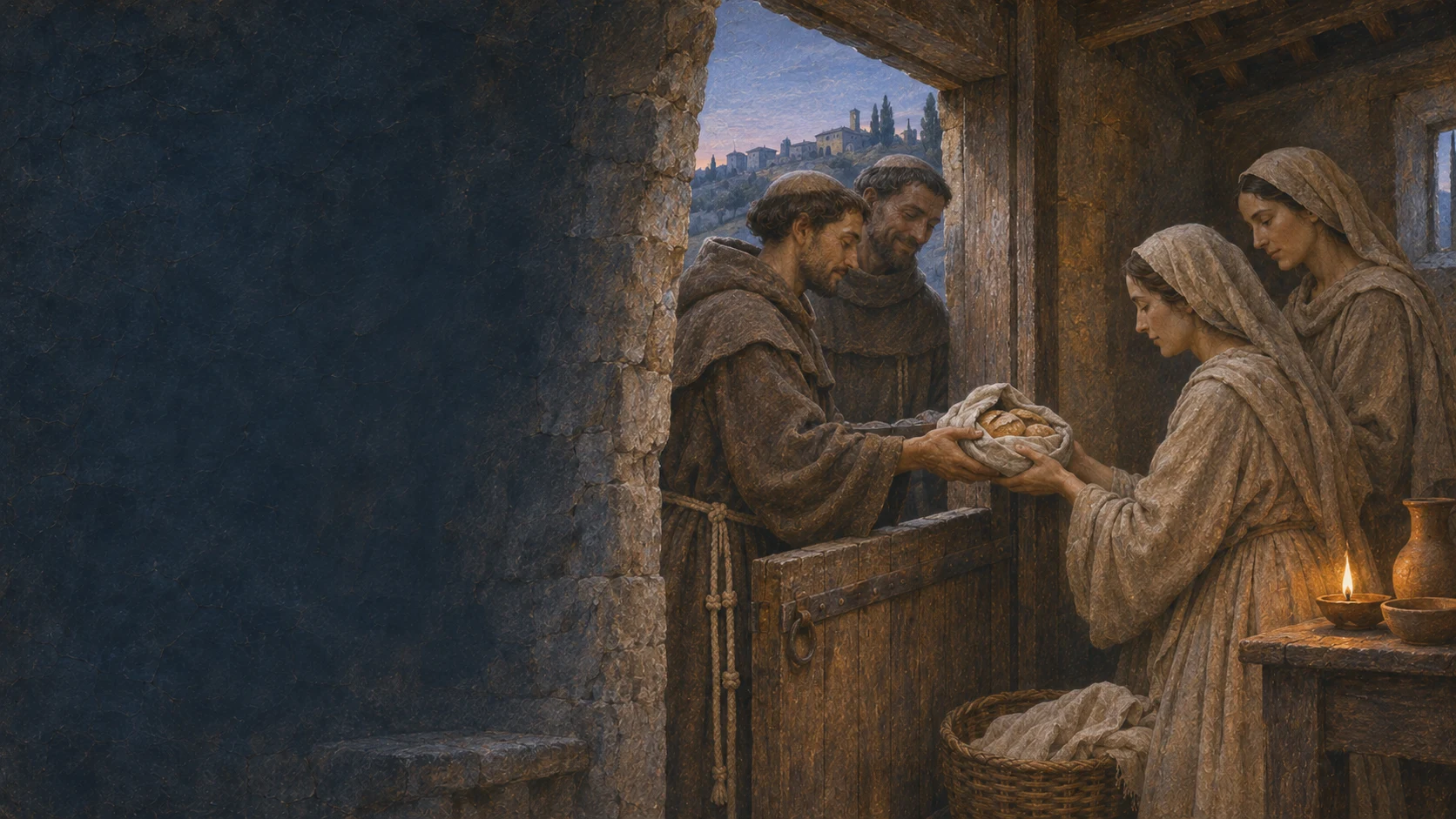
Brothers Outside, Sisters Inside
San Damiano depended on alms, priests and messengers. Its relationship with the friars reveals care, tension and a question: who would support the life Clare had chosen?
Read now →Enclosure, alms, spiritual assistance and mutual dependence · c. 1212–1253 · four decades of relations between San Damiano and the friars27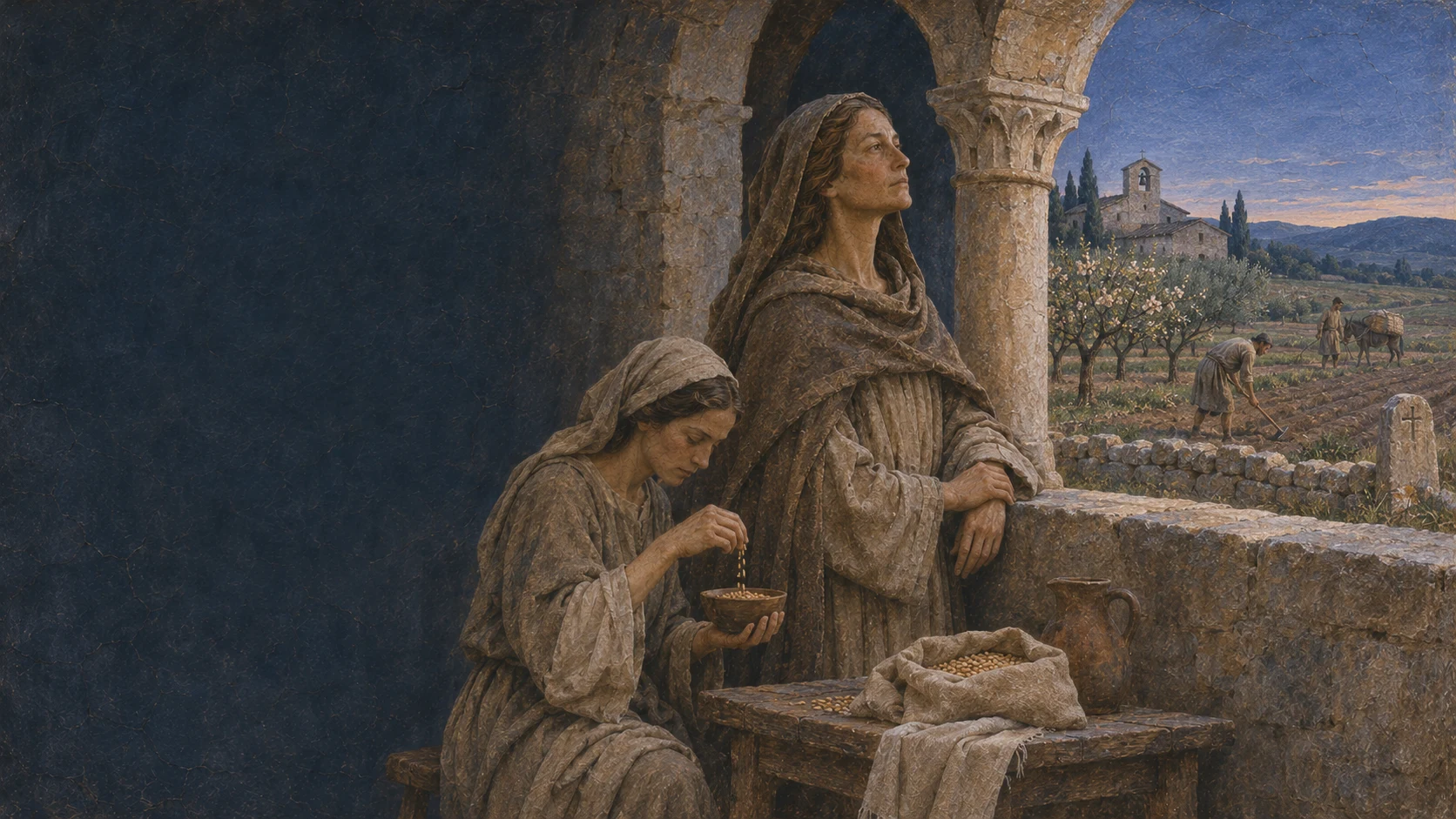
Why a Monastery Needed to Own Land
Clare’s refusal of property only makes sense when we see why land, income and granaries seemed essential to protecting a community of women.
Read now →Monastic property, women’s safety and radical poverty · 13th century · the economy and law of women’s religious communities28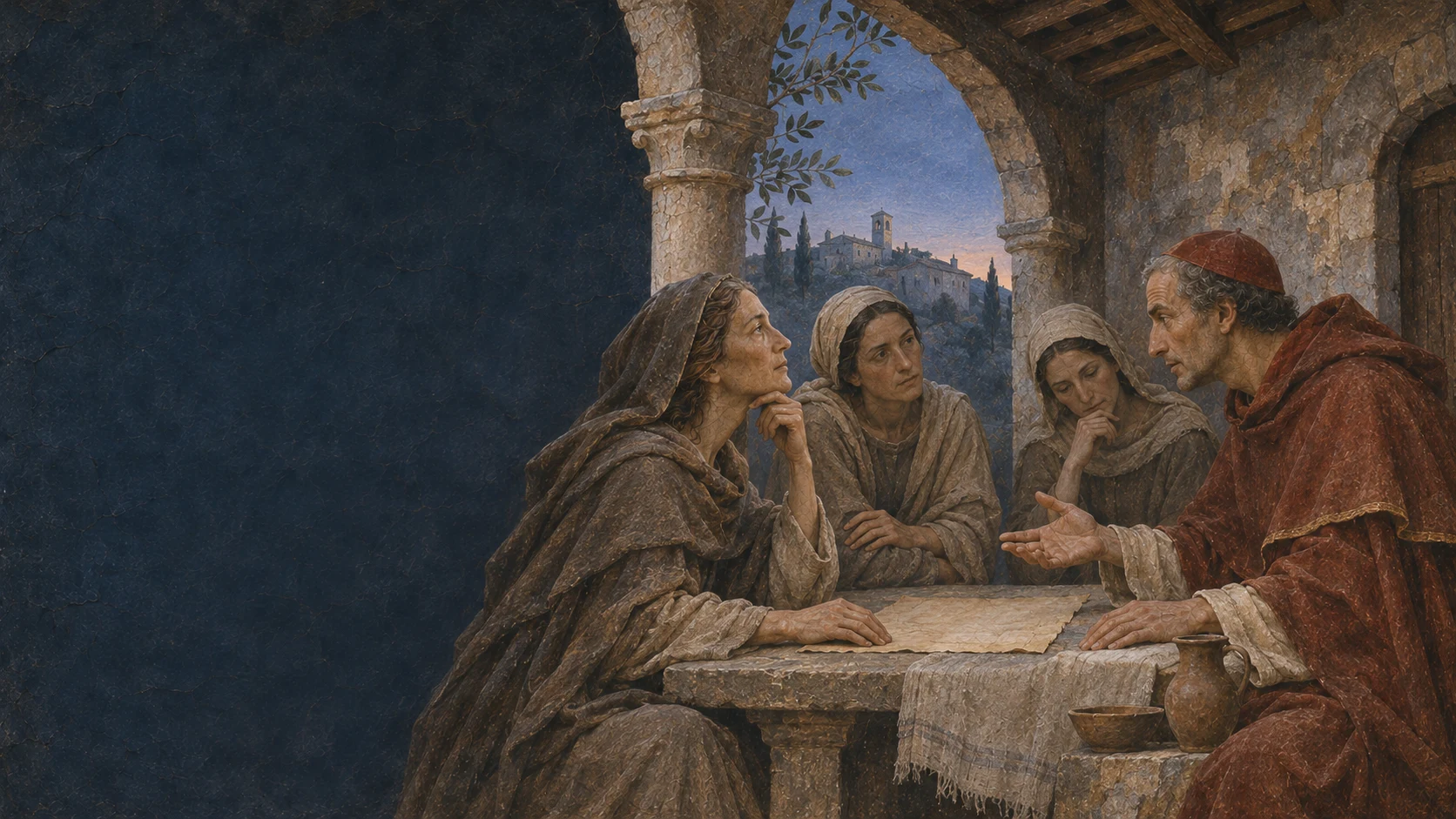
Cardinal Hugolino’s Form of Life
Before becoming Pope Gregory IX, Hugolino tried to organize communities of poor women. His protection brought stability — and rules Clare did not consider sufficient.
Read now →Protection and formal recognition of women’s communities · c. 1218–1219 · papal organization of women’s religious communities29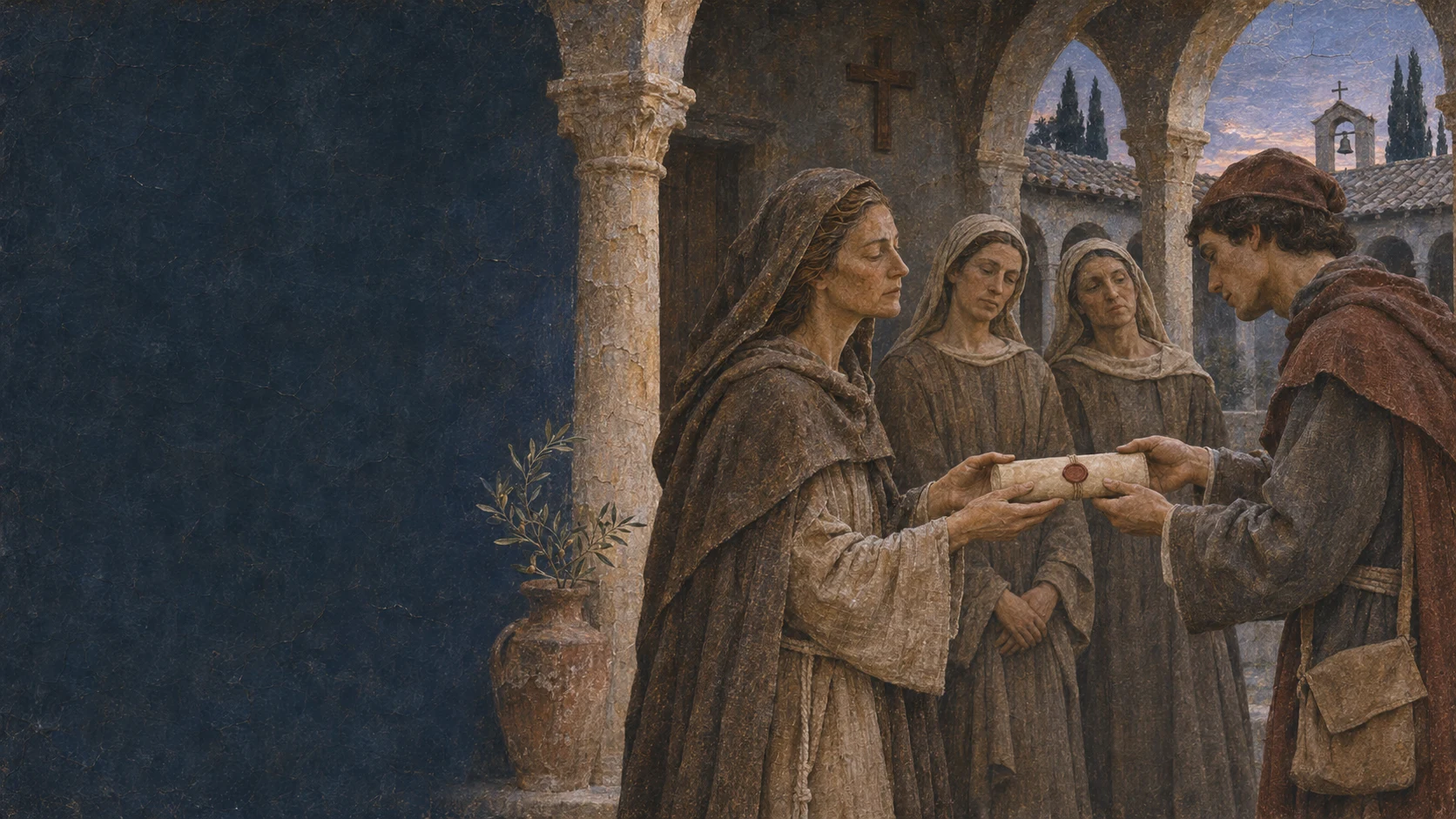
The Privilege of Poverty
Clare asked the Church for an almost paradoxical right: that nobody could force San Damiano to accept land or income. The document of 1228 still preserves that decision.
Read now →The right not to own and the difference between memory and document · 1216? and September 17, 1228 · tradition and a surviving document30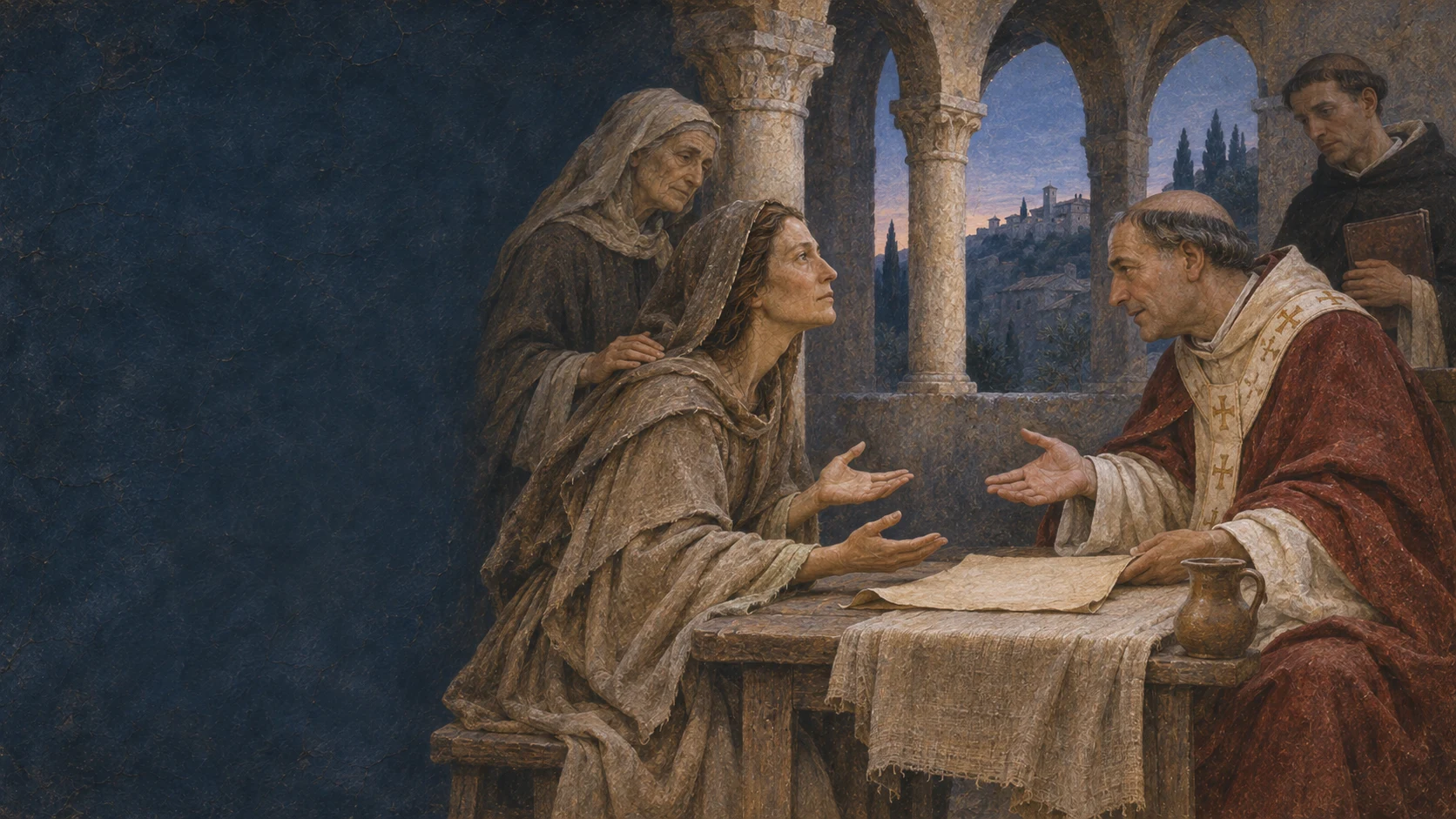
Gregory IX Offers Security
According to tradition, the pope offered to release Clare from her commitment to poverty. Her famous reply sheds light on a real negotiation, but must be read in light of its source.
Read now →Conscience, vows, papal authority and hagiographic tradition · Pontificate of Gregory IX, 1227–124131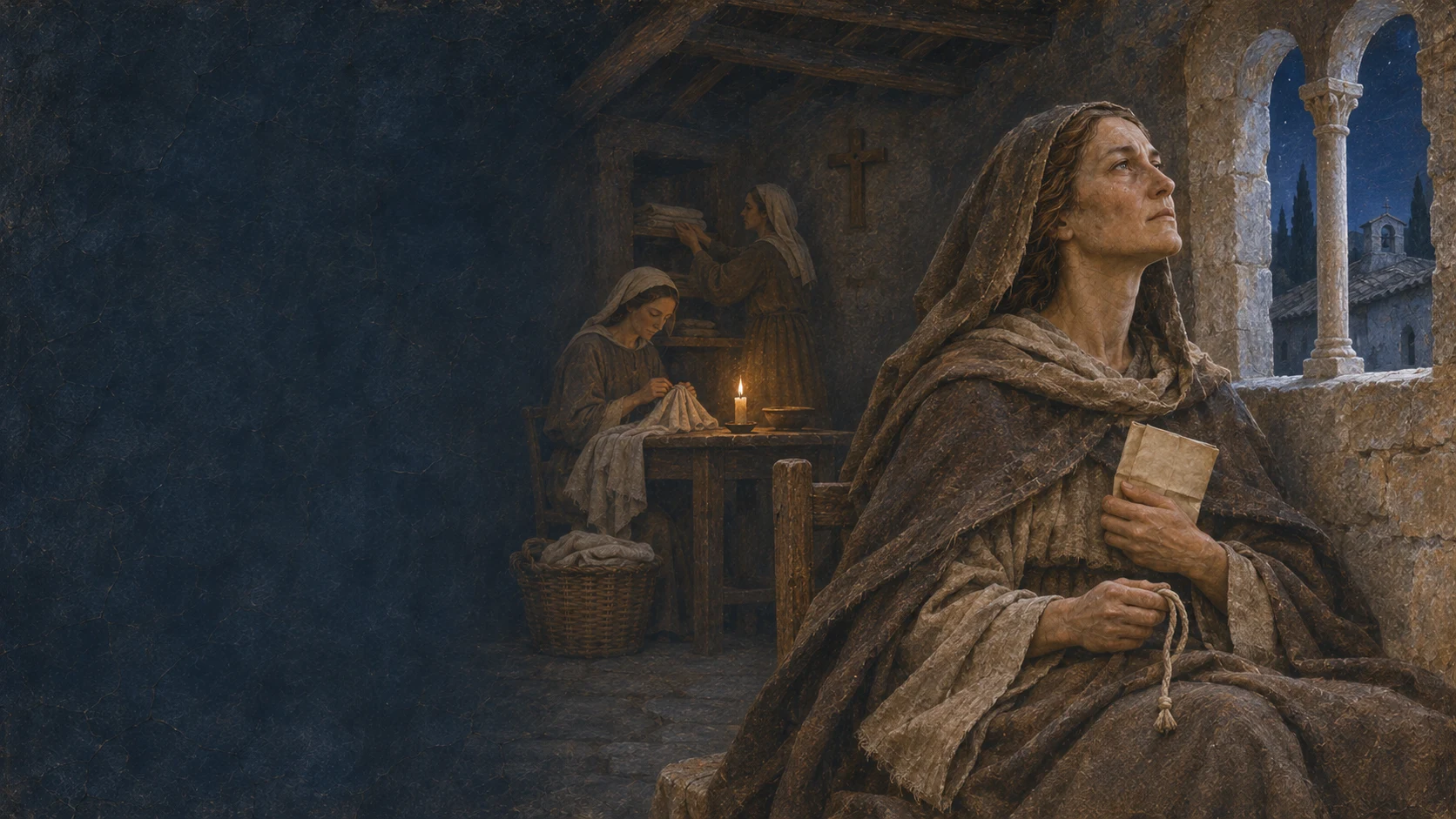
After Francis Died
When Francis died, Clare lost a friend and San Damiano lost a protective presence. What remained were brief words, memories and a fraternity that was beginning to change.
Read now →Grief, memory, autonomy and the community’s future · After October 3, 122632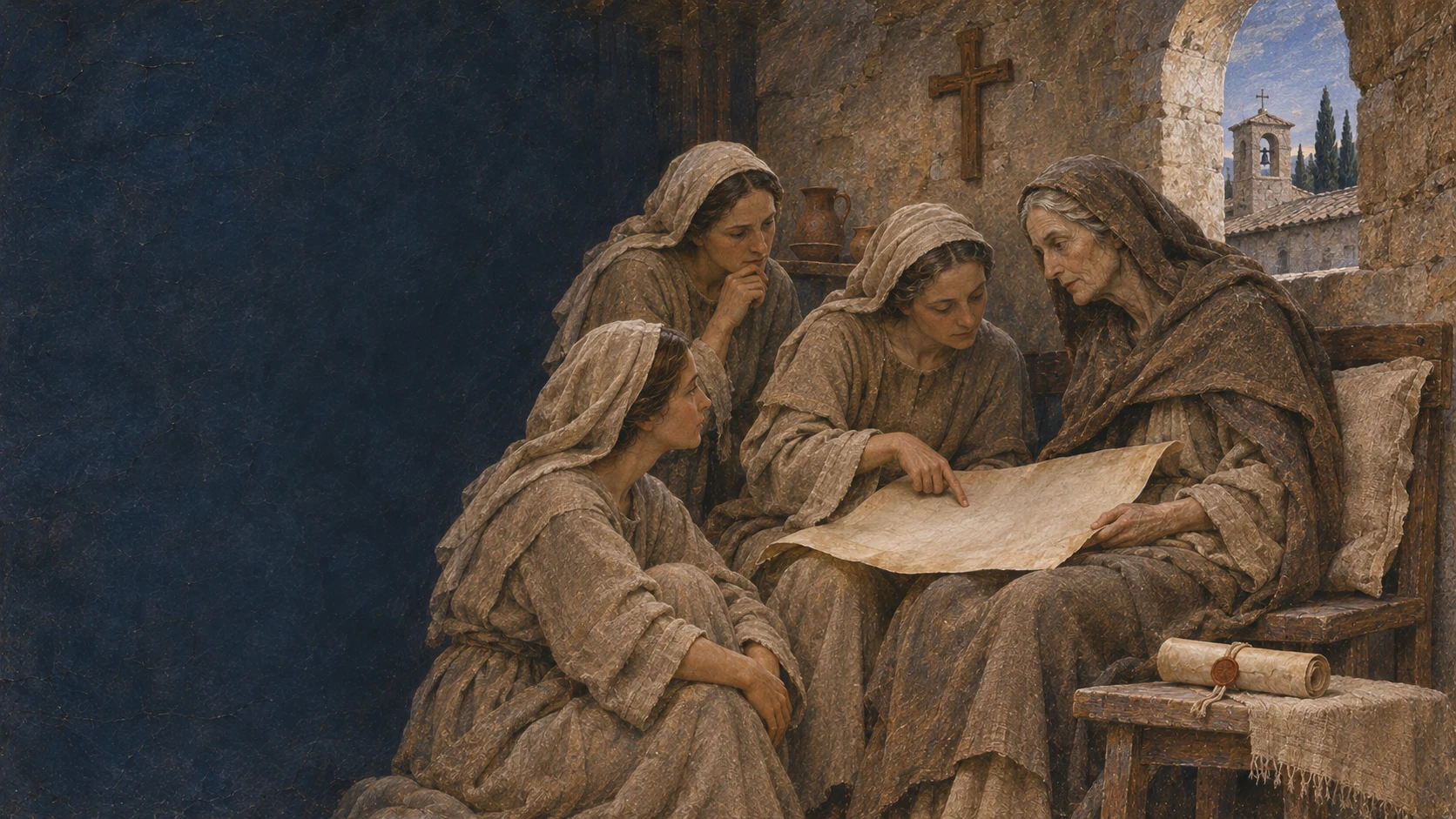
The Rule of Innocent IV
In 1247, a new rule brought women’s communities closer to the friars, but allowed property. For Clare, the solution still threatened the heart of San Damiano.
Read now →The papal attempt to unify and the question of property · August 6, 124733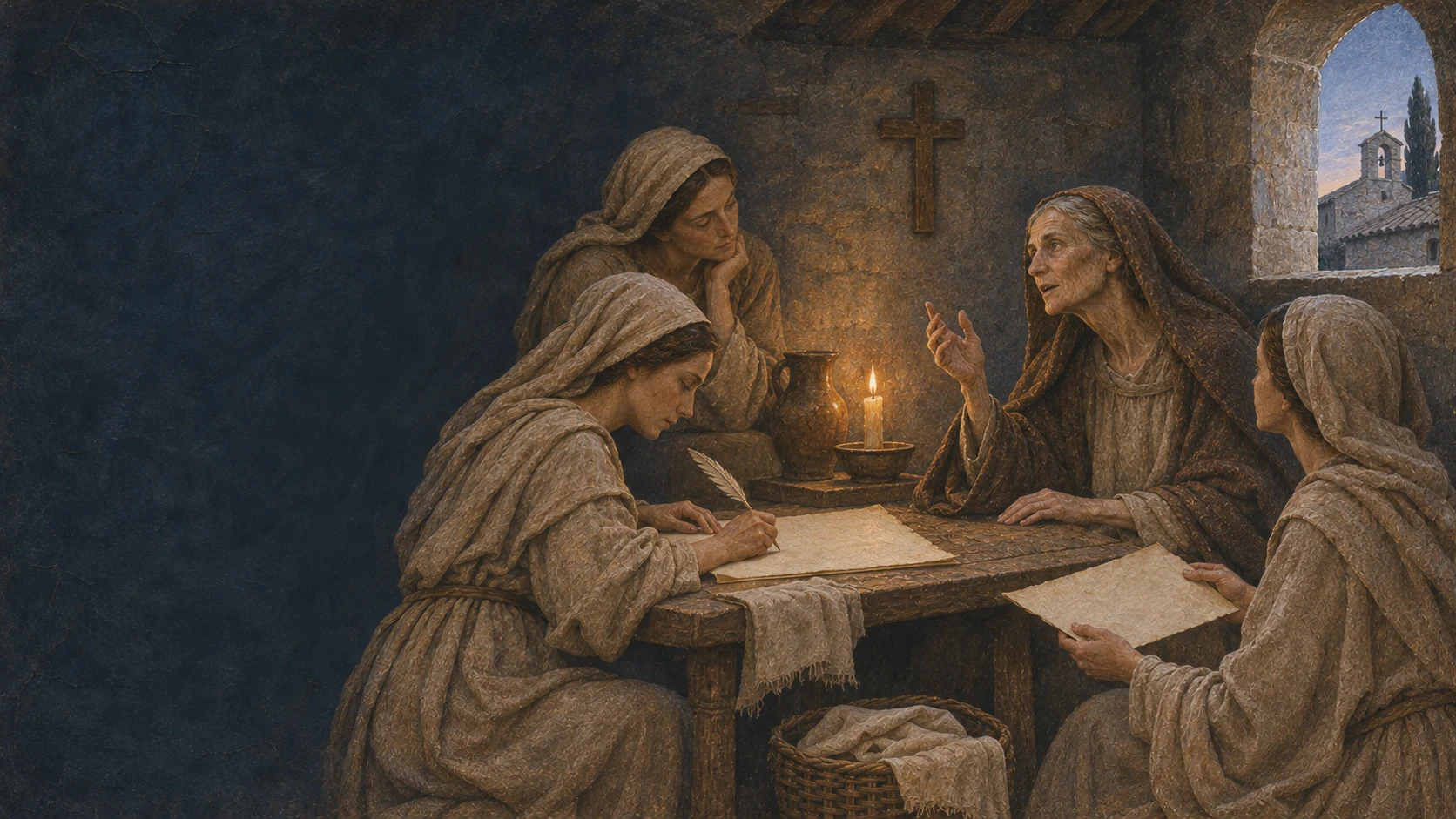
Clare Writes a Rule for Women
After decades of living, negotiating and discerning, Clare put into words a form of life written by a woman for a community of poor women.
Read now →Women’s authorship, Franciscan memory and community government · c. 1247–1253 · composition of the Form of Life34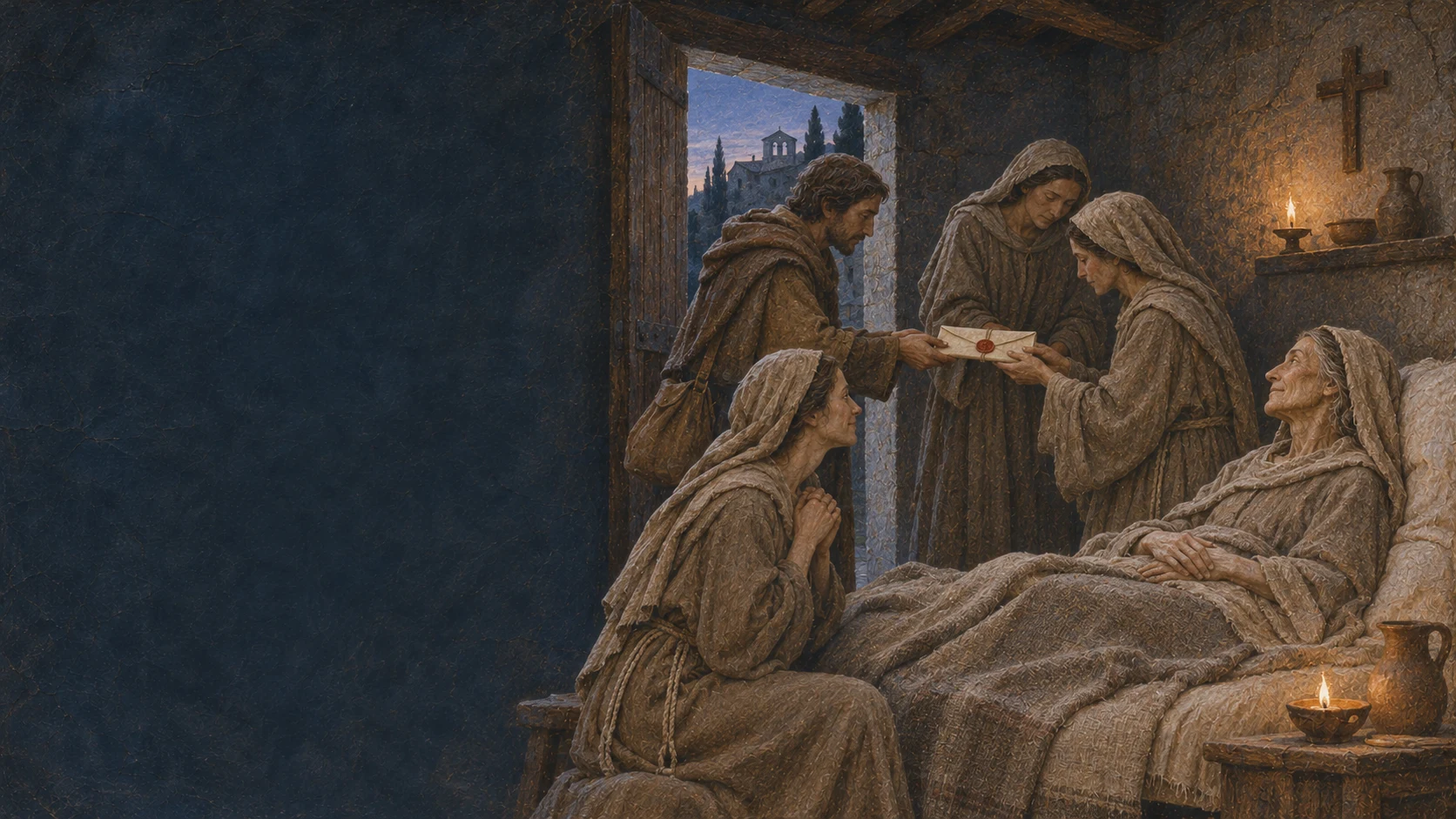
August Ninth, 1253
Two days before Clare’s death, confirmation of her Rule reached San Damiano. The parchment crowned forty years of faithfulness and negotiation.
Read now →The confirmation of the Rule and Clare’s final days · August 9–11, 1253 · Clare’s final days35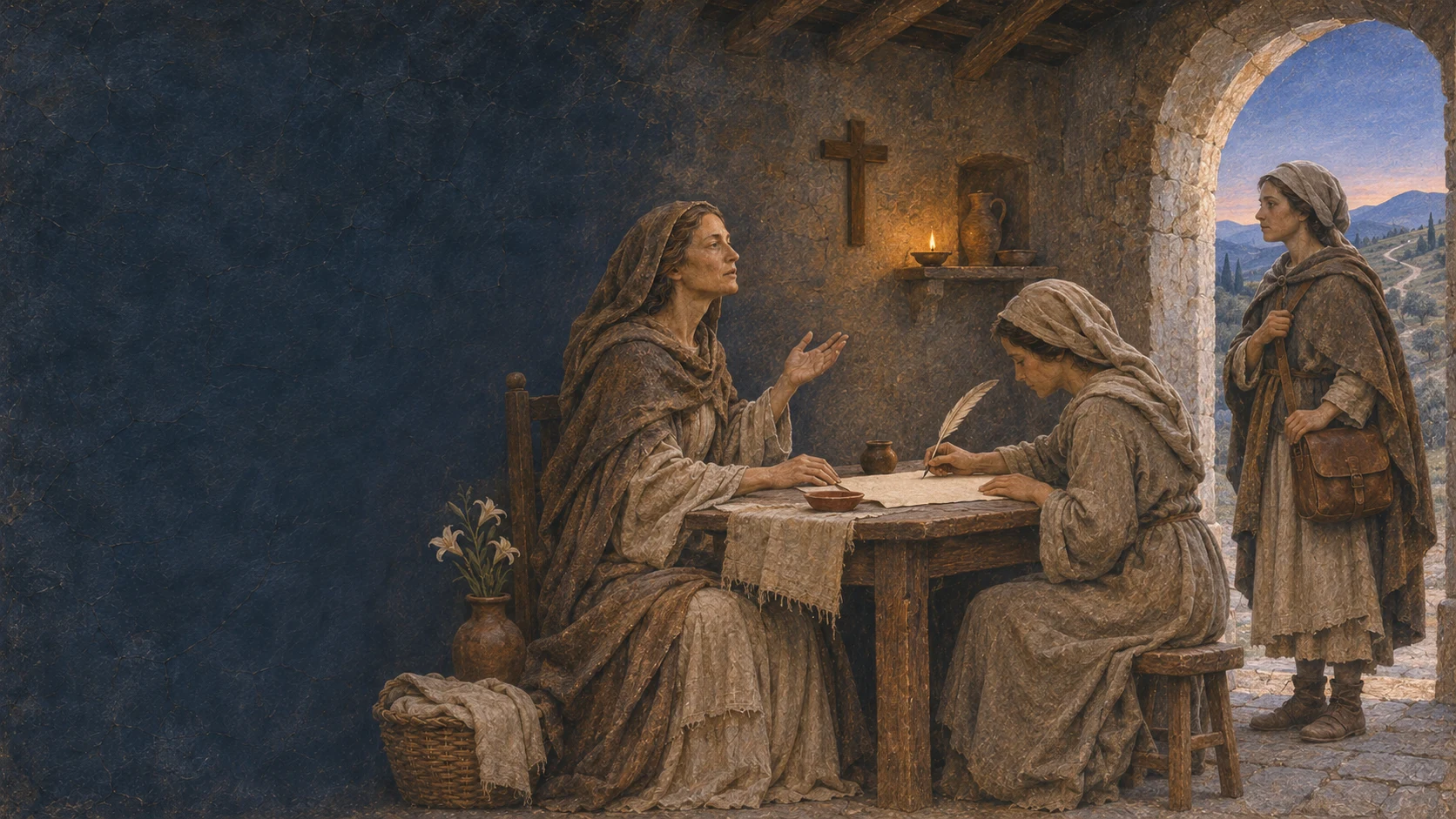
The First Letter to Agnes of Prague
Clare wrote to a princess who had refused an imperial marriage. Her first letter celebrates the choice of poverty without hiding the price of that freedom.
Read now →Choice, poverty, freedom and bridal language · 1234 · first surviving letter to Agnes of Prague36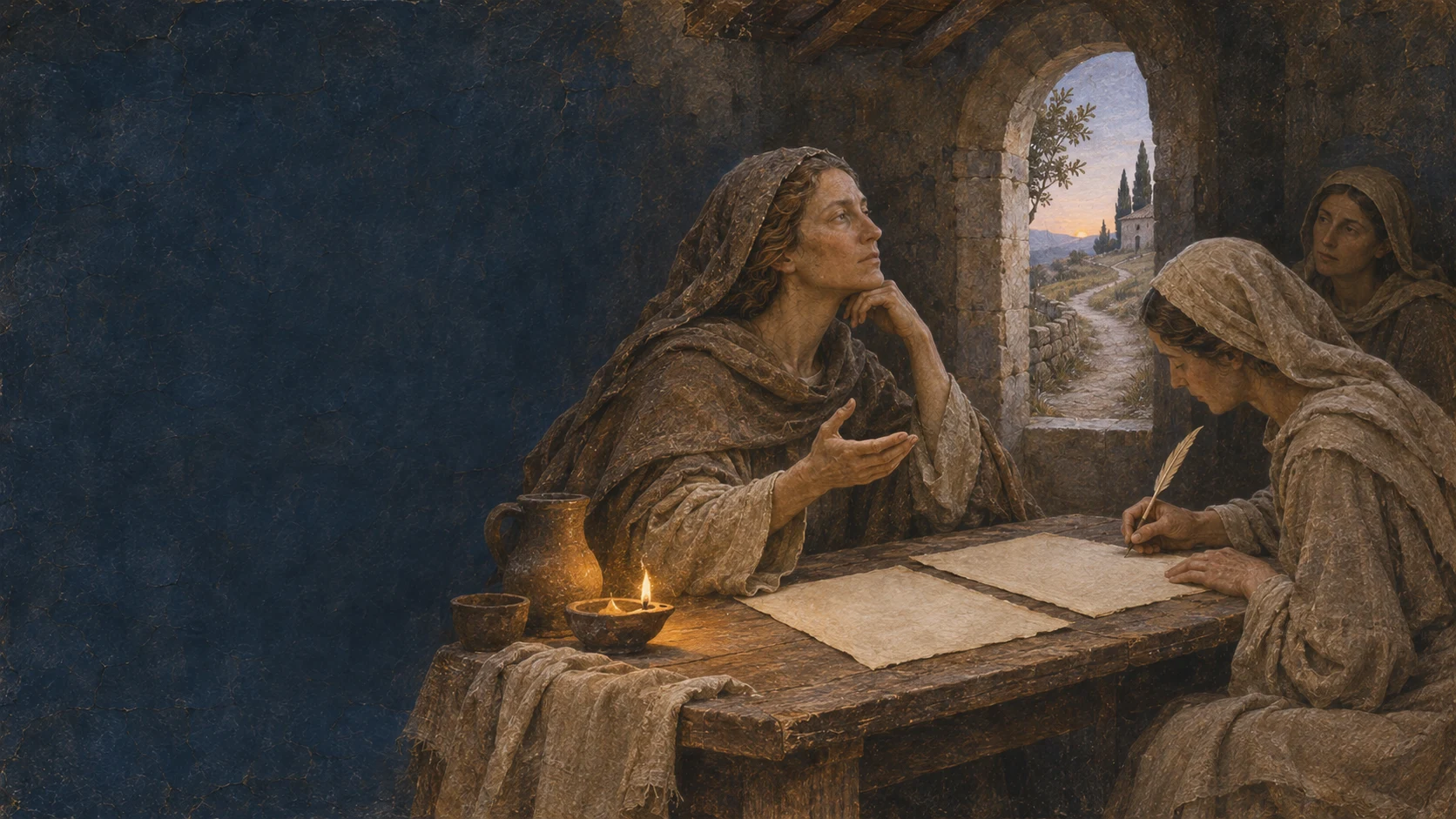
The Second Letter: Do Not Abandon the Beginning
When Agnes received advice that could draw her away from her chosen poverty, Clare replied gently and firmly: examine, embrace and do not let go.
Read now →Discernment, constancy and freedom in the face of conflicting advice · c. 1235–1238 · second surviving letter to Agnes of Prague37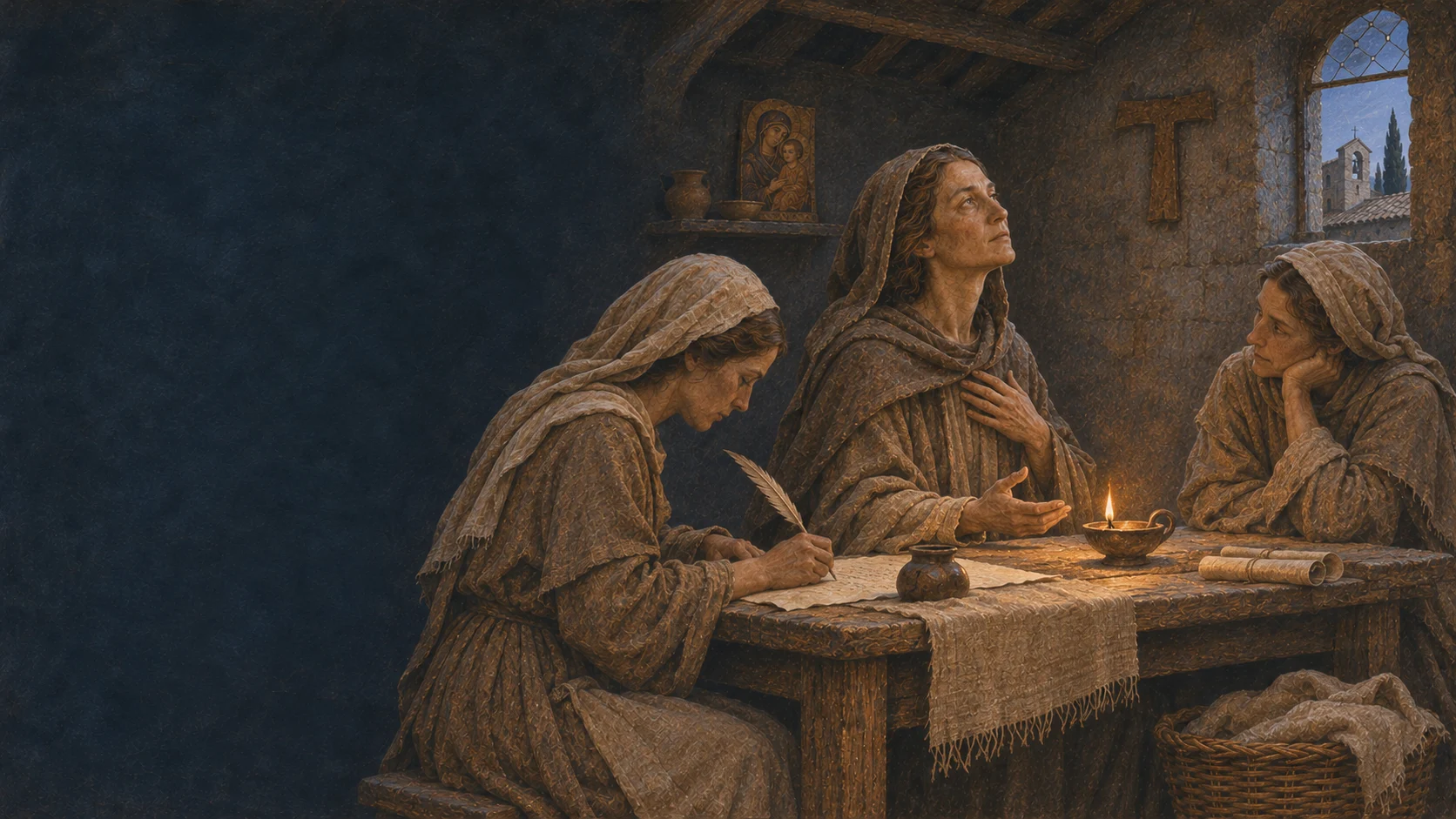
The Third Letter: containing the One whom the heavens cannot contain
In her letter to Agnes, Clare brings God's immensity close to the human body and ends by asking her friend to care for her health.
Read now →Incarnation, spiritual motherhood, and care for the body · c. 1238 · correspondence between Assisi and Prague38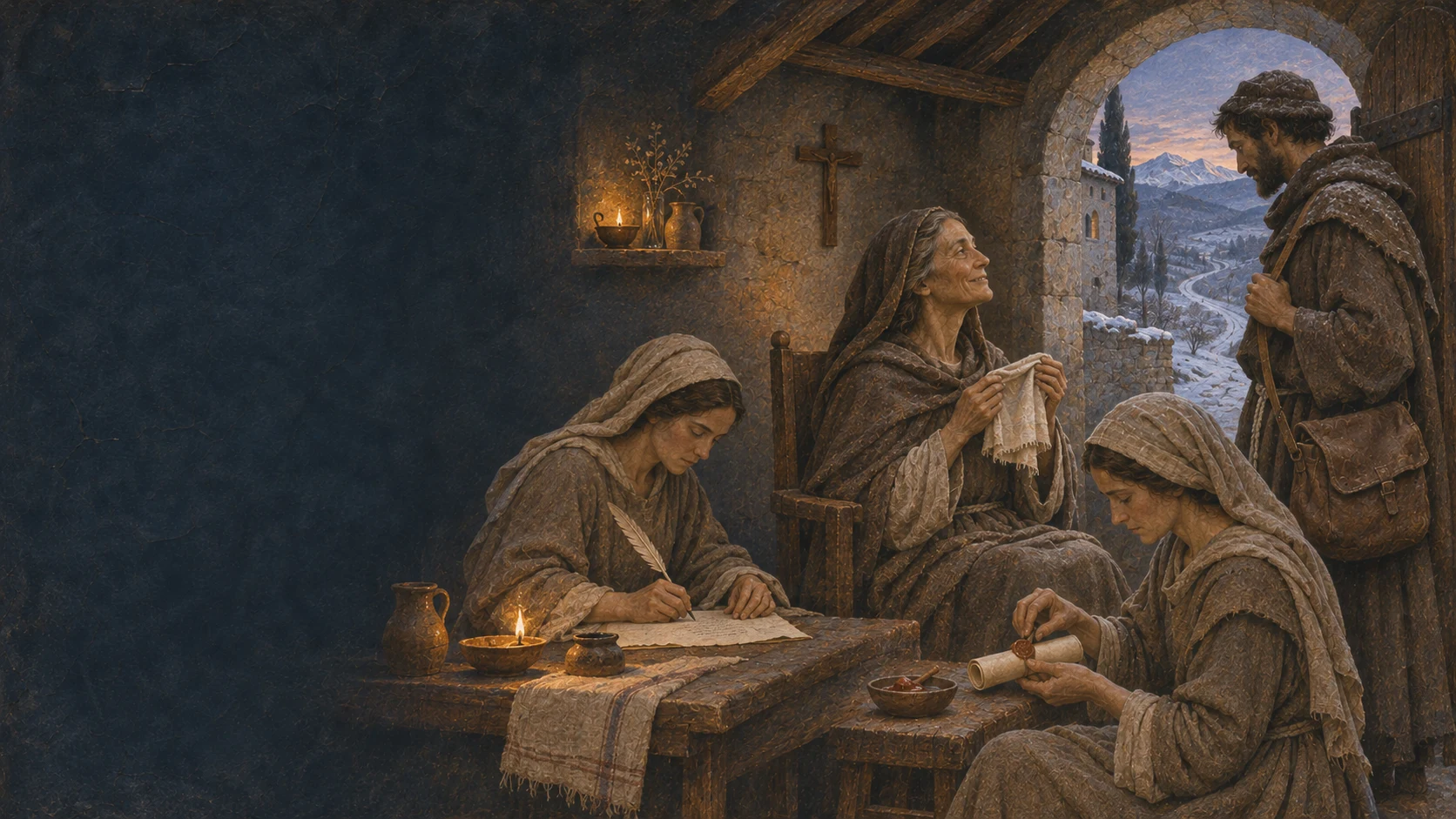
The Fourth Letter: joy, absence, and desire
Near the end of her life, Clare writes to Agnes of Prague with the intensity of a friendship that endured years of distance.
Read now →Mature friendship, contemplation, and the limits of correspondence · 1253 · last surviving letter to Agnes of Prague39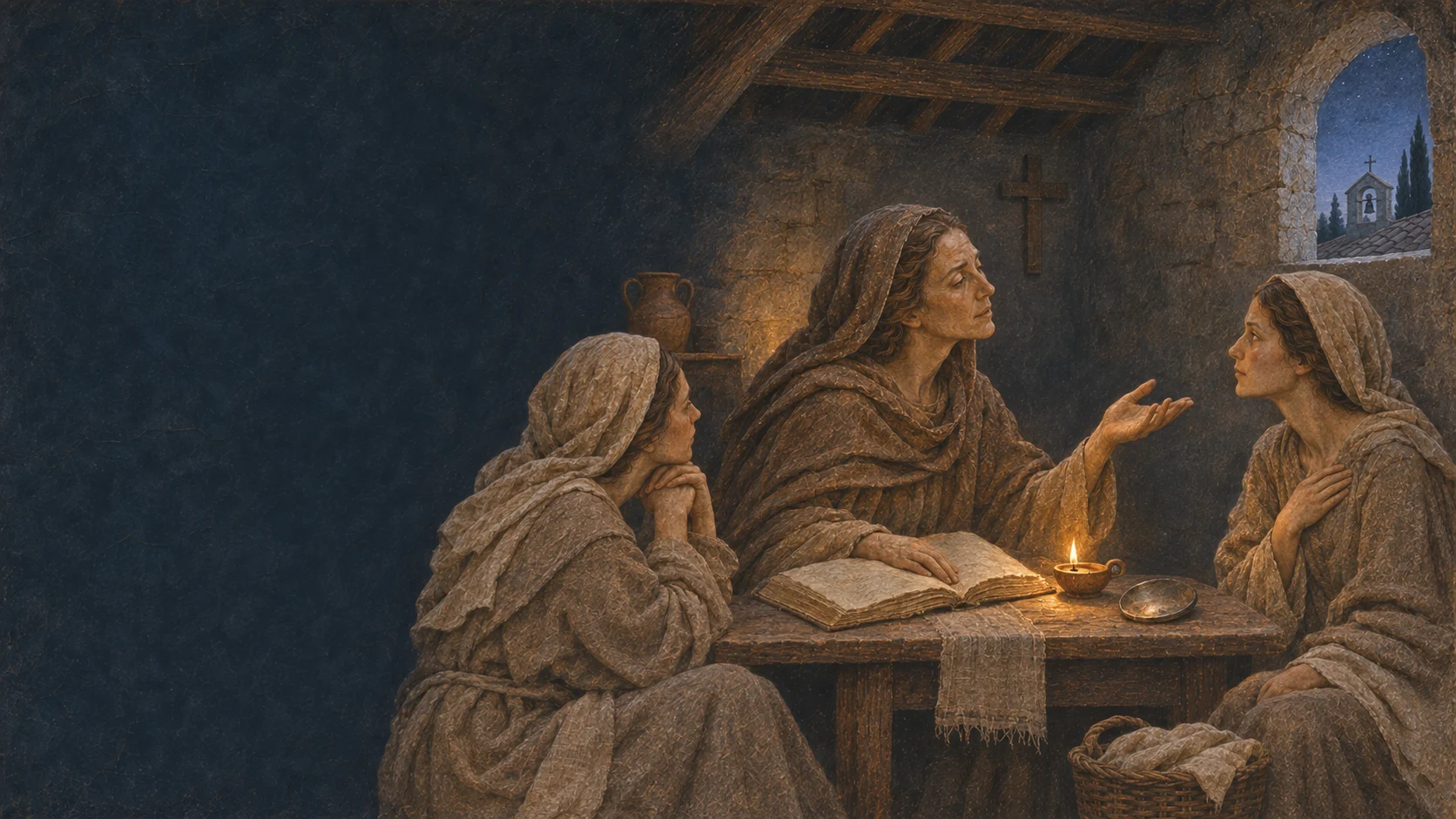
The mirror that transforms the beholder
In Clare’s letters, looking at Christ means learning to recognize poverty, humility, and love in everyday choices.
Read now →Contemplation and transformation in Clare’s language · c. 1235–1253 · images of contemplation in the letters40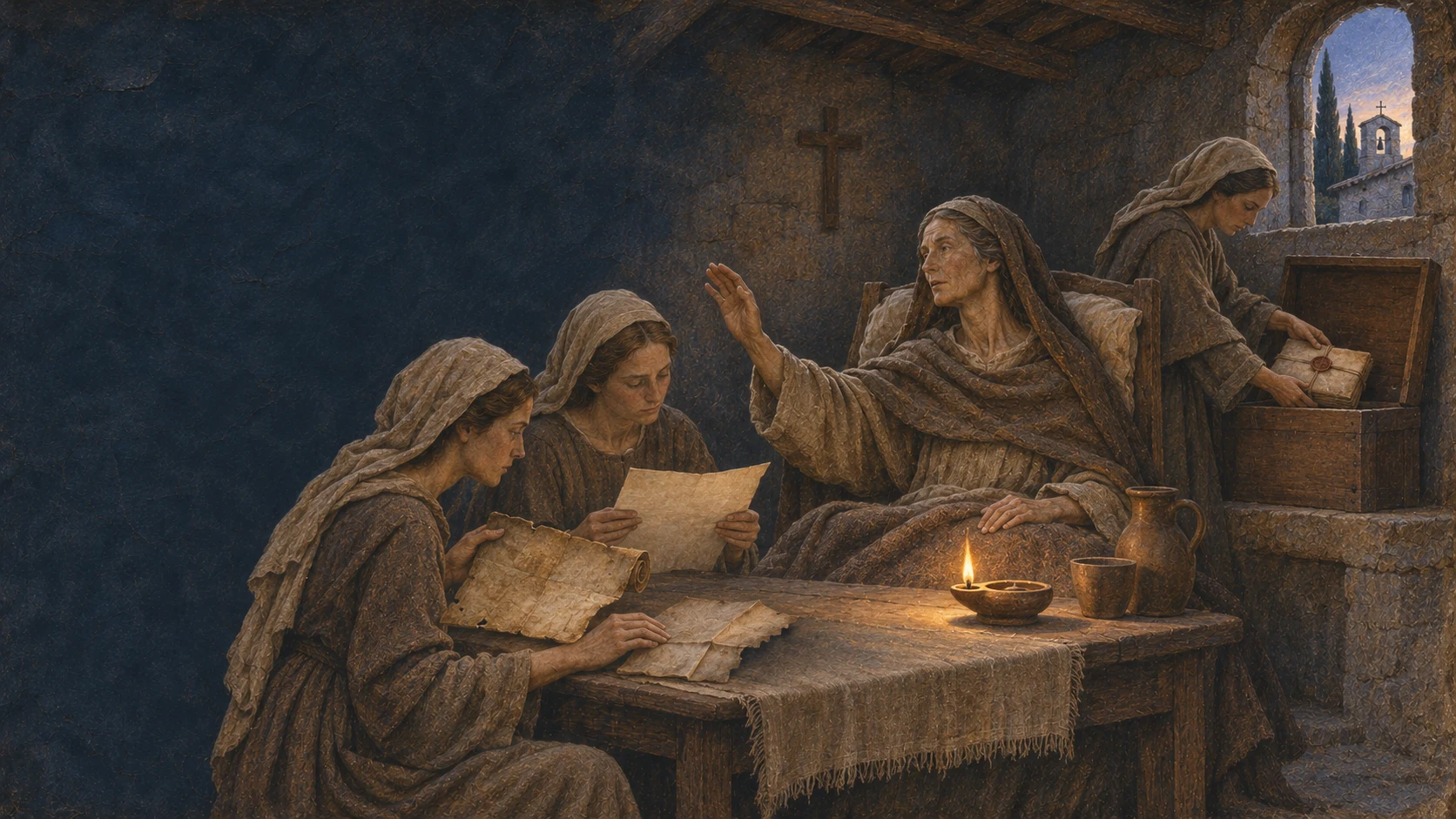
Testament, Blessing, and disputed words
Between accepted writings and debated attributions, Clare’s memory calls for care with words and attention to manuscripts.
Read now →Memory of the foundation, the sisters’ future, and critical study of the writings · Thirteenth–seventeenth centuries · attributed composition and transmission of texts41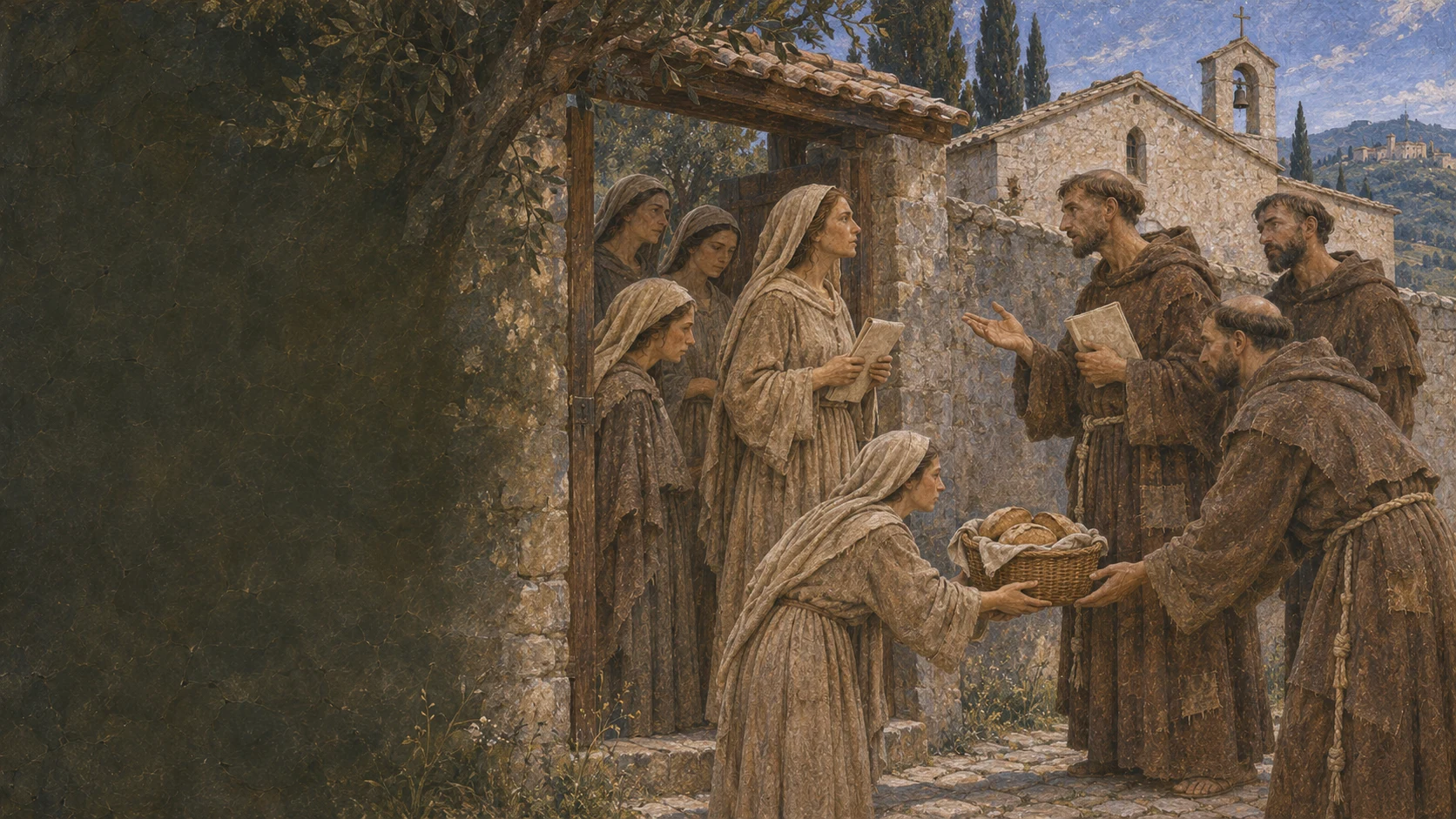
Clare and Francis without an invented romance
Affection, trust, authority, and distinct paths bring Clare and Francis together without the need to invent a romantic love story.
Read now →Spiritual friendship, separation, and Clare’s autonomy · c. 1211–1253 · shared life and memory after 122642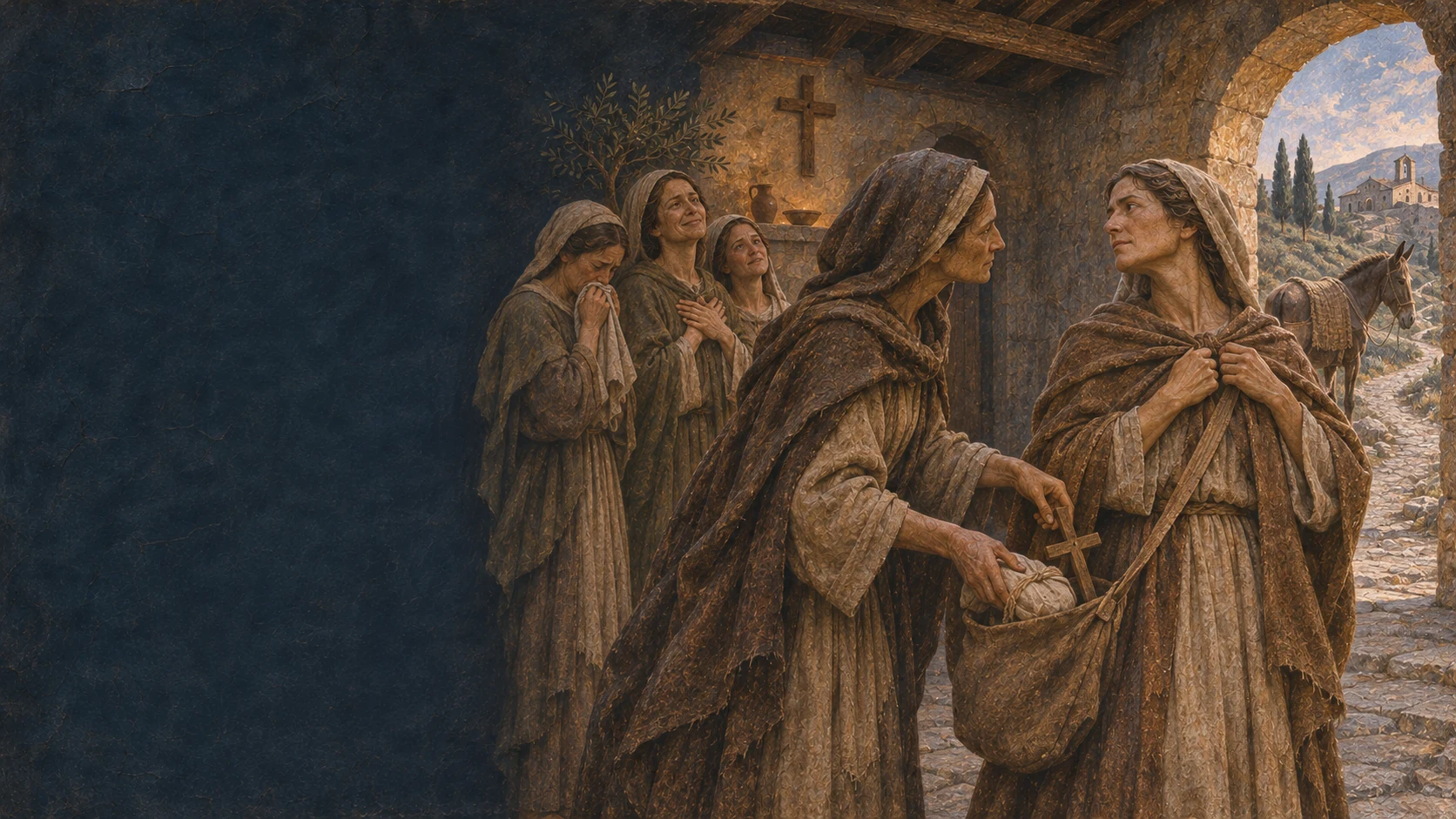
Agnes of Assisi, the sister who also chose
After following Clare, Agnes had to build a path of her own: living with other sisters, leaving Assisi, and enduring distance.
Read now →Personal choice, community service, and Agnes of Assisi’s longing · c. 1212–1253 · from Assisi to Monticelli and the memory of farewell43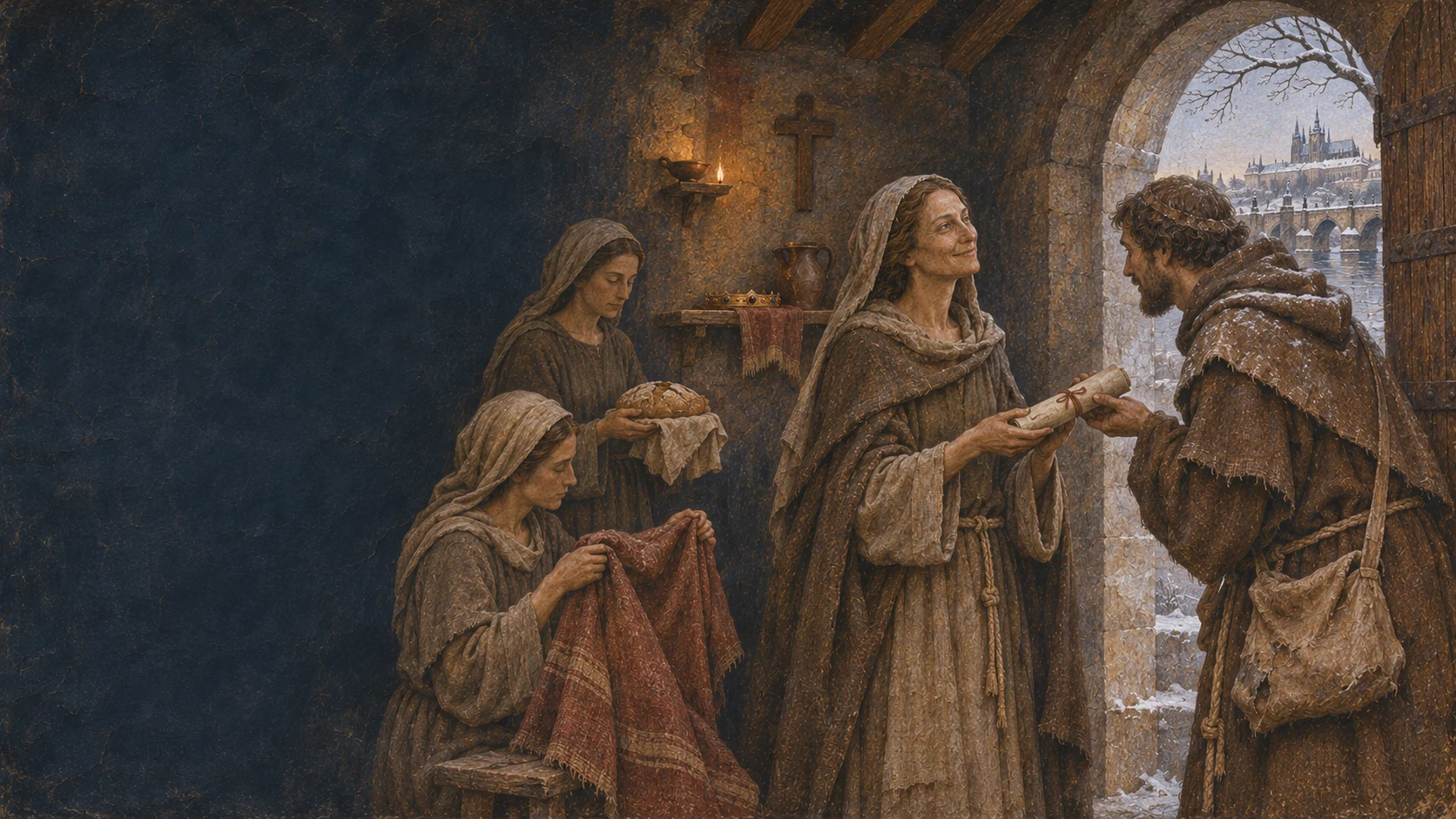
Agnes of Prague, a friendship across kingdoms
A king’s daughter builds her community in Bohemia and finds in Clare someone to discuss decisions involving faith, property, and authority.
Read now →Agnes of Prague’s agency and friendship between communities · 1234–1253 · correspondence; Agnes of Prague lives until 128244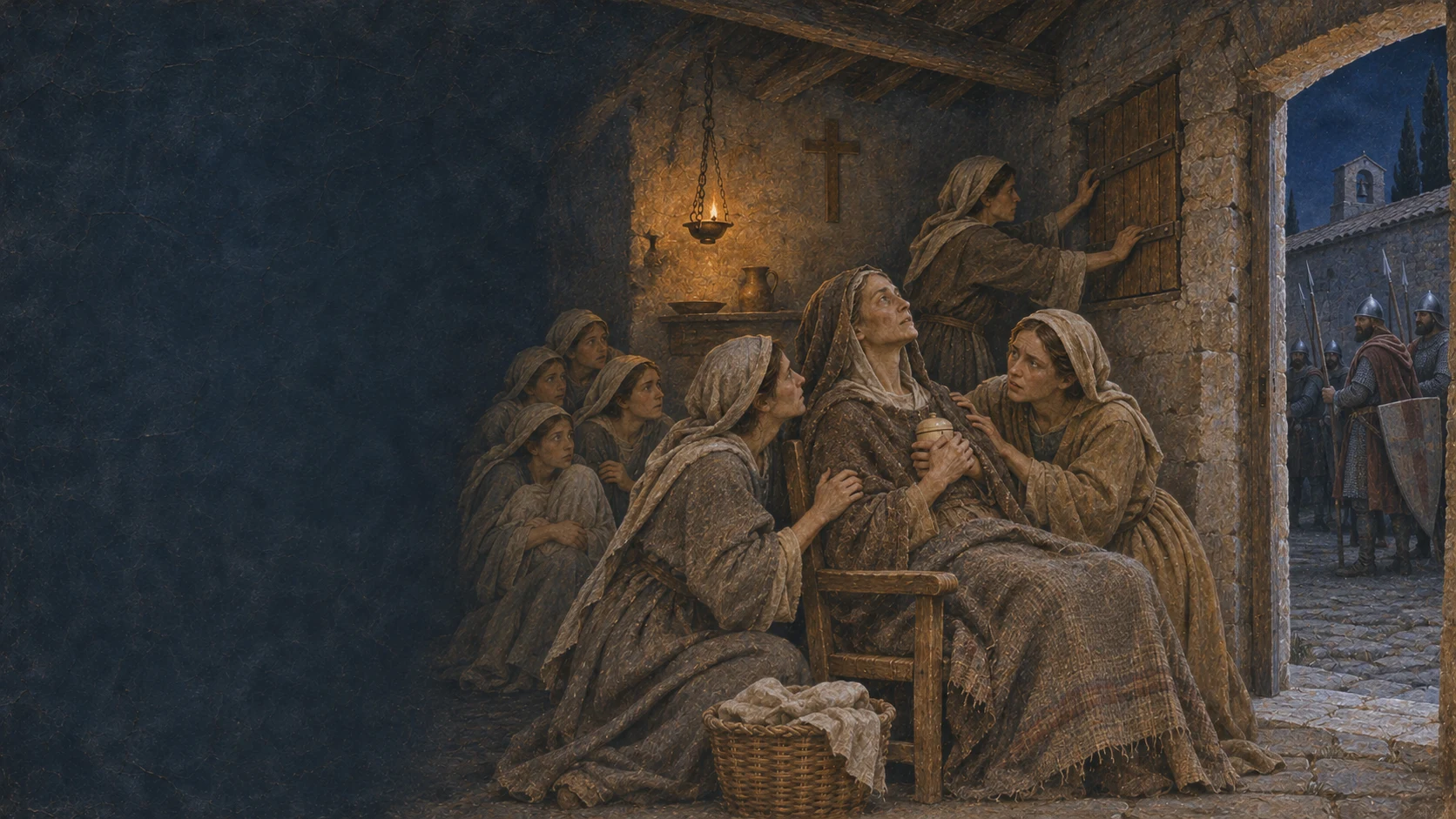
The soldiers before San Damiano
The sisters remembered an invasion, Clare’s prayer, and the soldiers’ withdrawal. Between these testimonies and the image of the monstrance lie essential differences.
Read now →Attack on San Damiano, religious experience, and the formation of iconography · c. 1240 · episode traditionally placed in September45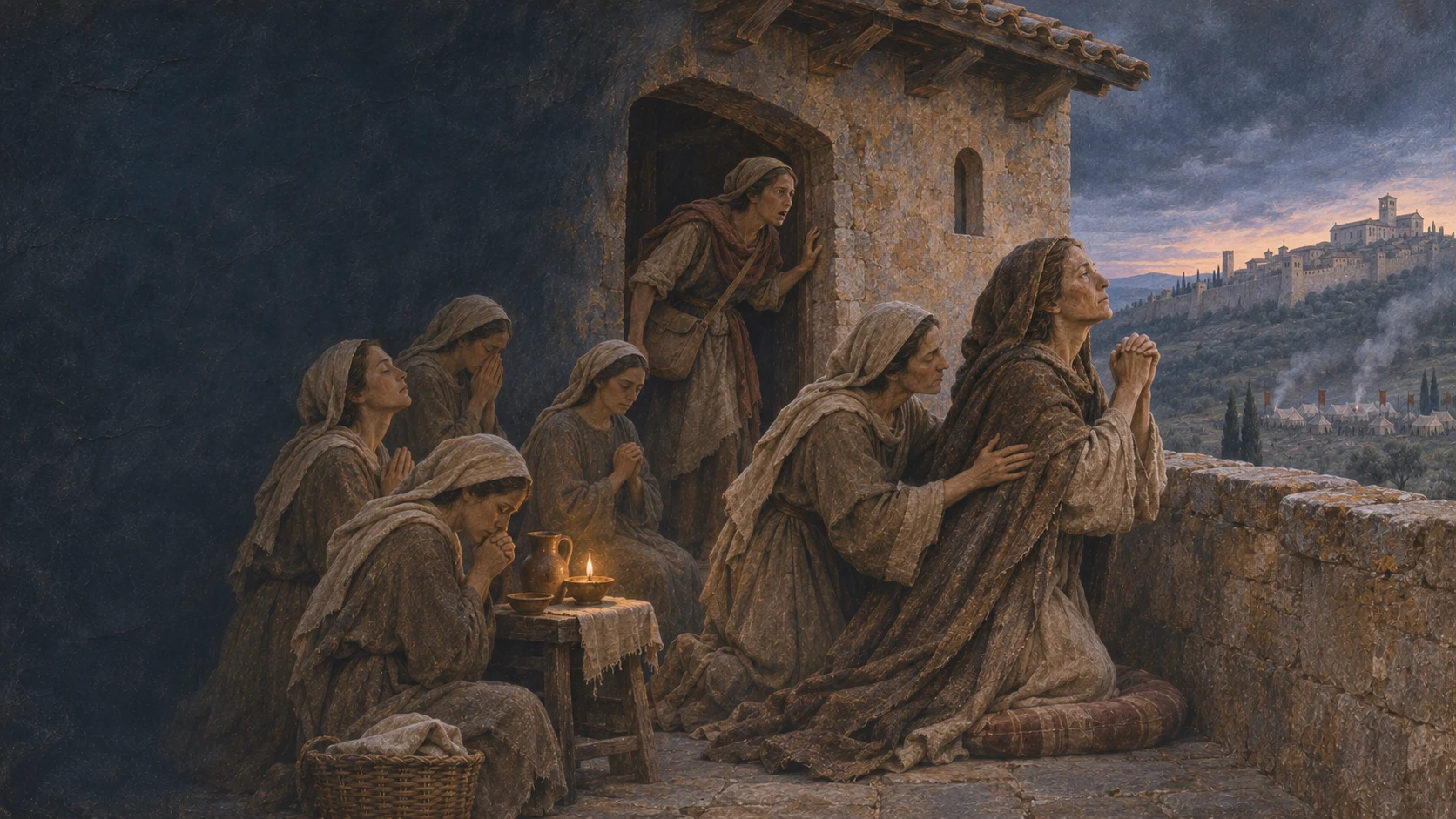
Clare prays for besieged Assisi
Faced with Vitale of Aversa’s siege, the sisters remembered Clare gathering the community to pray for the city that also sustained them.
Read now →Responsibility for the city, ashes, and community prayer · c. 1241 · siege of Assisi by Vitale of Aversa46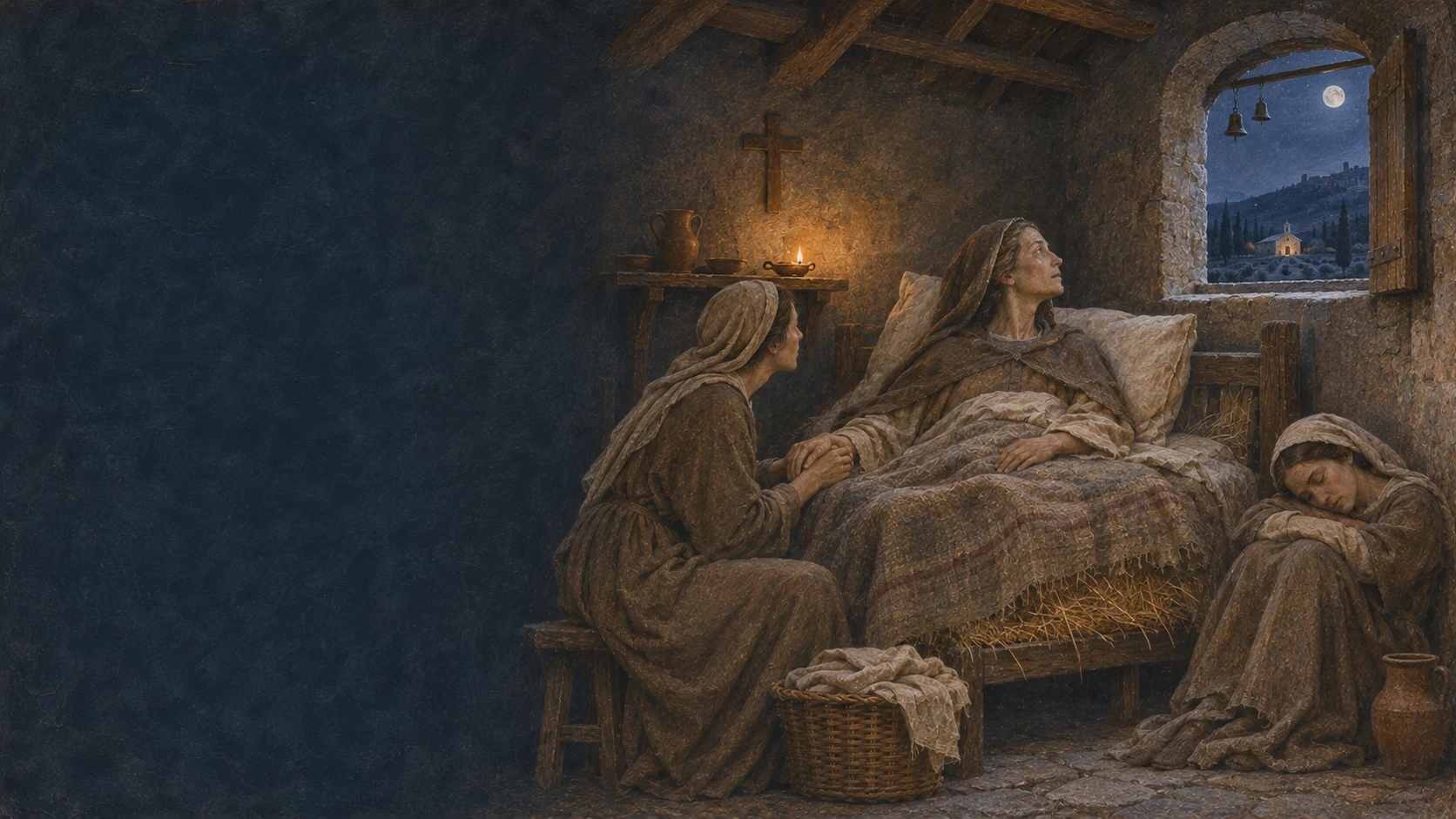
Christmas night seen from afar
While ill, Clare said she had followed a distant celebration. The account preserves comfort and loneliness, with clear limits between experience and proof.
Read now →Illness, liturgy, and the transmission of a visionary experience · Christmas 1252 · account recorded in 1253; reception in 195847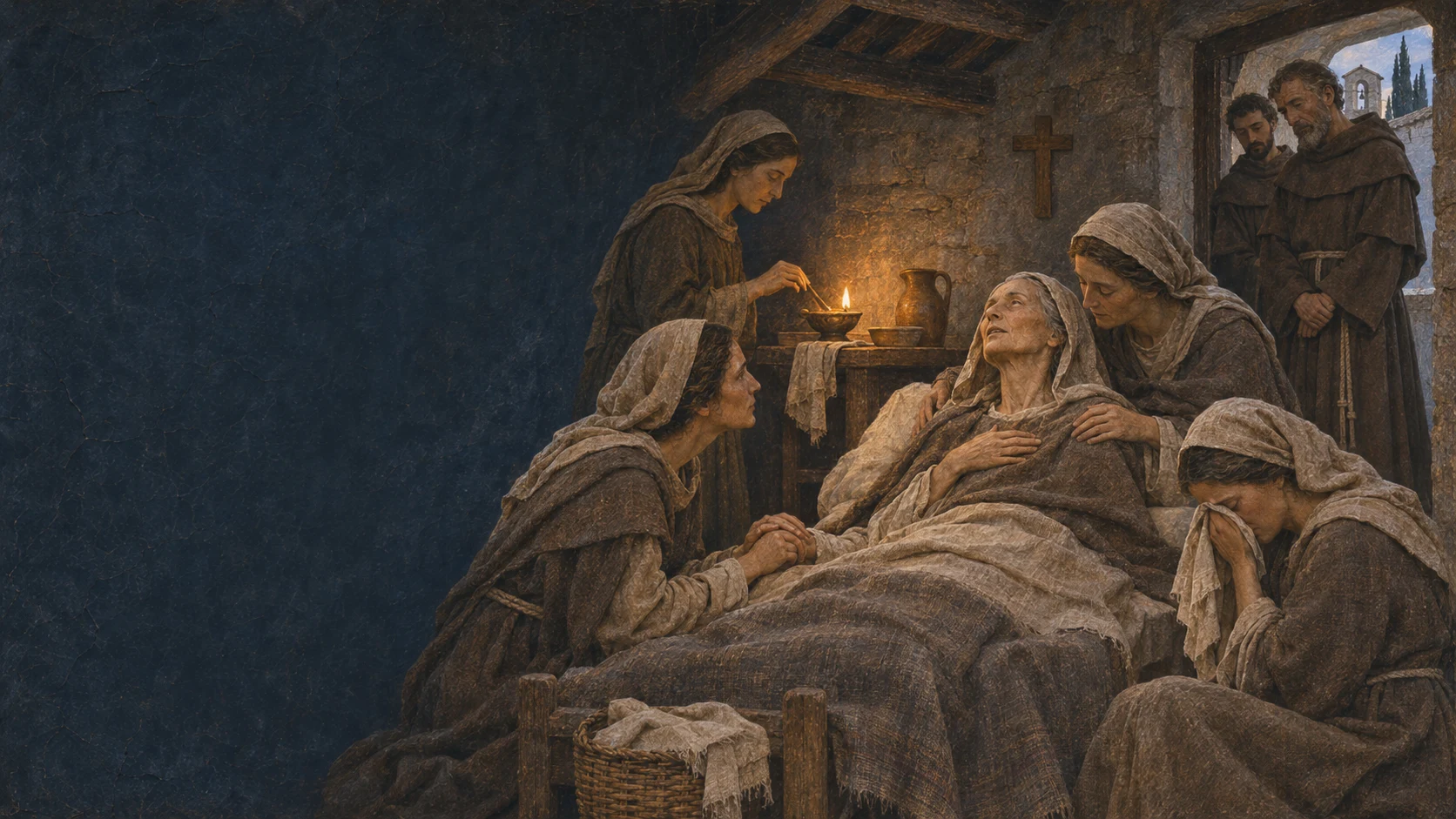
Go safely, for you have a good escort
In Clare’s final days, the sisters preserved words addressed to her own soul, gratitude for life, and the care of a shared farewell.
Read now →Final days, gratitude for creation, and the memory of care · August 1253 · death on August 1148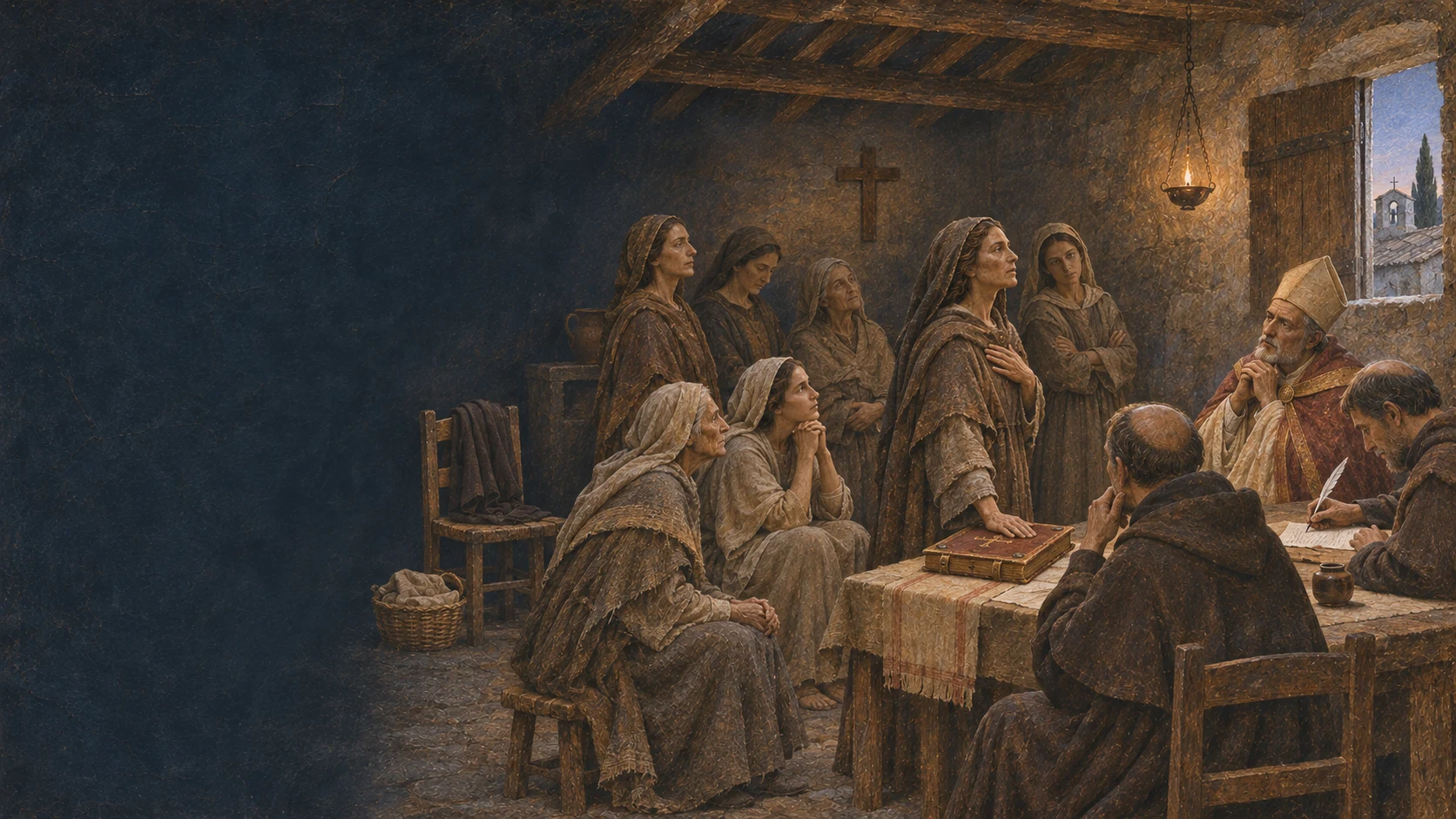
The sisters take the oath
After Clare’s death, women who had lived with her gave names, memories, and limits to what they knew. Their voices sustain the history we can tell.
Read now →Women as witnesses and the critical transmission of memory · 1253–1265 · Process, canonization, Legend, and basilica; later memory