
Book IV · Franciscans
What the stones
did not forget
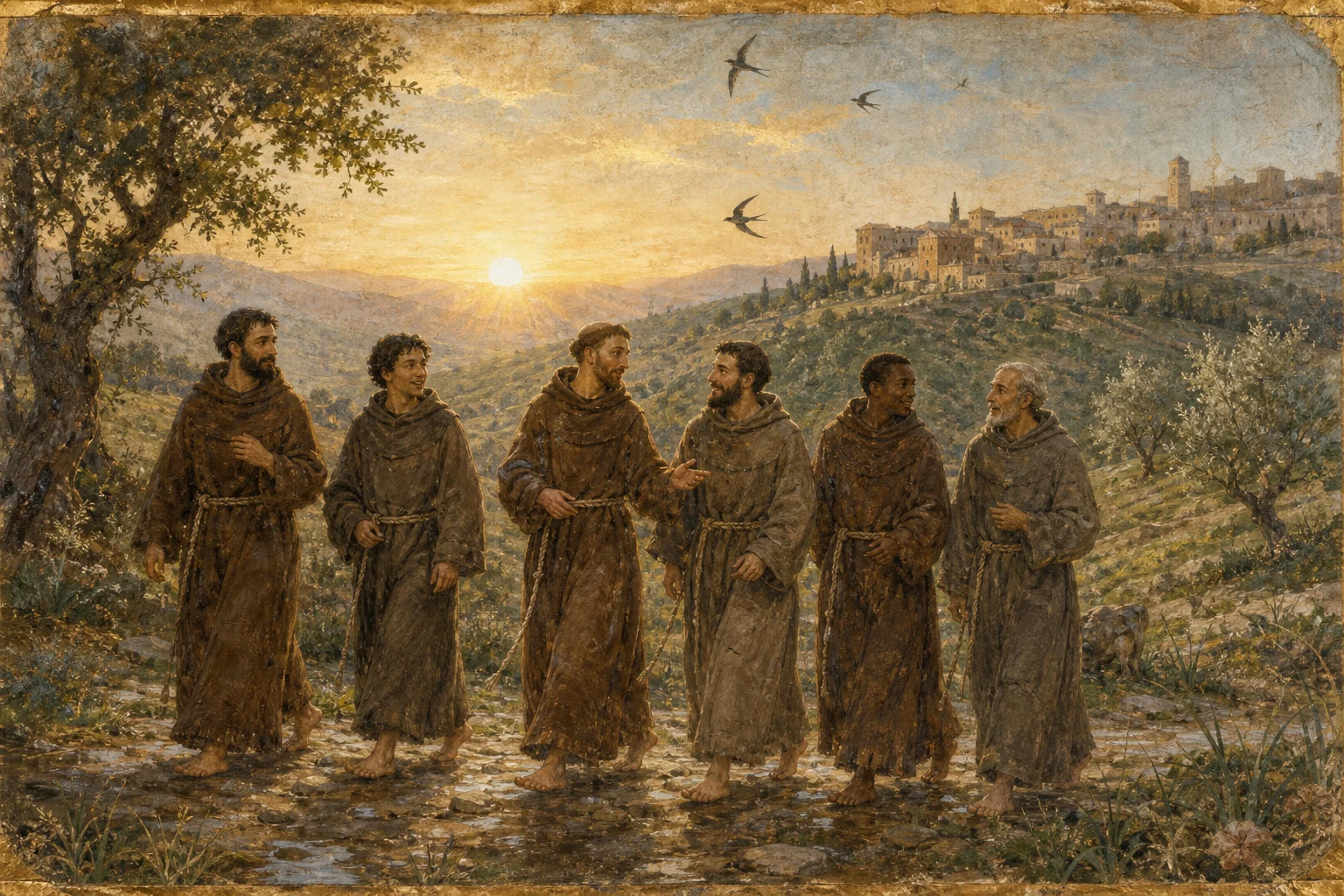
Companions of Saint Francis, monasteries, manuscripts, journeys, and accounts carefully distinguished between history and legend.
Sources, context, and contemplation
A story brought close without losing the truth.
Every page is written to be clear and welcoming without flattening the complexity of history.
We distinguish documents, traditions, and legends, and always explain the origin of prayers and quotations.
Complete contents
21 paths to explore
Choose a page to begin. Follow the order or enter through the story you need most today.
The Brothers Who Remained
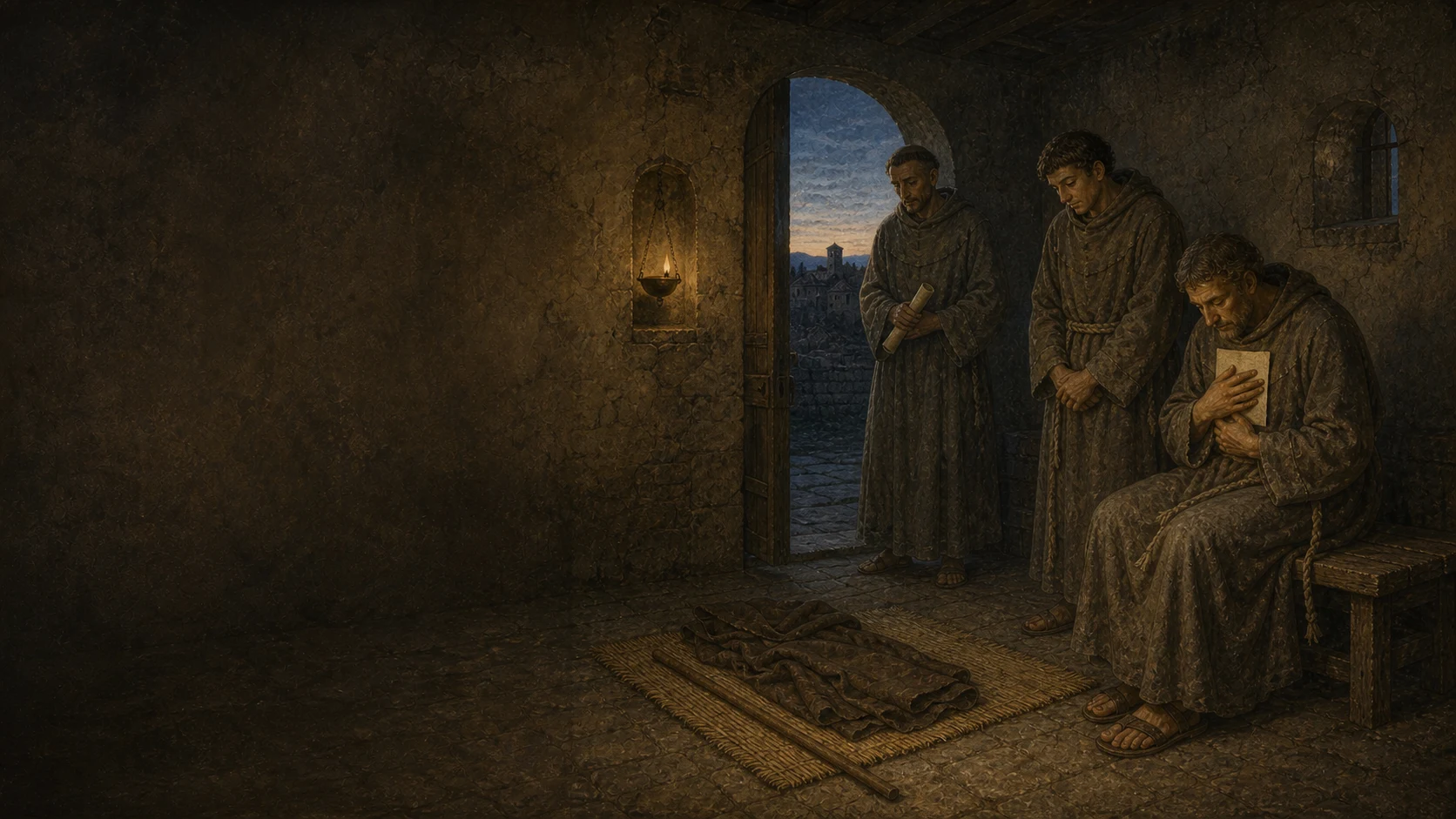
When Francis died, the brothers received a Rule, a memory and a difficult question: how could they continue without turning the poor brother into no more than a memory?
Read now →1226–124602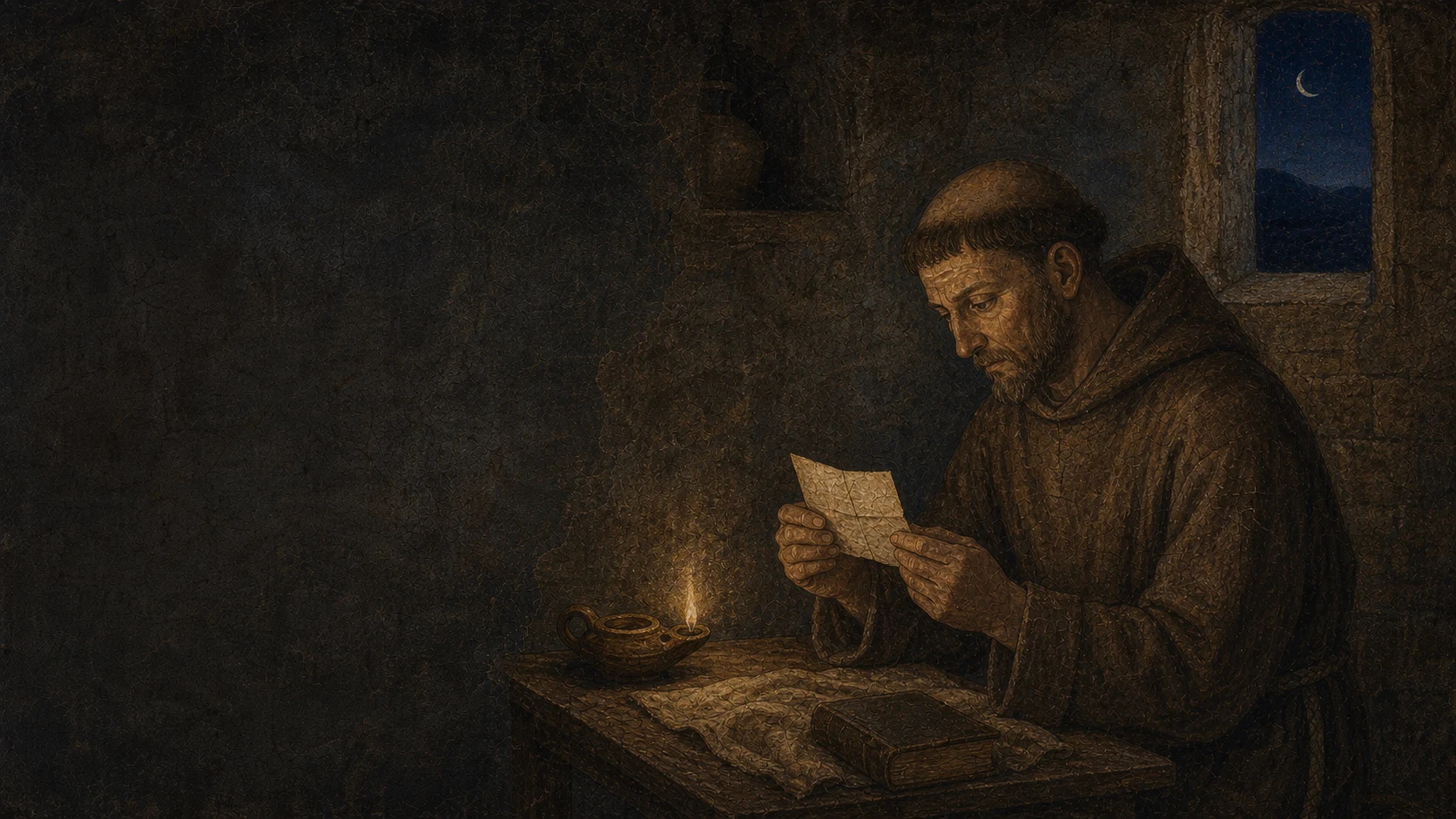
Brother Leo, Guardian of the Memories
The story of the companion who received a small handwritten sheet from Francis and helped the memories of the first brothers cross the centuries.
Read now →13th century · From La Verna to the memories of Greccio03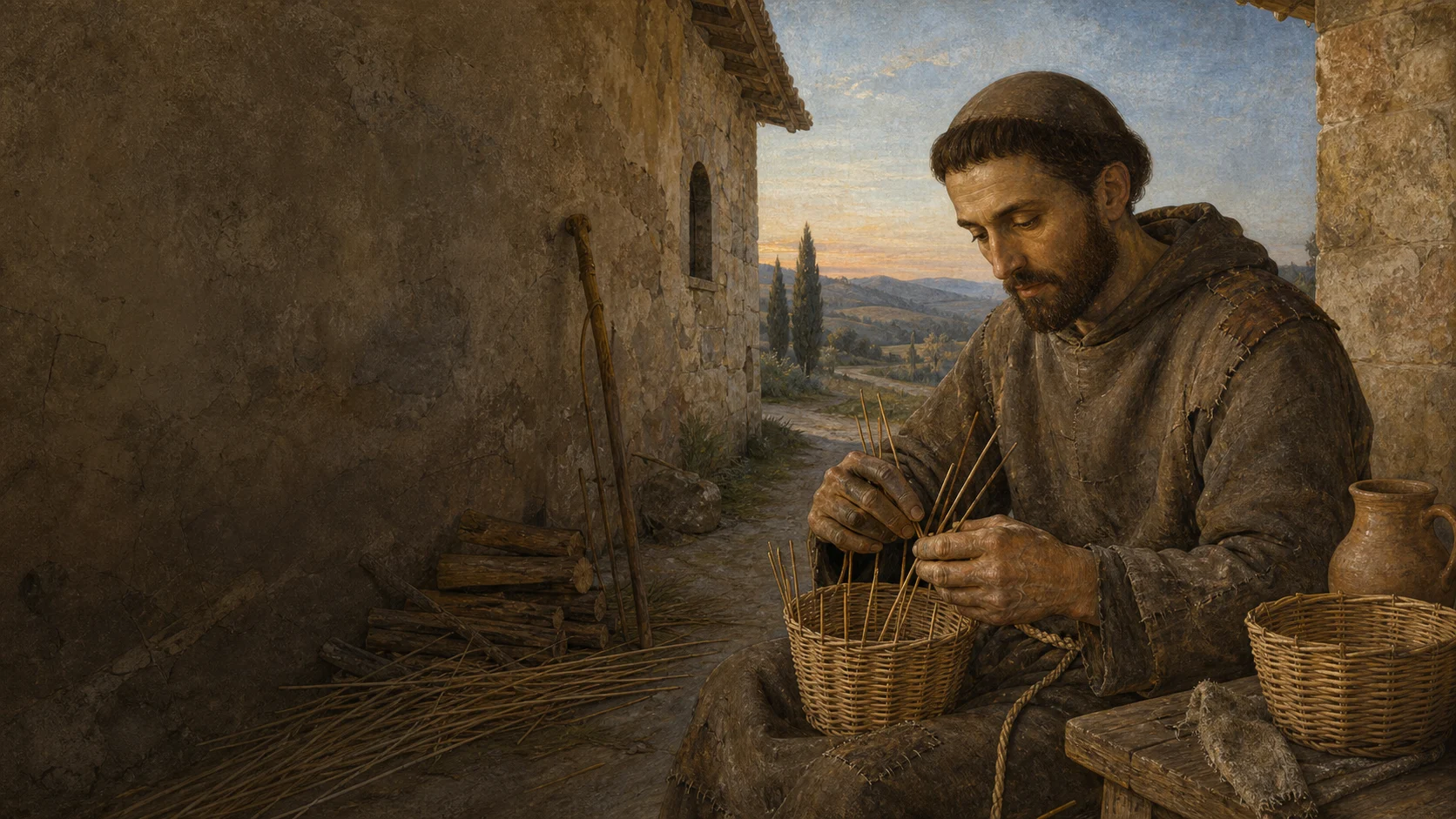
Brother Giles and His Calloused Hands
Giles traveled roads, cut wood, carried water, and made work a form of prayer. His wisdom grew between silence and tired hands.
Read now →1209–1262 · From the road to Monteripido04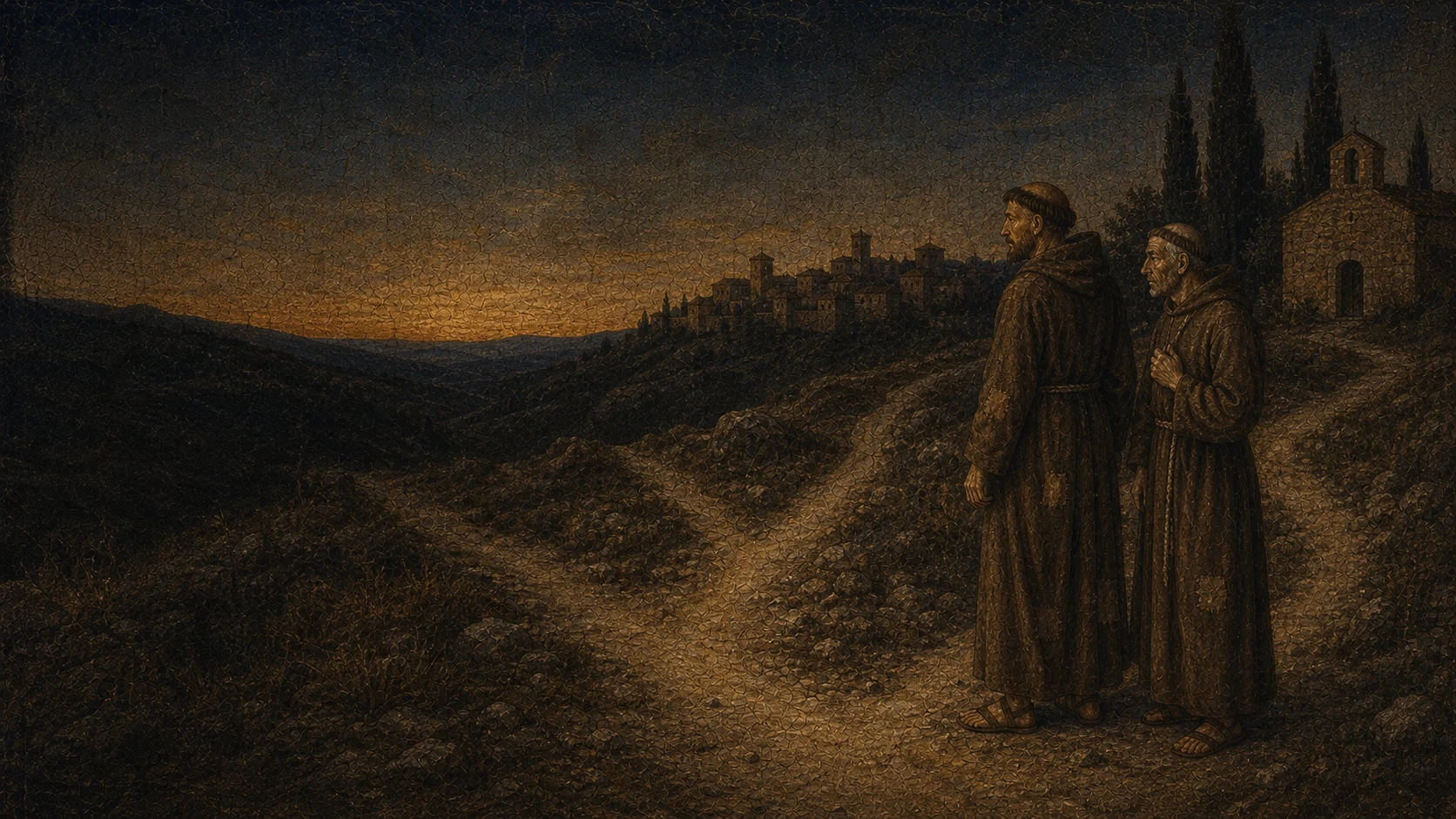
Brother Masseo and the Stories from the Road
Francis’s companion whom the old Little Flowers placed at crossroads, doorways and tables where humility had to be learned.
Read now →The 13th century in 14th-century Franciscan memory05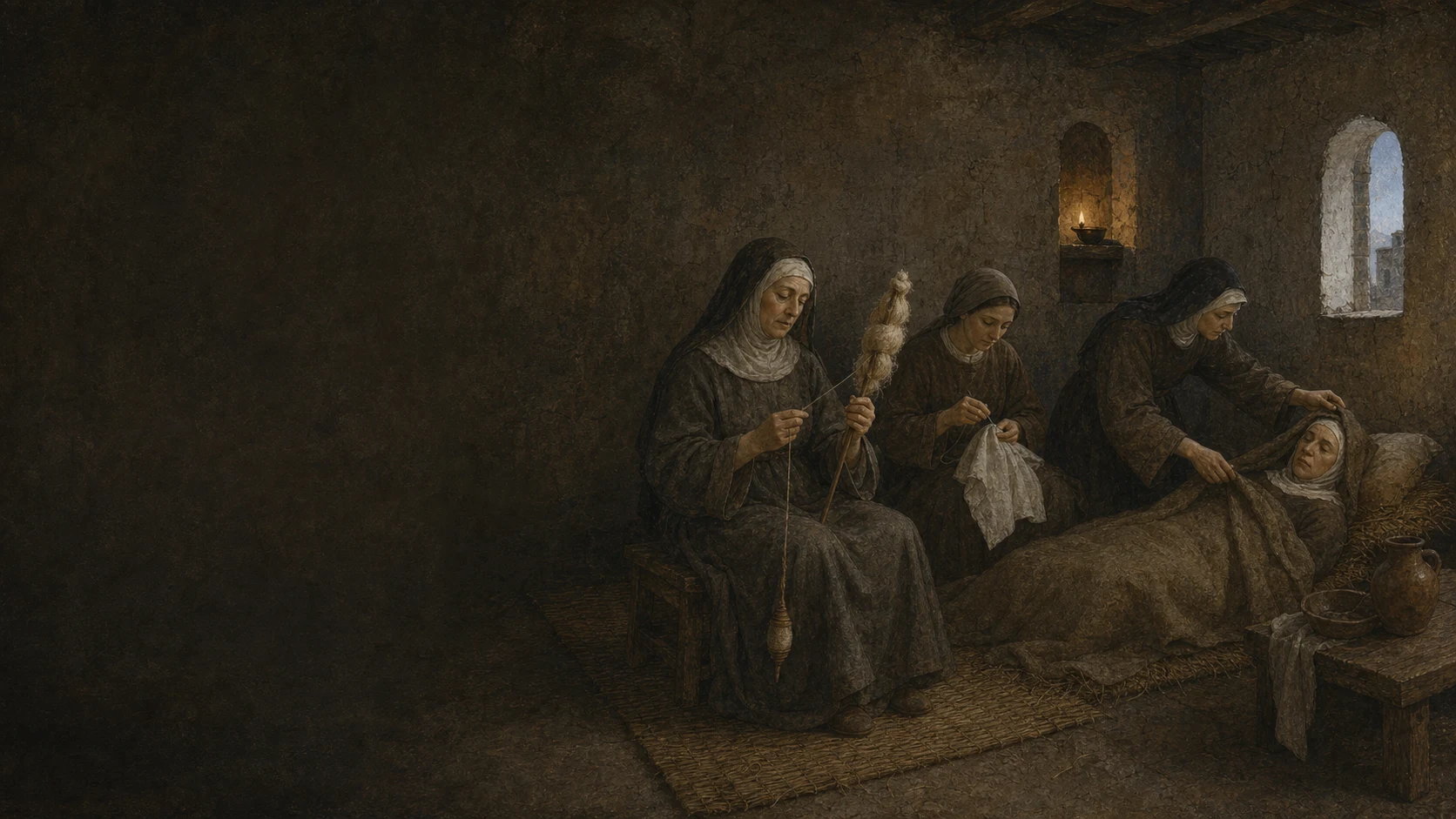
Clare and the Sisters of San Damiano
Amid cold walls, prayer, thread, illness, and difficult decisions, Clare and her sisters made San Damiano a home where poverty had to take the form of care.
Read now →1212–125306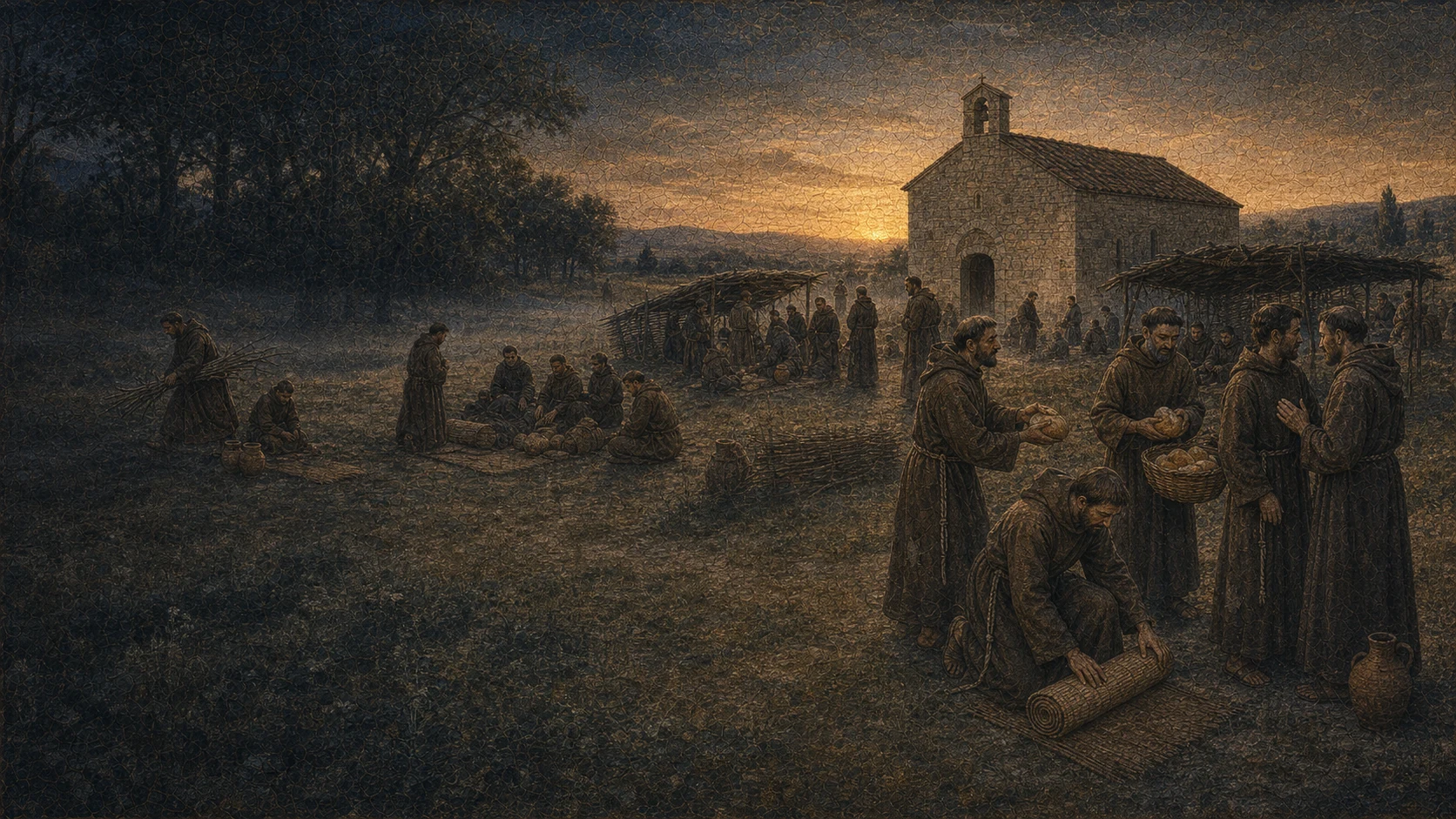
The Chapter of the Mats
The great gathering beside the Portiuncula: thousands of brothers, shelters of branches, bread offered by local people and a fraternity that had to learn how to grow.
Read now →Pentecost 1221 · Portiuncula07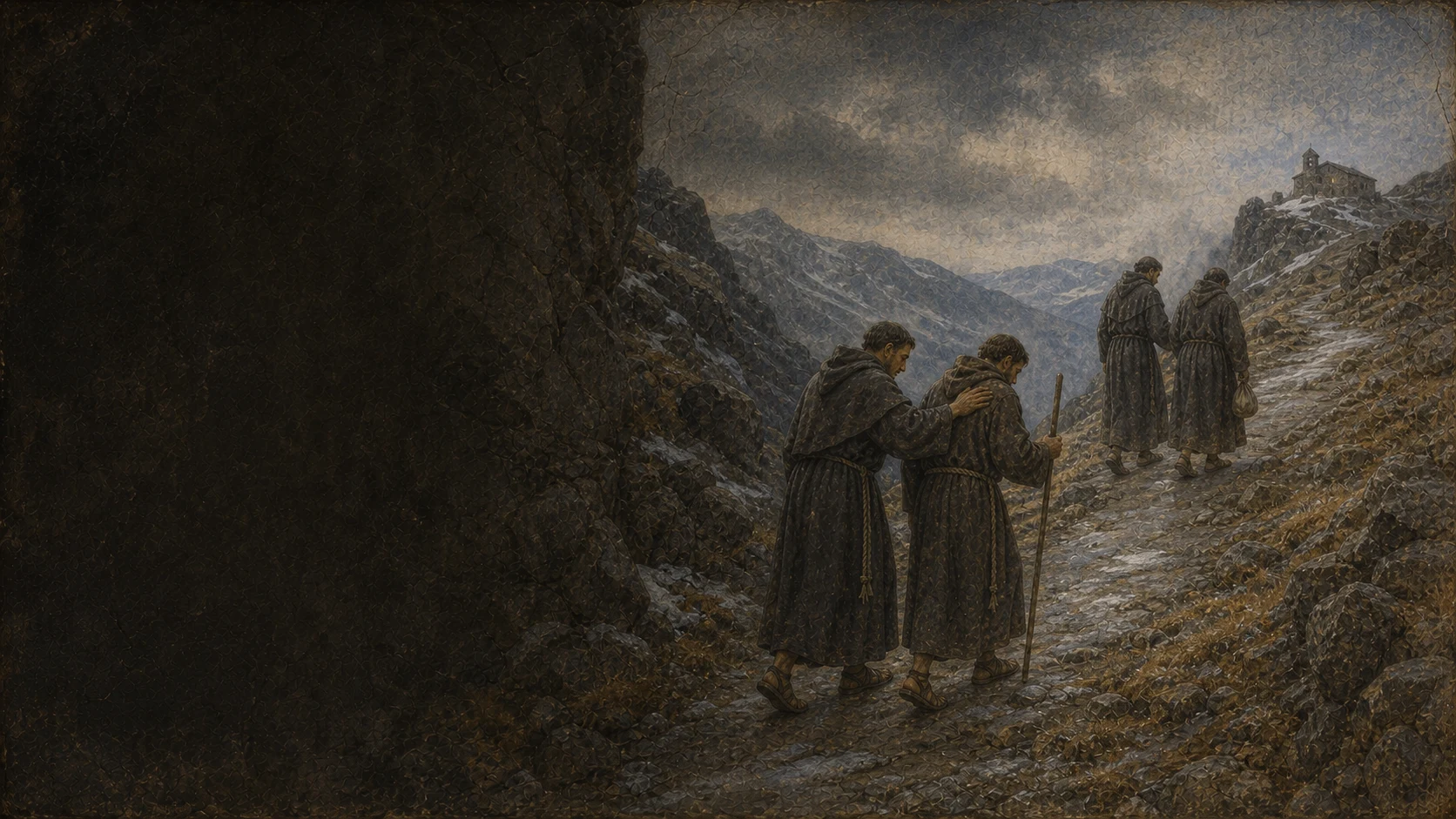
When the Friars Crossed the Alps
The first brothers traveled beyond the mountains without perfect maps, money or mastery of local languages—and discovered that proclaiming peace also required learning to listen.
Read now →1217–122408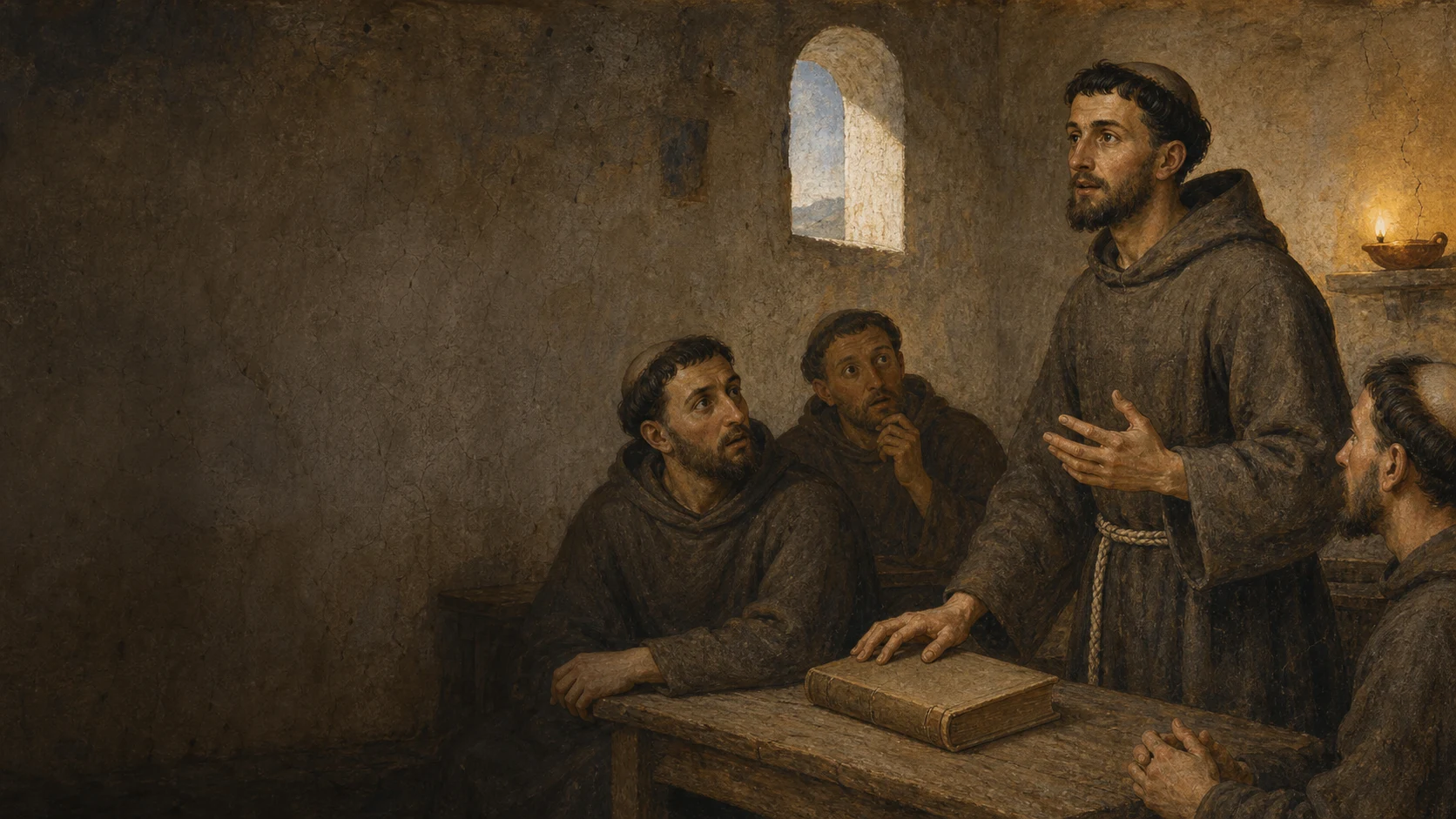
Anthony, the Friar Who Came from Portugal
Before becoming the saint known around the world, Anthony was Fernando: a student in Portugal, a traveler overcome by illness, and a quiet friar whose voice no one expected to hear.
Read now →c. 1195–1231 · From Lisbon to Padua09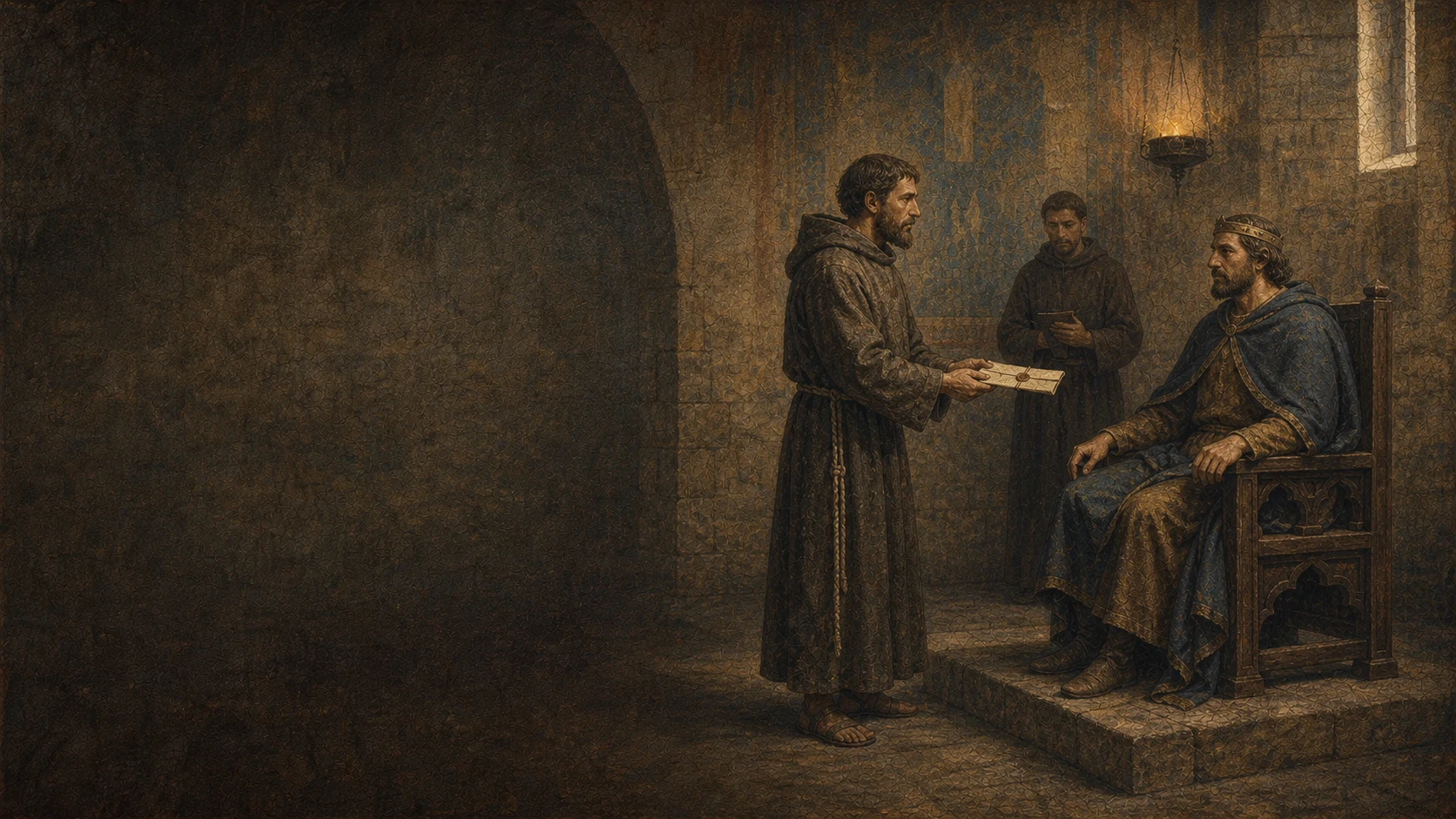
Before Kings and the Powerful
Friars and sisters before popes, kings, and great khans: when poverty entered the courts without leaving dignity outside.
Read now →13th century · From Prague to the Mongol courts10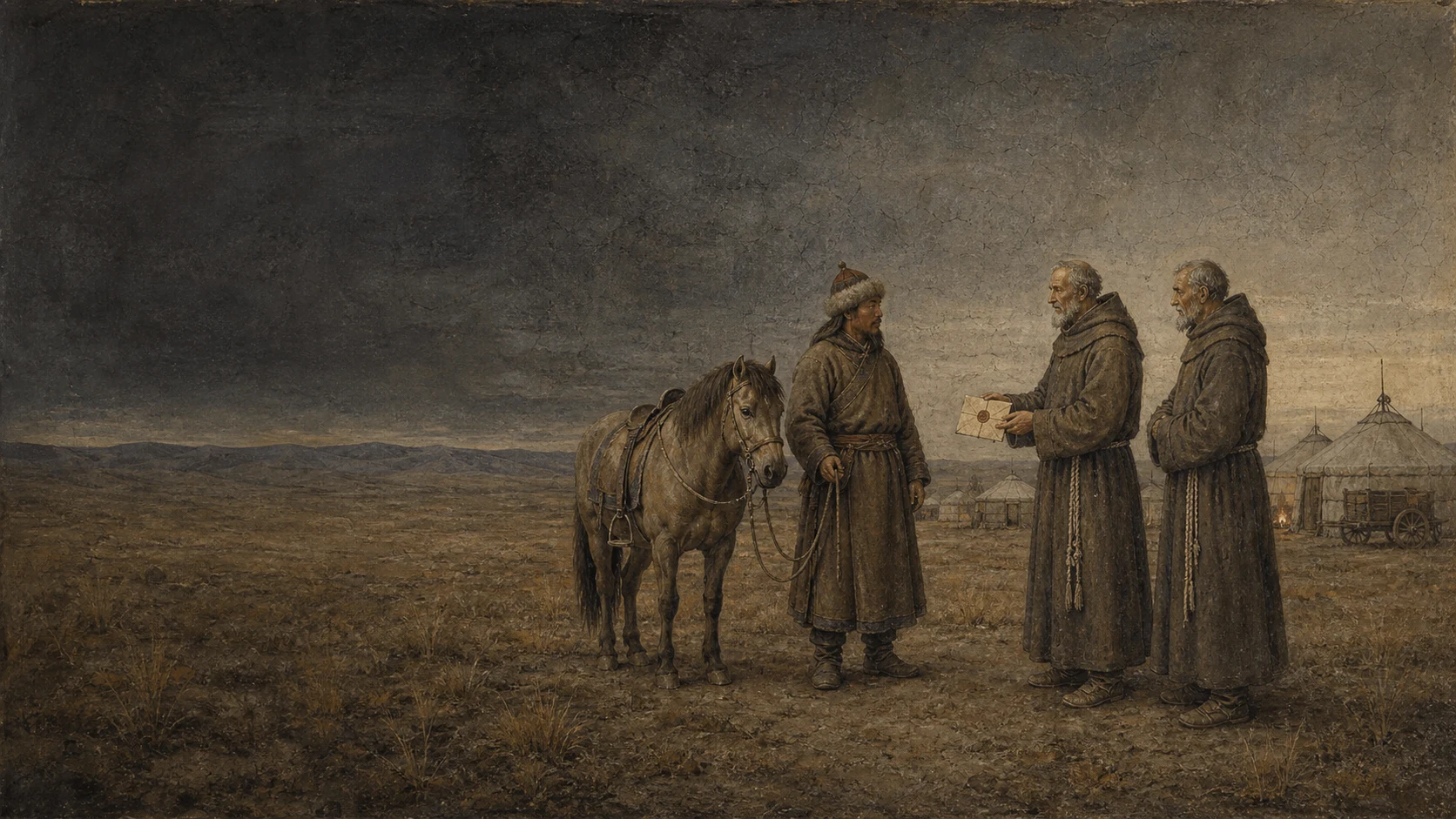
To the Lands of the Mongols
Two friars crossed the ruins of Eastern Europe and the vast steppes carrying papal letters—and returned with one of the first direct European accounts of the Mongol world.
Read now →1245–124711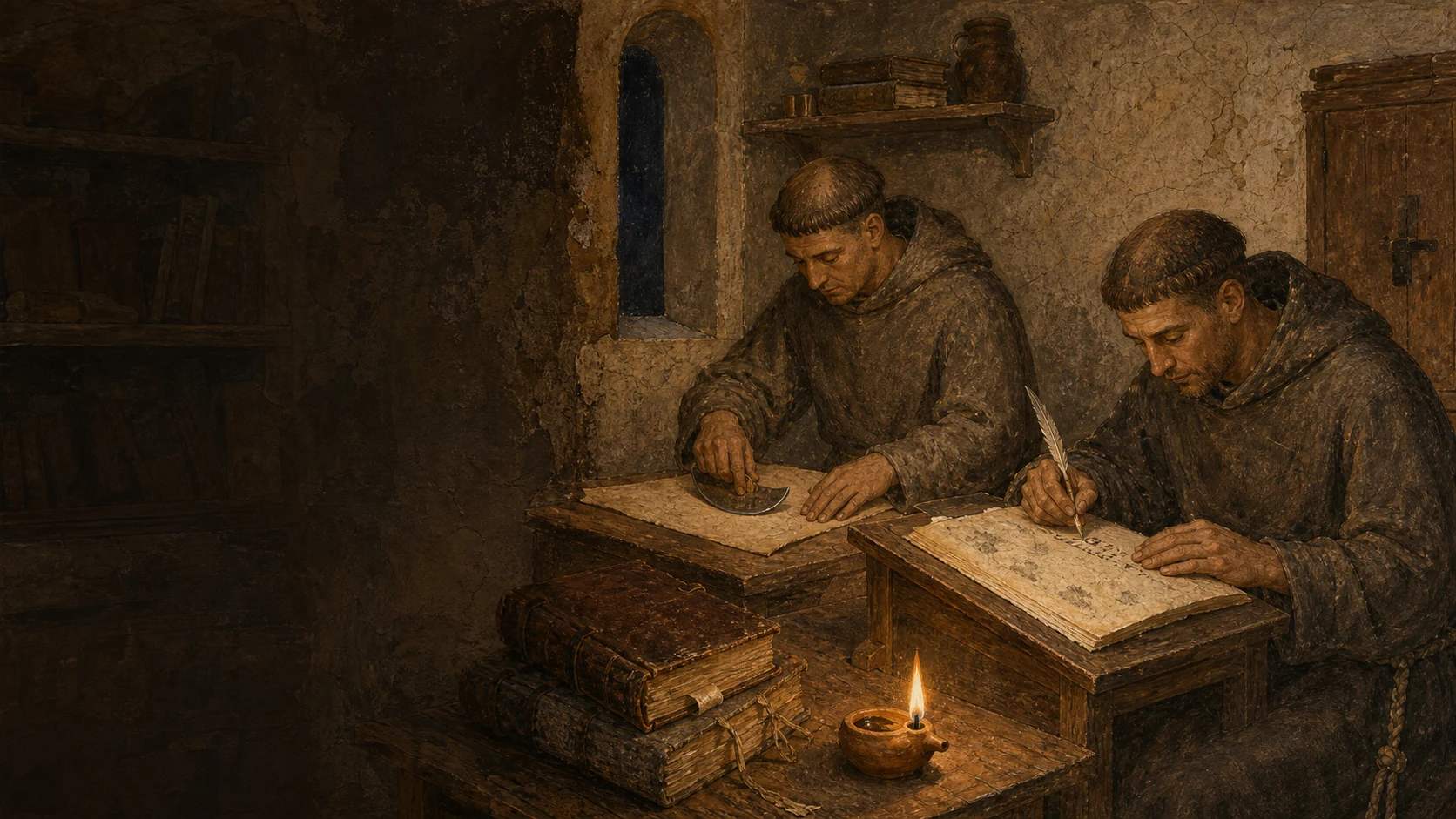
Books, Quills and Oil Lamps
From the first breviaries to great scholarly libraries, the friars learned to care for books without forgetting that knowledge, too, must live in poverty and service.
Read now →13th–15th centuries · From fraternity to libraries12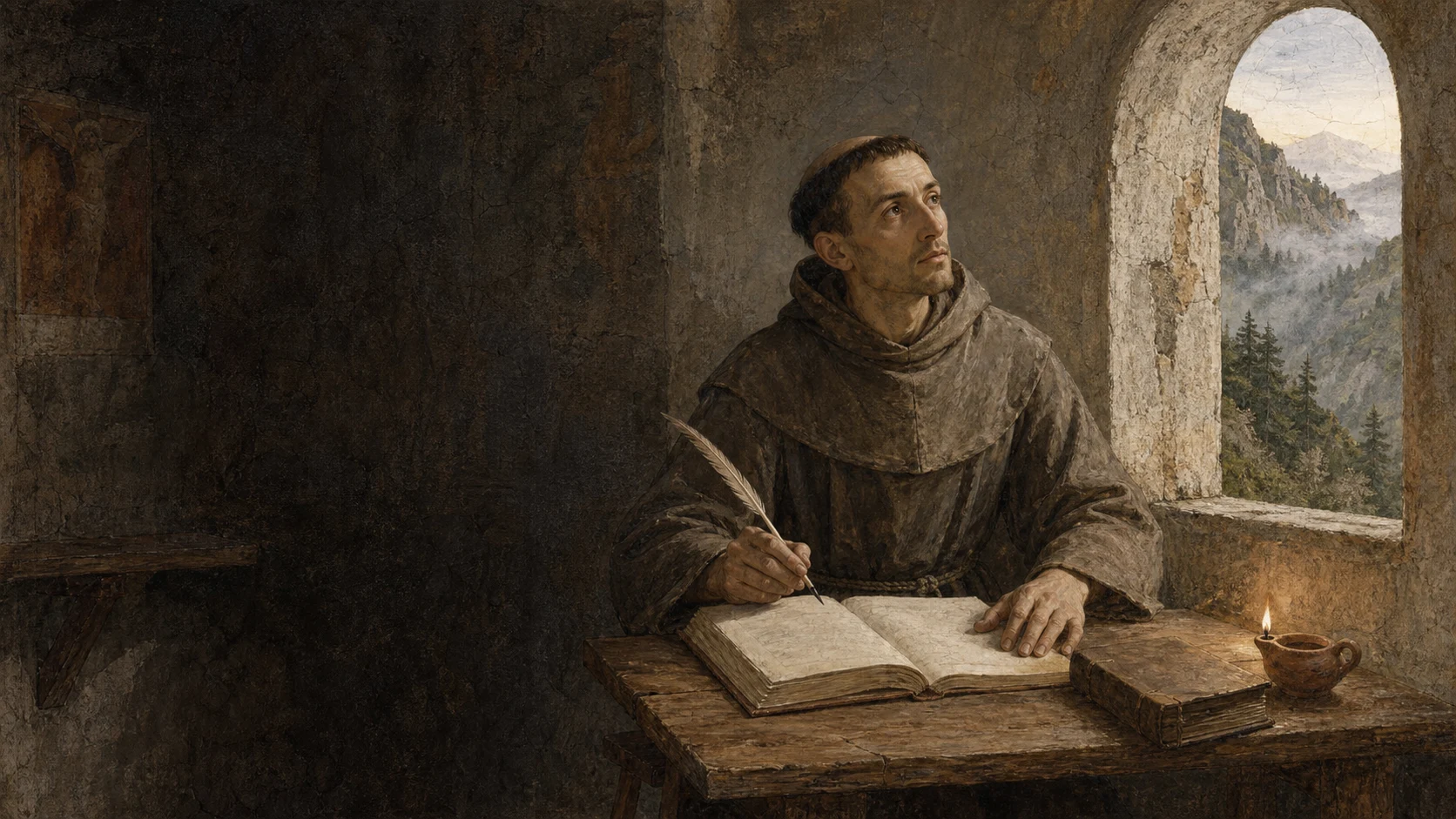
Bonaventure and the Mountain of the Soul
At La Verna, the great Franciscan teacher and minister sought peace. His mountain became a path through creation, understanding, love, and silence.
Read now →c. 1217/1221–1274 · From Bagnoregio to Lyon13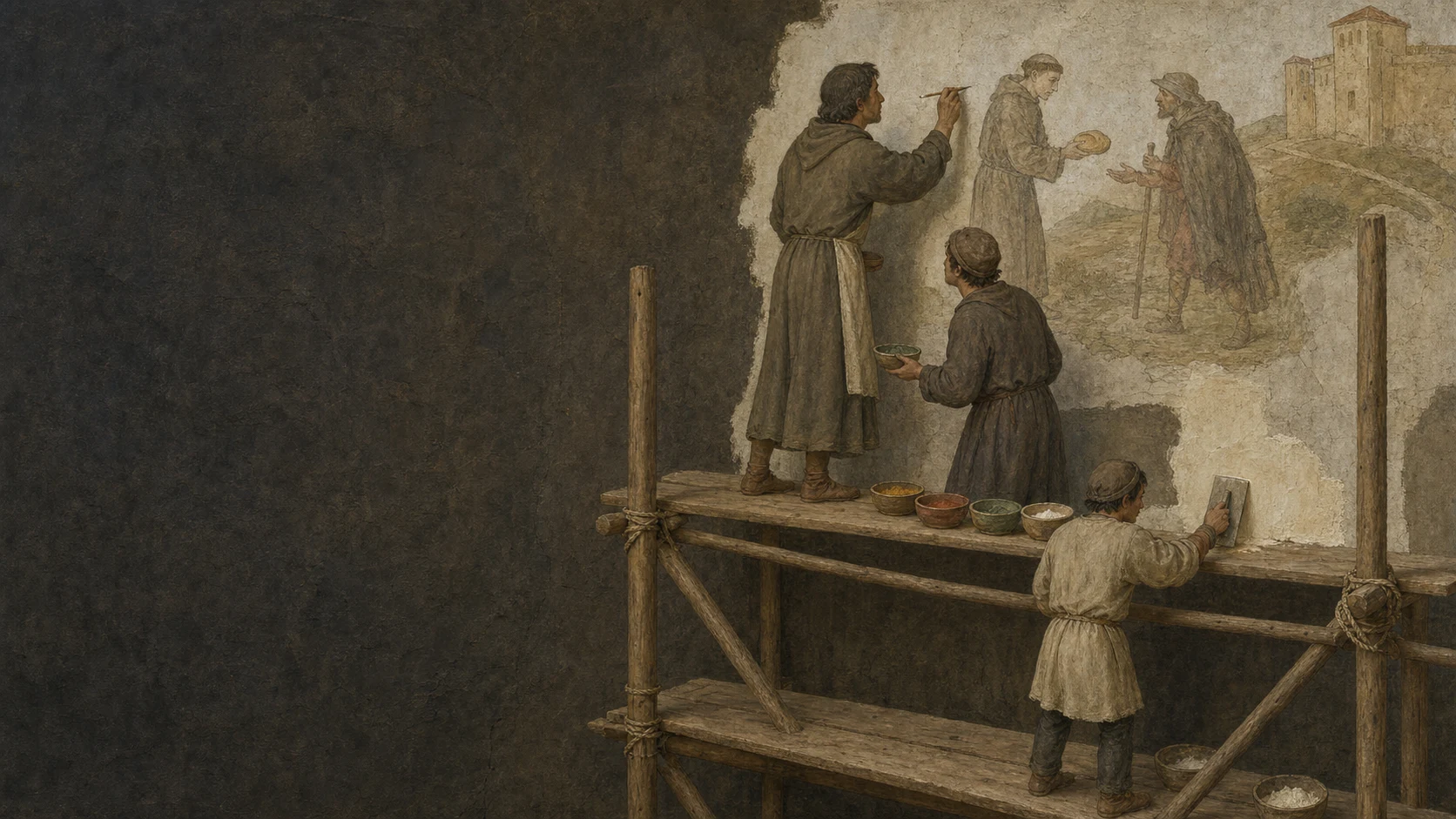
Giotto and the Painters of Assisi
High on wooden scaffolding, a workshop covered the Basilica of Assisi with stories of Francis—painted swiftly on wet plaster and still surrounded by one question: who made each scene?
Read now →Final decades of the 13th century14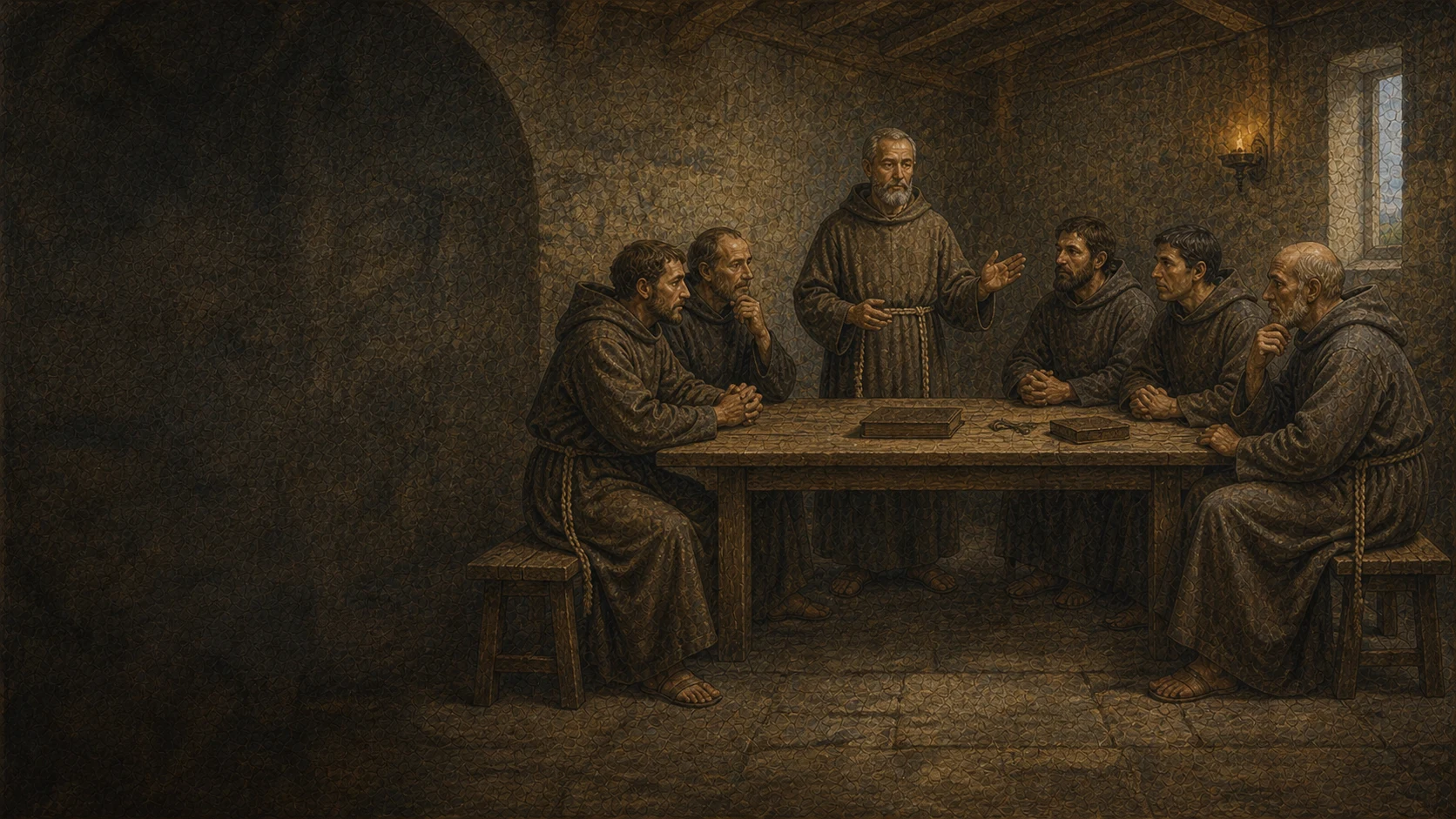
When Poverty Became a Dispute
Houses, books and a Rule on the table: how the Franciscan dream of poverty became a difficult question for the whole Order.
Read now →13th and 14th centuries · from fraternity to controversy15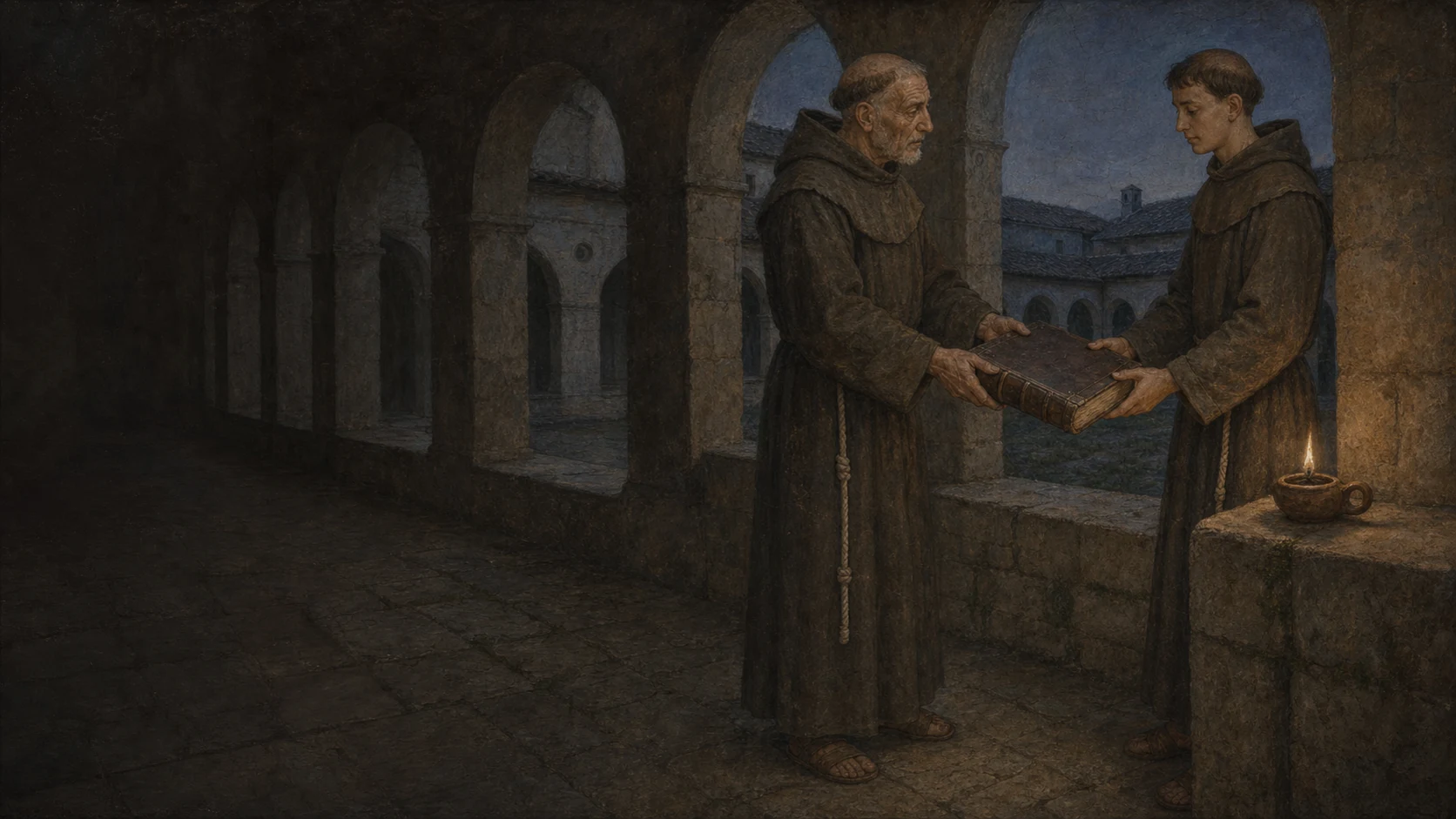
The Fragrance That Crossed the Centuries
Through worn parchments, cold stone, copied stories and repeated practices, the memory of Francis crossed the Middle Ages—not intact, but alive in the hands that received it.
Read now →13th–15th centuries16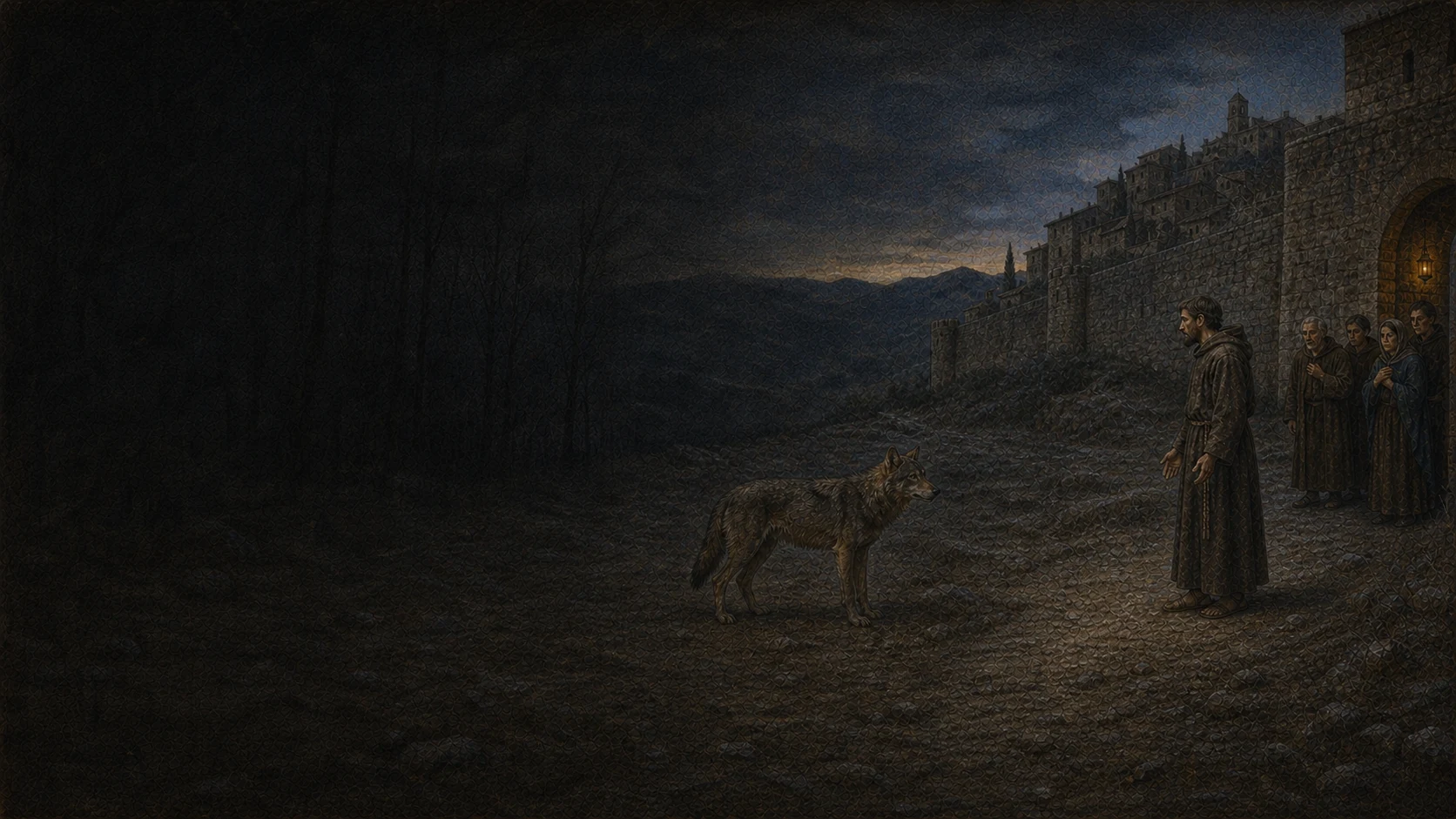
The Wolf of Gubbio
Between the city walls and the woods, a later story speaks of fear, hunger and peace. What do we know—and what does the night still conceal?
Read now →Tradition set in the 13th century · written in the 14th century17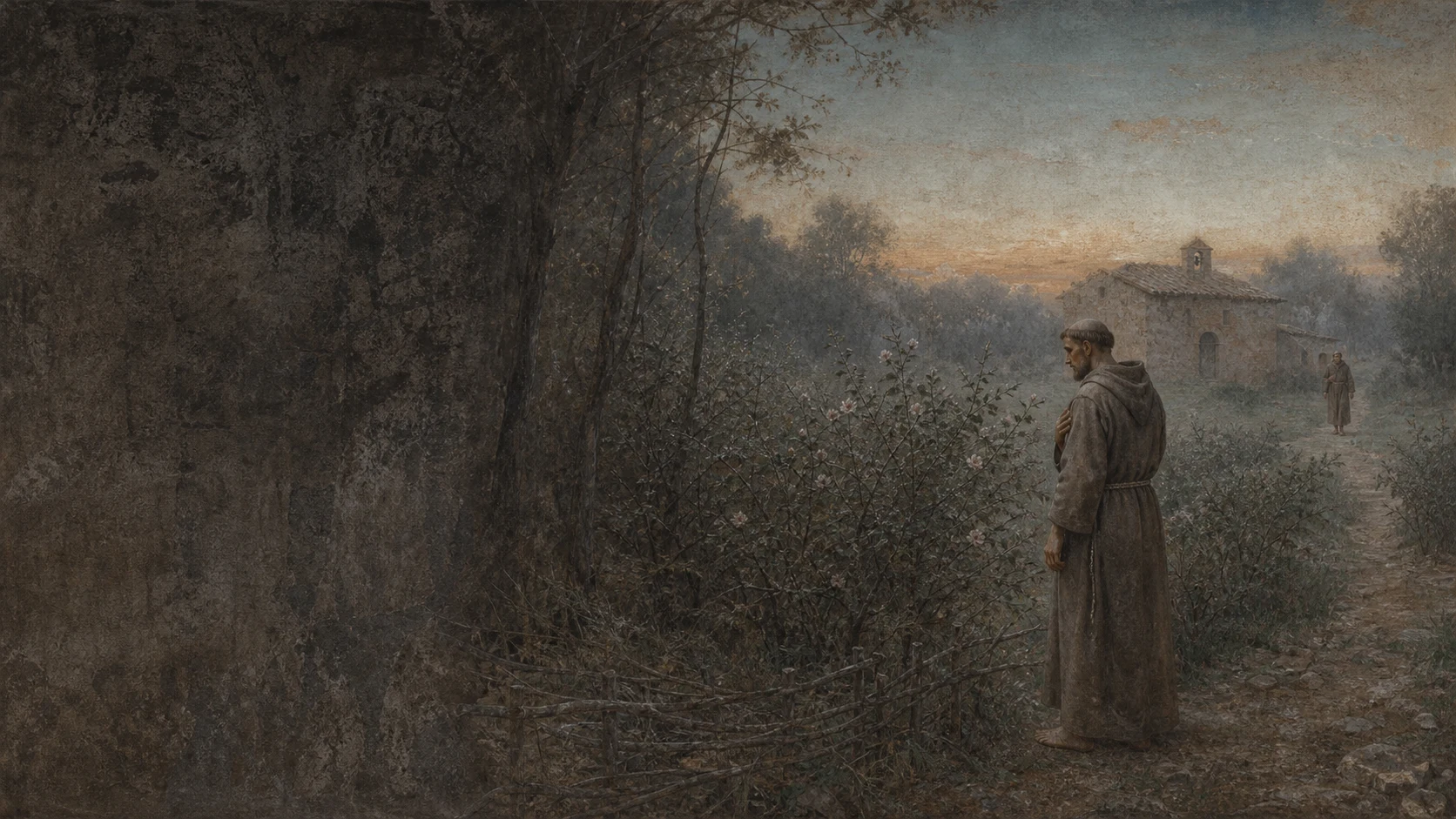
The Rose Bush That Lost Its Thorns
Beside the Portiuncula grows a garden linked to a miracle absent from the earliest biographies. Between plant, painting and devotion, silence too is a source.
Read now →14th century onward · Memory of the Portiuncula18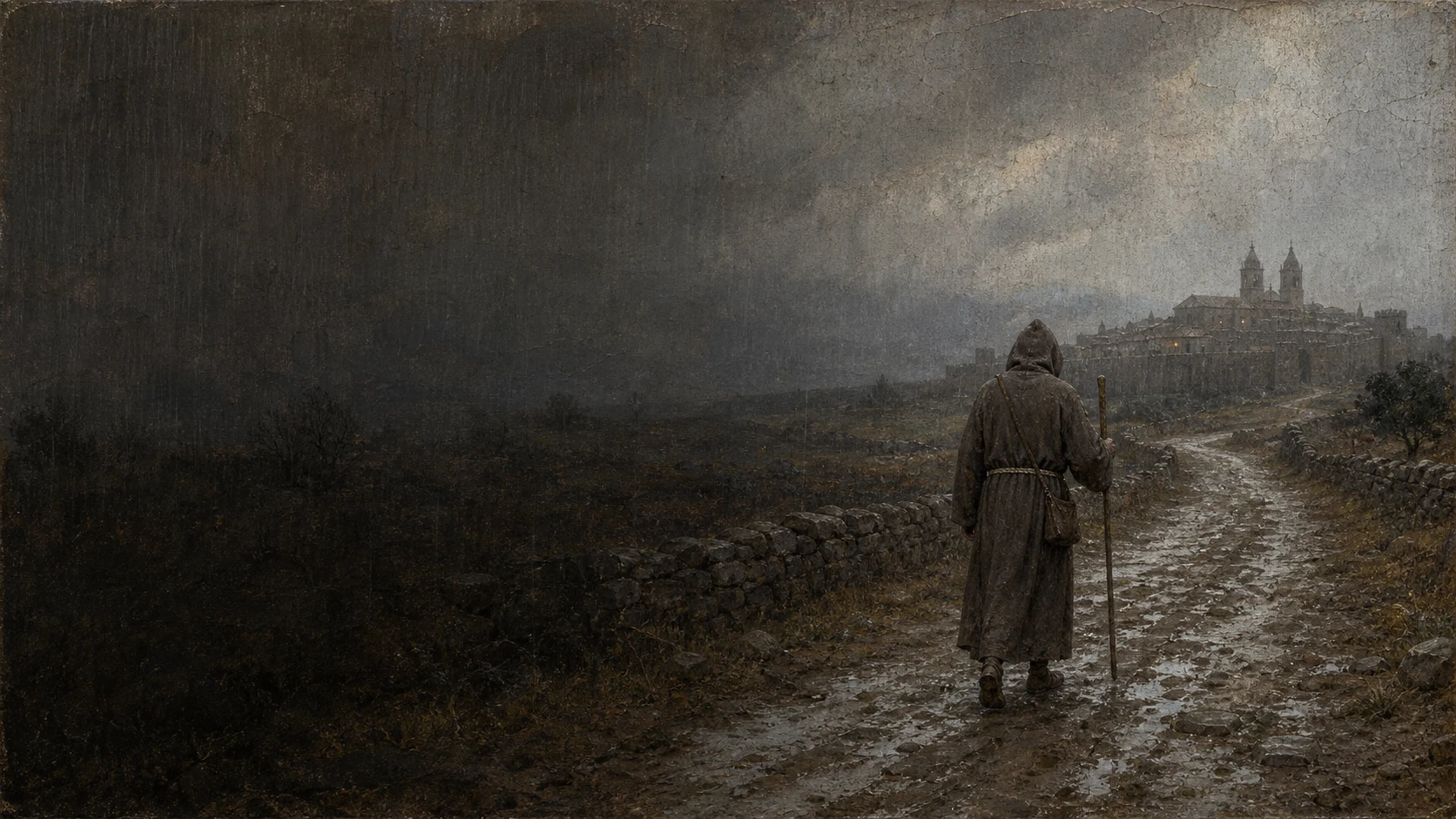
Did Francis Walk to Santiago?
A journey to Spain, an illness, silence in the early biographies, and a tradition that flowered a century later: how far did Francis really go?
Read now →1213–1214 · Tradition from the 14th–16th centuries19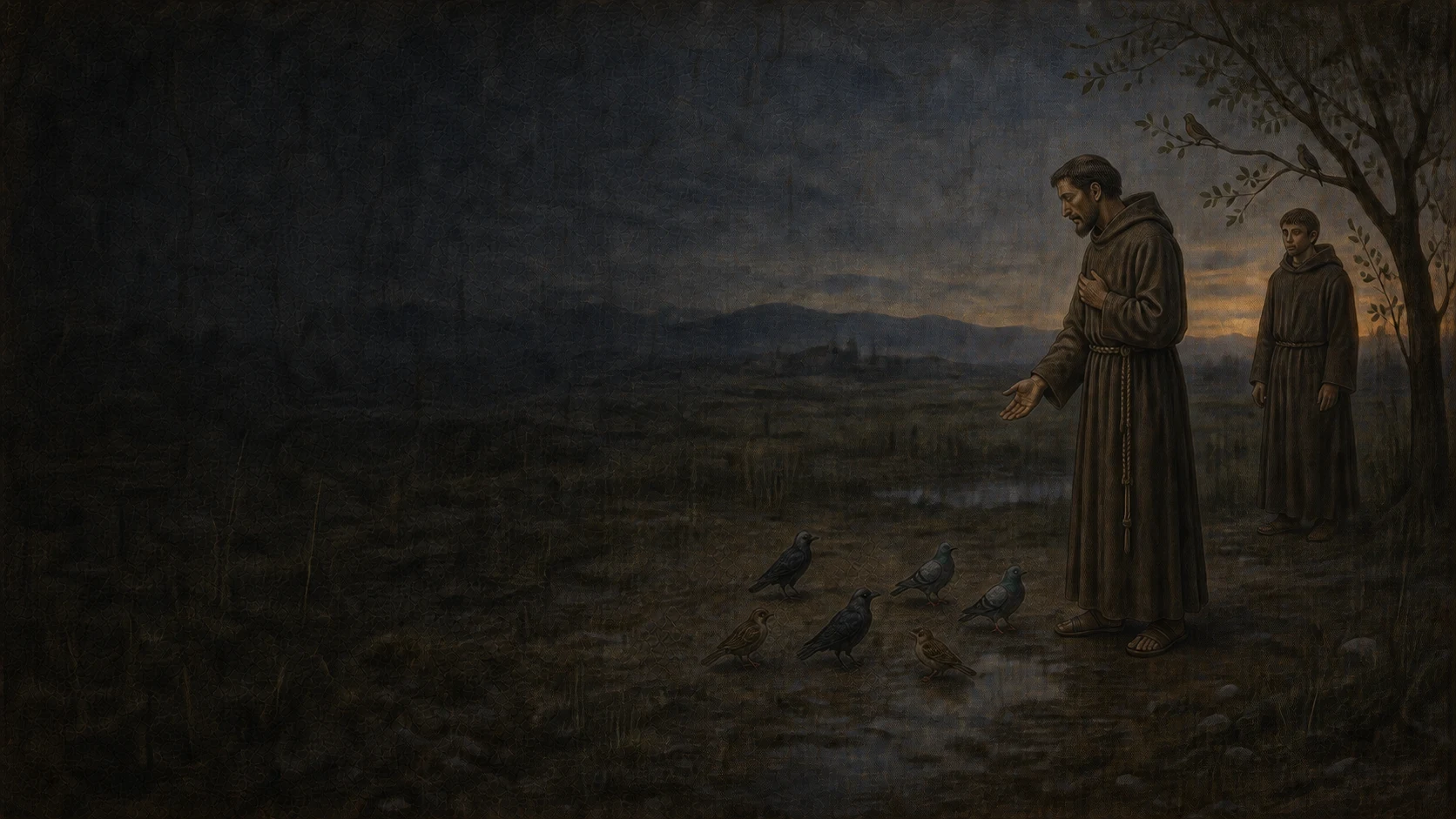
The Sermon to the Birds
In a field in Umbria, Francis speaks and the birds do not fly away. A scene recorded close to his lifetime grew through parchments, places and paintings.
Read now →13th century · contemporary memory and growing tradition20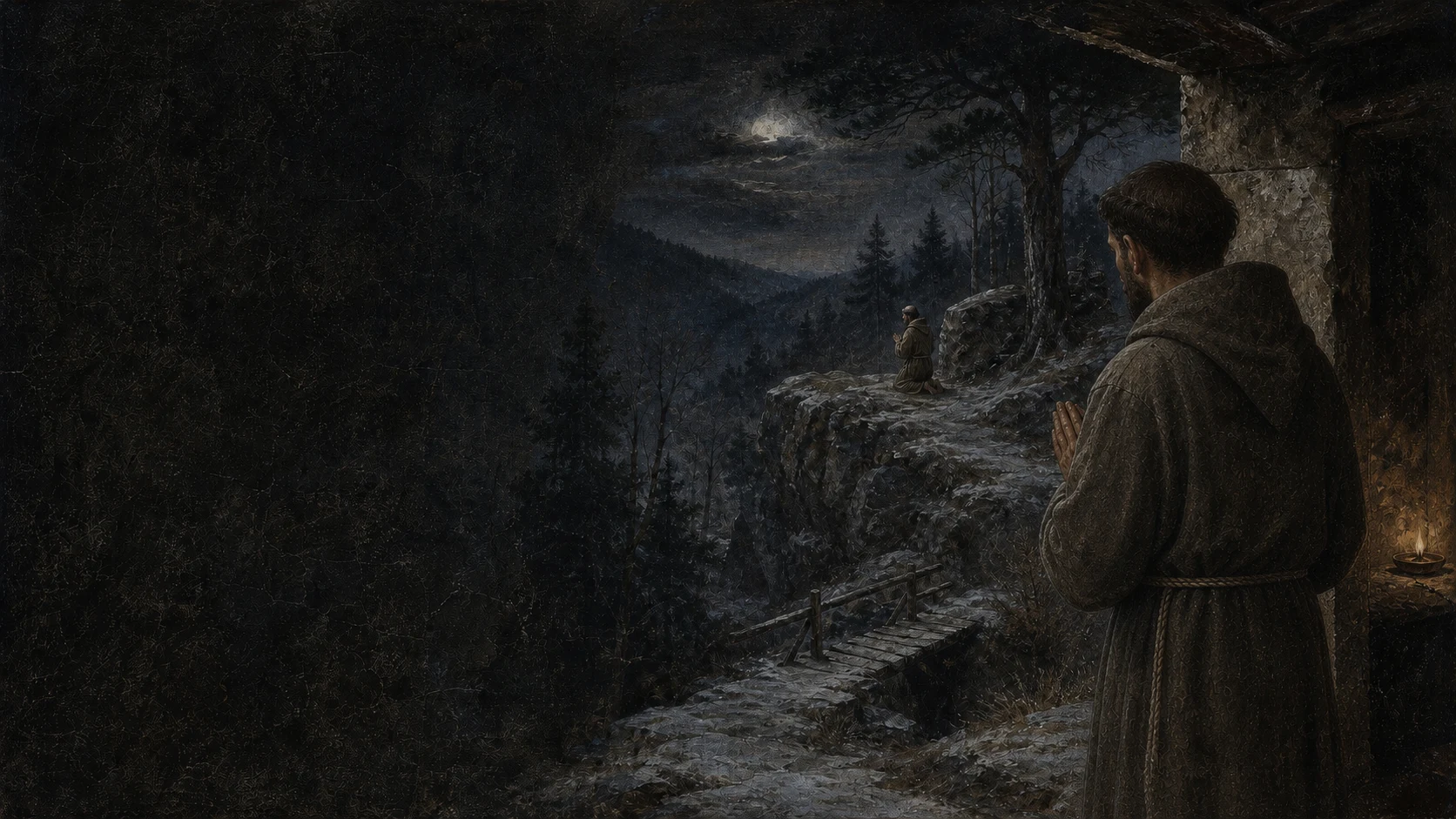
The Night Brother Leo Heard Francis
A voice crosses the stones of La Verna, but the account arrived late. Between an authentic little sheet and a night told in the 14th century, Brother Leo guards the boundary of what we can know.
Read now →1224 in 14th-century memory · La Verna21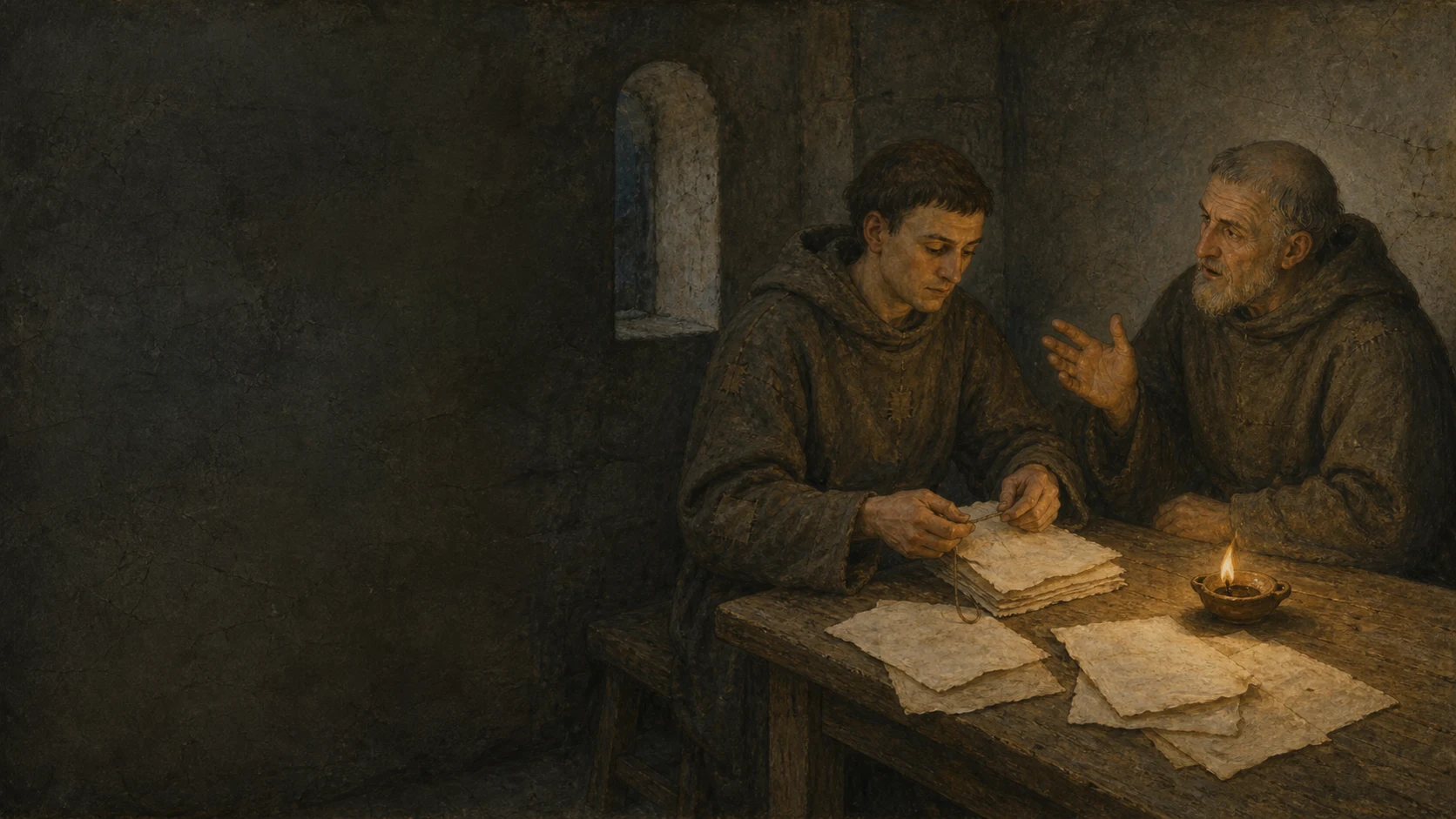
The Stories of the Little Flowers
How memories of Francis passed through voices, parchments and translations to become one of the best-loved books of the Middle Ages.
Read now →c. 1327–1396 · Medieval Franciscan memory